Tuesday, November 29, 2005

CAVAL infolit conference 2

I have just been given the web address of the CAVAL page with the presentations from the CRIG seminar held last Wednesday (23rd) in Melbourne, Australia (see right for a picture of delegates at the conference), so that is where I will refer you. Thanks to Valma Datson for the web address. It has the presentations that Bill and I gave (on our research on academics' information literacy, plus material on information literacy and educational development), plus the case studies that were presented in the afternoon. These case studies were:

Kerry Vickers, University of Melbourne: Undergraduate Sequenced Information Literacy Skills Program in the Faculty of Education, University of Melbourne
Beverly Forsyth, Latrobe University: Information Literacy Subject for Nursing Undergraduates
Joyce Jenkin, Monash University: Information literacy for the Health Sciences -essential
ingredients for successful collaboration

Narelle Love, Jo Reidy & Jacqueline Kapnoullas, Australian Catholic University, Melbourne Campus: Foregrounding information literacy in order to prepare international students for unfamiliar assessment tasks in Australia

This is where you can find the presentations: http://www.caval.edu.au/members/wpr/crig/pa/2005_papers.shtml

Deadline for LOEX 2006 approaching

The 2006 LOEX Conference, Moving Targets: Understanding Our Changing Landscape, will be held May 5-6 2006 at the University of Maryland, College Park. Check out the web site for information and updates.

The proposal deadline is December 2, 2005 and is rapidly approaching. Themes related to information literacy include:
  • How have librarians dealt with the changing landscape of academic integrity, plagiarism and the ethical use of information?
  • How do we translate our understanding of how students use sources into effective information literacy instruction?

For information about submitting a proposal, go to: http://www.lib.umd.edu/loex2006/proposals.html.

Sunday, November 27, 2005

CAVAL Reference Interest Group: Report 1

The main reason that Bill Johnston and I have come over to Australia was to deliver half a day on the CRIG annual seminar in Melbourne. CRIG (CAVAL Reference Interest Group) is a special interest group for librarians in Victoria which focuses mainly on information literacy. This year the title of the conference was Lifting the Lid: Information Literacy and Academics – Challenging the Assumptions of Librarians. Bill and I found ourselves actually becoming merchandise, since the logo featured us "lifting the lid" and this appeared on bags, posters etc. and on the mugs that were the presents to speakers! (see the logo on a laptop in this photo. A younger, slimmer version of me is represented on the left.)

Bill and I had 2 sessions in which we concentrated particularly on talking about the discoveries from our project on UK academics' conceptions of, and pedagogy for, information literacy. We were talking about the implications for librarians, including how it might challenge certain assumptions e.g. the assumption that the lecturer was information illiterate and the librarian information literate. In the second session Bill was talking about looking at information literacy from an educational development perspective, and I was looking at it from a marketing perspective.

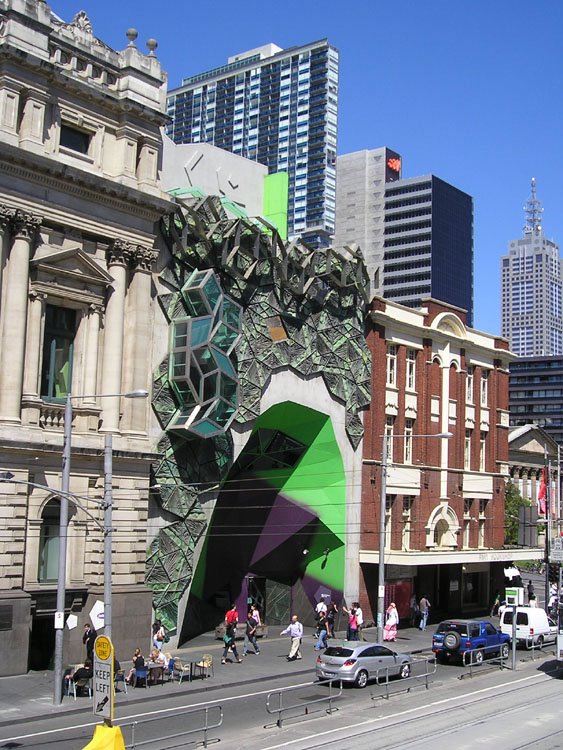
The conference was held in Storey Hall, pictured on the right, which is a refurbished hall from the 1890's, and is now part of the Royal Melbourne Institute of Technology (RMIT). The day was attended by about 140 librarians, mainly from Victoria, but some from other States and a couple from further afield.

At the moment I can't upload our presentation, but I'll upload at least some of it when I get back to the UK.

Newsletter

The November 2005 issue of the ALIA (Australian Library and Information Association) information literacy forum newsletter is available at http://www.alia.org.au/groups/infolit/newsletter/2005.11.html

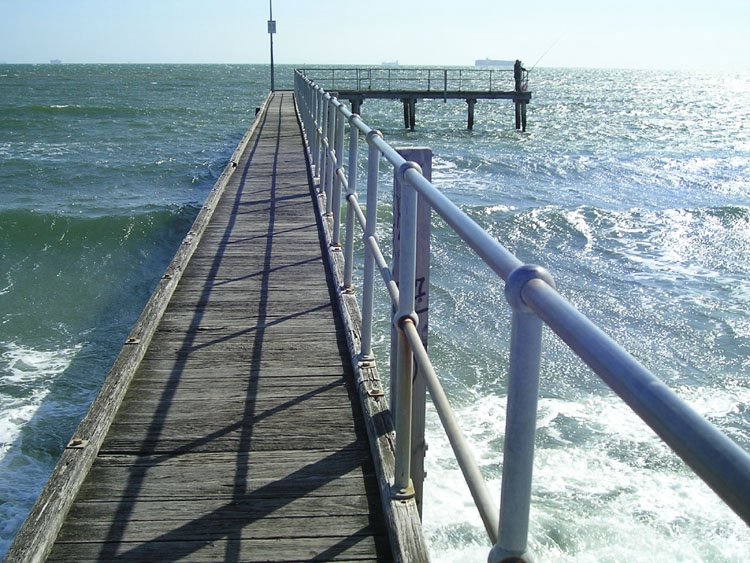
(Photo by S. Webber: St Kilda, Melbourne, Australia, Nov. 2005)

Friday, November 25, 2005

Mindmapping seminar 2

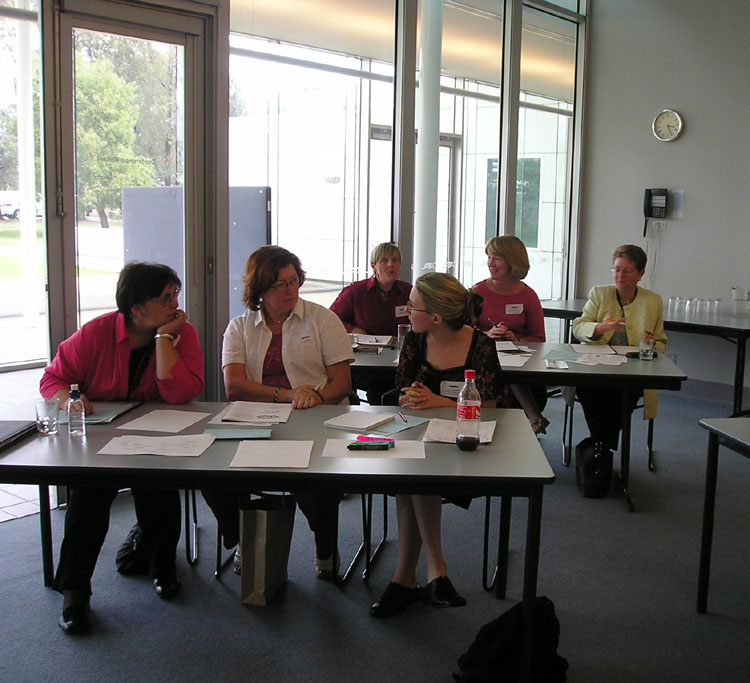
A little bit more about the seminar which Bill and I held yesterday in Melbourne, Australia. There were 13 delegates (see some of them on the right), mostly from university libraries. If you aren't familiar with the concept of mindmapping then there is a nice introduction at http://www.jcu.edu.au/studying/services/studyskills/mindmap/. The "father" of mindmapping is Tony Buzan and his website is at http://www.mind-map.com/EN/index.html (there is a lot of information about his priced products and services, but also a short intro to mindmapping).

We were talking about different ways in which this technique can be used. Bill was particularly focusing on its use in stimulating creativity, and I was particularly focusing on its use in information work. In particular, my students in my 1st year Information Literacy class have to use it as a tool for planning & representing searches. I gave a paper about this aspect at the Online conference in December 2002 which is available in pdf at http://dis.shef.ac.uk/sheila/sw-mindmap-2002.pdf

Thursday, November 24, 2005

LILAC 2006 Call for Papers

Call for papers - LILAC 2006

Deadline for proposals: 30th November 2005.

LILAC 2006 Conference themes

* Embedding and enriching
* Information Literacy and citizenship
* New areas of practice and research
* Practical approaches to Information Literacy
* Staff development and Information Literacy
* Strategic approaches to Information Literacy

All presentations should address one or more of the conference themes. This
year's conference will include papers and presentations in the following formats:

* Short Papers <http://teaching.lse.ac.uk/tech/lilac/#short>
* Long papers <http://teaching.lse.ac.uk/tech/lilac/#long>
* Demonstrations / hands-on / workshop sessions
<http://teaching.lse.ac.uk/tech/lilac/#demo>
* Posters <http://teaching.lse.ac.uk/tech/lilac/#poster>

Further details and an Online submission form can be fund at: http://teaching.lse.ac.uk/tech/lilac/

Mindmapping seminar 1

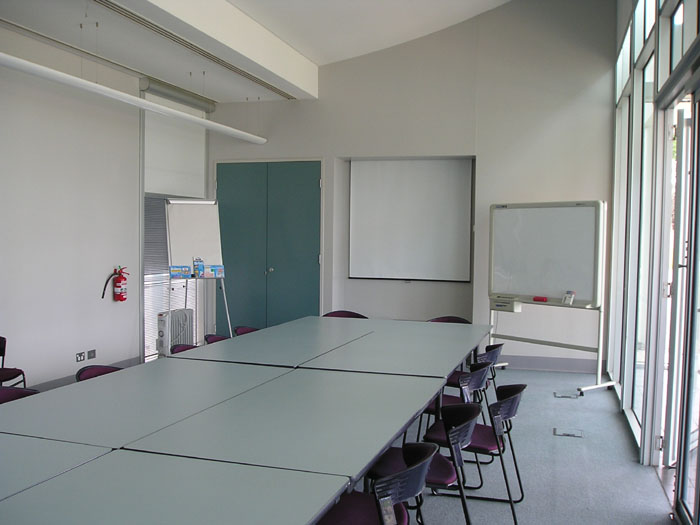
Today Bill Johnston and I have been giving a workshop about mindmapping, creativity and information literacy for CAVAL (http://www.caval.edu.au) in Melbourne, Australia. On the right is a picture of what the training room looked like earlier in the week ... shortly I will post a photo of what it looked like during the seminar! The last few days have been full of preparations for this and for talks at a one day conference on information literacy that took place on Thursday. Over the next few days I'll catch up in reporting on those.

Monday, November 21, 2005

Health Information literacy

There is a special issue of Health Information and Libraries Journal (2005 vol. 22 issue s2) edited by my colleague Phil Levy, focusing on e-learning and learner support. It includes:

"Healthcare librarians and learner support: a review of competences and methods"
Lyn Robinson, Julia Hilger-Ellis, Liz Osborne, Jane Rowlands, Janet M. Smith, Anne Weist, June Whetherly, Ray Phillips (p42-)

"Learning and teaching resource discovery in the Health and Life Sciences—partnership and interoperability"
Donald M. Mackay, Suzanne Hardy (p70- )

"E-learning in the common learning curriculum for health and social care professionals: information literacy and the library"
Debra Morris (p74- )
(Photo by S. Webber: Unseasonal cherry blossom on autumn tree, Sheffield, UK, Nov 2005. Actually I am now in Melbourne, Australia, preparing for seminars for CAVAL, but I haven't photoshopped any of my photos here yet)

Friday, November 18, 2005

Award: IL research review

I am leading a team that has been awarded a Review of Research Literature project. It will be undertaken January-June 2006 with funding from the UK's Higher Education Academy, in conjunction with the Society of College, National and University Libraries.

The aim is to inform practitioners, policy makers and researchers in UK Higher Education (HE) by illuminating key concepts, evidence and issues concerned with information literacy in students’ experience of learning in HE. This will include a focus on approaches to teaching and support of information literacy, and on the impact of information literacy and libraries as regards the student learning experience.The rest of the team consists of:

–Professor Sheila Corrall, DIS
–Bill Johnston, Centre for Academic Practice & Learning Enhancement, Strathclyde University
–Dr Philippa Levy, Director, Centre for Inquiry-based Learning in the Arts and Social Sciences, & DIS
–Sharon Markless, Institute of Learning and Teaching, King’s College, University of London
–David Streatfield, Information Management Associates.

There is a brochure with more information at http://dis.shef.ac.uk/literacy/hea-flyer-nov.pdf and there is a blog at http://infolit-review.blogspot.com/

(Photo by S. Webber: York (where the HEA is based) in the sun, Nov. 2005)

Thursday, November 17, 2005

Information Literacy for a Lifetime set for Hawaii

The biennial LOEX-of-the-West Conference, Information Literacy for a Lifetime, will be held June 8-10, 2006, in Fairmont Orchard, Hawaii.

The Association of College & Research Libraries proclaims that "information literacy forms the basis of lifelong learning." This conference explores the extent and the ways that information literacy programs and instruction librarians in academic libraries are developing lifelong learners.

More information is available on the conference website. Oh, and did I mention it's in Hawaii?

Wednesday, November 16, 2005

Alexandria proclamation

The Alexandria proclamation on information literacy and lifelong learning has just been produced. This will be promulgated by UNESCO, including at the World Summit on the Information Society that takes place 16-18 November. It starts "Celebrating this week’s confirmation of the site of the Pharos of Alexandria, one of the ancient wonders of the world, the participants in the High Level Colloquium on Information Literacy and Lifelong Learning held at the Bibliotheca Alexandrina on 6-9 November 2005 proclaim that information literacy and lifelong learning are the beacons of the Information Society, illuminating the courses to development, prosperity and freedom. "Information Literacy lies at the core of lifelong learning. It empowers people in all walks of life to seek, evaluate, use and create information effectively to achieve their personal, social, occupational and educational goals. It is a basic human right in a digital world and promotes social inclusion of all nations." It can be found at http://eprints.rclis.org/3829/1/alexfinalreport.pdf [url updated 3 Feb 2021 (SW)]  (Photo by S. Webber: Poppy, Sheffield, June 2005)
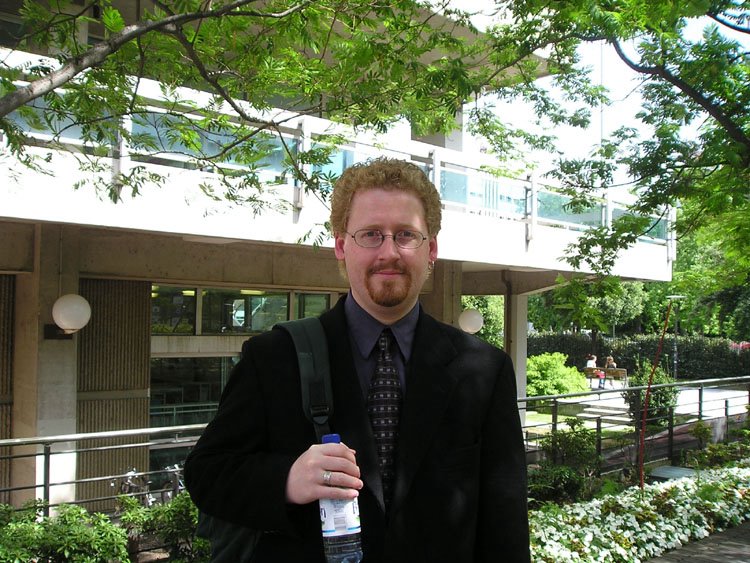
Stuart Boon, who was working full time on our Arts and Humanities Research Council- funded project "UK academics' conceptions of, and pedagogy for, information literacy" has finished his 3 years here. We congratulate him on securing a post as Lecturer in Strathclyde University's Centre for Academic Practice and Learning Enhancement. To mark this shift to educational development he started up a new Educational development in Scotland blog a little while ago. There is a link on the sidebar on the right, but here it is as well: http://eddev.blogspot.com/
(Photo by S. Webber: Stuart at the FORMIST conference in Lyon in June, where he and I gave a talk. Sorry, Stuart, I'm better at photographing flowers than people)

Tuesday, November 15, 2005

WLIC 2006 Soeul - another call for papers

The IFLA Section of School Libraries and Resource Centres is calling for proposals for papers and posters for the Section's Open Session to be held as part of the 2006 World Library and Information Congress in Seoul, South Korea 2006. The theme of is Information Literacy for Young People: Evolving Models in a Changing World. Proposals that consider schools, school libraries, children's libraries, or home schooling environments will be considered. The Section is also seeking proposals for Posters on the same theme. Note that IFLA does not meet conference registration, travel or accommodation costs for presenters, nor does it provide financial support.

Proposals should include the following information:
Title of Proposed Paper or Poster; Name of Presenter/s; Contact Information (mailing address, fax, email); Abstract of Paper or Poster (200-300 words); Short Biography of Presenter/s (maximum 100 words each.

Proposals may be submitted by air mail, fax, or email, to:
Prof. James Henri; Division of Information & Technology Studies; Faculty of Education; The University of Hong Kong; jameshenri@hku.hk http://www.cite.hku.hk/people/jhenri/

31 January 2006: Deadline for submission of proposals
28 February 2006: Notification of acceptance of proposals
15 April 2006: Submission of full papers.
(Photo by S. Webber: WLIC banner in Oslo, Aug. 2005)

Peacock at Augustana IL Workshop 2005

This year's Augustana Information Literacy in Academic Libraries Workshop speaker will be Judy Peacock (Information Literacy Coordinator - Queensland University of Technology - Brisbane, Australia). The workshop will be on December 12-13, 2005 in Camrose, AB, Canada.

For more information, please visit the workshop website.

Sunday, November 13, 2005

Competition for free student place at LILAC conference

The Information Literacy Group of CILIP is sponsoring one free place at the Librarians' Information Literacy Annual Conference - LILAC 2006 for a student delegate. If you are interested in applying for this free place, please submit a short written piece (maximum 400 words) explaining why you would like to attend this conference and how the conference might benefit you in your future career. Applications will be assessed by the conference committee.

In return for this free place the successful applicant will be required to write a brief report on the impact their attendance has had on their knowledge and understanding of Information Literacy. Please note that the sponsorship is open to UK applicants only. The sponsorship covers conference attendance & student accommodation. It does not include travel expenses. Applications for sponsorship should be made by Friday 23rd December 2005. All applicants will receive notification of the result by January 23rd 2006. Please send your submission via e-mail only, along with your own full contact details including job title to Jane Secker at j.secker@lse.ac.uk.

Details of the conference are at: http://www.cilip.org.uk/specialinterestgroups/ bysubject/informationliteracy/lilac/lilac2006

(Phot by S. Webber: Autumn leaves, Sheffield, Nov. 2005)

Friday, November 11, 2005

Blogging

More on blogging ... the Blog Business Summit (about business blogging) took place about 10 days ago. It is a commercial operation but it has a blog (in fact the whole site looks like a blog) which includes some material and also links to people blogging about the blogging conference. http://www.blogbusinesssummit.com/

Also I picked up a useful reference from the Sept/Oct issue of eLucidate, namely
Gardner, S. (2005) "Time to check: are you using the right blogging tool?" Online journalism review, 14 July. http://www.ojr.org/ojr/stories/050714gardner/
It focuses more on professional (rather than free) services, but includes Blogger, and makes some good comparative points.

(Photo by S. Webber: Snow on Remembrance Day wreaths, Weston Park, Nov. 2004. Today is Remembrance Day - and Google Uk has a Remembrance poppy logo!)

Thursday, November 10, 2005

Library education wikis

Two wikis concerned with education and libraries have emerged recently. Wikis are designed so that anyone can edit and create content in the wiki. One wiki was started by Chris Powys, in the UK and is at http://www.infoteach.org/. It says that "The Infoteach Wiki is intended to be a dynamic information base on teaching and learning in a library or information context. The aim of Infoteach is to play a part in enabling librarians and information workers, in every sector, to be competent teachers and facilitators of learning."

The second is based in the USA, created by the Oregon Library Association's Library Instruction Roundtable and at is at http://instructionwiki.org/Main_Page. It is "a collaboratively developed resource for librarians involved with or interested in [library] instruction ... The Library Instruction Wiki was designed to help librarians learn from one another. Use the wiki to find handouts, tutorials, suggested reading, and more!"

At the moment the latter has more content than the former, but the type of content differs. Infoteach also has a discussion board section. I think the scope implied by the statements quoted above is slightly different - though part of the difference is in the terminology current in the USA vs. the UK. For example in the UK the word "instruction" is one you would avoid, as it implies transmissive teaching (bad, bad, bad...) whereas in the US this word doesn't seem to be interpreted in the same negative way. Both wikis look useful - but future usefulness obviously depends on people contributing to the wikis. (I'm afraid I haven't contributed to either yet...)

(Photo by S. Webber: Leaf on a bench in sunlight, Sheffield, Nov. 2005)

Wednesday, November 09, 2005

Xanga and infolit

I was having a look at Xanga (http://www.xanga.com/) , a blogging tool. To get a feel for the blogs there, I searched Xanga on Information Literacy. What I came up with were mostly entries from various (probably American) my-life blogs, saying things like (to take 5 different blog examples):

"It was a review day in my information literacies course... which meant... wait... it still a nap time... I hate that class... but don't mind some of my classmates"
"Monday's I have that stupid one credit course information literacy."
"Should of went to school today to work on a paper for Information Literacy, but when I woke up, I felt about as energetic as a dead man inside of a box."
"I'm also going to try and take [snip] Principles of Speaking--oh god..., Intro to Philosophy, Information Literacy...pointless class, Wellness Concepts...another pointless class"
.... though also ...
" Well anyways, class was great. I got another perfect on my Information Literacy Project! "

Mostly people weren't being that enthusiastic about other studies either. However, it was a salutary reminder about what students might be writing about my classes in their blogs....
(Photo by S. Webber: Hydrangea & spider's web, Oct. 2005)

Tuesday, November 08, 2005

Googlefight

For some harmless time wasting (or is time wasting never harmless?) try Googlefight at http://www.googlefight.com/ You type in two words or phrases and it shows a little stick-figures-fighting animation, then it shows two bars, indicating the number of hits on Google for the two terms. Thus one sees that there are, for example, a lot more hits for "information literacy" than for "information skills", and "e-literacy" vs. "information literacy" is no contest, but "information literacy" and "media literacy" are closer (though with IL still the winner).

One can also do sad stuff like putting in one's own name and the name of someone else and shouting "yay" when one gets more hits than the other name. Not that I'd ever do anything like that, of course.

Monday, November 07, 2005

Blogging presentation

There's a nice presentation by Frances Jacobson Harris called What's a Blog Doing In My Library? which goes through some basics of what blogs are about, including what some different types of people want from them. It also identifies some options for running blogs and gives examples. It was given at the AASL 12th National Conference.
http://www.uni.uiuc.edu/library/blogging/
(Photo by S. Webber: Bicycles, Sheffield University, November 2005)