There's a Twitter focus in the latest issue (vol 40 no 2) of Reference Services Review:
- Libraries atwitter: trends in academic library tweeting: by Darcy Del Bosque, Sam A. Leif, Susie Skarl (pp. 199 - 213)
- To tweet, or not to tweet? by Susan Jennings (pp. 214 - 216)
- Students tweet the darndest things about your library – and why you need to listen. by Steven Bell (pp. 217 - 220)
- Just the right tweet at just the right time. by Ameet Doshi (pp. 221 - 223)
- Beyond broadcasting: Customer service, community and information experience in the Twittersphere. by Lyndelle Gunton, Kate Davis (pp. 224 - 227)
Other articles include:
- Reference Services Review: content analysis, 2006-2011: by Katy Mahraj (pp. 182 - 198) This analysis confirms that the vast majority of authors are from the academic sector, with 83% from the United States, and "information literacy and instruction" is the topic with the biggest share of articles.
- Information literacy on Facebook: an analysis. by Donna Witek, Teresa Grettano (pp. 242 - 257)
- Student preference for tutorial design: a usability study. by Lori S. Mestre (pp. 258 - 276)
- Engaging undergraduates in discipline-based research. by Heidi Gauder, Fred Jenkins (pp. 277 - 294)
This is a priced publication: here is the home page: http://www.emeraldinsight.com/journals.htm?issn=0090-7324
Photo by Sheila Webber: York castle with bluebells, 2012
Information Literacy Weblog
We bring you news and reports about information literacy around the world
Friday, May 18, 2012
Short course in South Africa
ITOCA (Information Training and Outreach Centre for Africa) is running workshops called 21st Century Information Literacy Skills in Centurion, South Africa on June 18-22, 2012 and July 2-6, 2012 and also via a web version. "Participants will learn how to acquire, and facilitate the acquisition and application of information literacy skills that are relevant for the information user in the 21st century." http://www.itoca.org/node/135
Labels:
events
Wednesday, May 16, 2012
The ways that young people experience information
Marian Smith gained her PhD from Loughborough University in 2010, with an interesting dissertation about children's perceptions of information (I was external examiner at her viva) entitled "Young people: a phenomenographic investigation into the ways they experience information". Mark Hepworth, who supervised Marian at Loughborough, recently did a blog post in which he outlines the framework she identified, that could be used to guide information literacy teaching to children. His blog post is here: http://markhepworthsblog.blogspot.com/2012/05/young-peoples-perception-of-their.html and Marian's full dissertation is here: https://dspace.lboro.ac.uk/dspace-jspui/handle/2134/6632
Photo by Sheila Webber: Wildflowers, Maryon Park, May 2012
Tuesday, May 15, 2012
Plagiarism and attribution: an academic literacies approach?

Magyar, A.E. (2012) "Plagiarism and attribution: an academic literacies approach?" Journal of Learning Development in Higher Education, 4. "In many Higher Education courses in the UK the ability to write extended academic prose is central to assessment and therefore to student success. One aspect of academic writing which students struggle with is incorporating the work and ideas of others, using appropriate attribution conventions. This can lead them to fall foul of institutions’ plagiarism policies. Advice on plagiarism often consists of discussions around what is or is not plagiaristic behaviour while advice on attribution has tended to focus on referencing. This paper explores what an academic literacies approach to plagiarism might look like. It discusses and illustrates how an academic literacies approach was used in the design, analysis and application of a small-scale ethnographic research which set out to explore international postgraduate students' understandings of and questions about plagiarism across the disciplines in one UK university. The intention of the research was to use the findings in developing more culturally and context sensitive explanations of our attribution practices."
http://www.aldinhe.ac.uk/ojs/index.php?journal=jldhe&page=index
Photo by Sheila Webber: cherry blossom, 2012
Labels:
academic sector,
Literacies,
Plagiarism,
UK
Monday, May 14, 2012
Declaración de la Habana / Declaração de Havana /South American information literacy
The Havana declaration on information literacy, from March 2012, is available in Portuguese and Spanish. This asserts the importance of information literacy and calls for collaborative work and building of networks for the growth of information literacy in the context of Latin American countries. It has 15 points for action.
Declaração de Havana (Portuguese version): https://docs.google.com/file/d/0B0XpF3d0HM6YN3dBLWROYmNHLU0/edit?pli=1
Declaração de Havana (Brasilian Portuguese version): https://docs.google.com/file/d/0BweUYcipCswRSmI1ZFkyUDVqTjA/edit?pli=1
Declaración de la Habana (Spanish) https://docs.google.com/open?id=0BweUYcipCswRQjhxNnhITGEzOW8
Declaração de Havana (Portuguese version): https://docs.google.com/file/d/0B0XpF3d0HM6YN3dBLWROYmNHLU0/edit?pli=1
Declaração de Havana (Brasilian Portuguese version): https://docs.google.com/file/d/0BweUYcipCswRSmI1ZFkyUDVqTjA/edit?pli=1
Declaración de la Habana (Spanish) https://docs.google.com/open?id=0BweUYcipCswRQjhxNnhITGEzOW8
Saturday, May 12, 2012
Comedy facebook privacy video
I had an interesting talk yesterday with one of our third year BSc students, whose dissertation I'm supervising. He has carried out two focus groups with his peers about how and why they share information on Facebook and Twitter (no further detail yet, as he hasn't finished writing it up, but I will add some more in the future).
Coincidentally, I came across this spoof documentary from Bubblegum Comedy about a Facebook privacy action group that I found amusing. I think the video dates from about 2010, so certainly not new. Humour is a subjective thing, and I don't think I'd actually show it all to students in class, in case some of this thought it was dull or lame & therefore got turned off the topic. However I could perhaps use a scene to get a discussion going on a specific point, or refer to it as an example of people's underlying concerns.
Friday, May 11, 2012
Academic Skills Support event at Leeds Metropolitan University
There is an Academic Skills Support event on 20th June 2012, at Leeds Metropolitan University, UK, Cost is £60. "Are you being asked to extend the range of academic skills support offered by your library? Would you be interested in hearing how other libraries provide this kind of service and the innovative ways in which they deliver tutorials, workshops and resources? Libraries and Learning Innovation at Leeds Metropolitan University is hosting a professional development event on the approaches used by a number of libraries to support students’ academic skills. The event will be an ideal opportunity for those involved in this area to share experience and discuss best practice."
There is a full programme, including "Skills for Learning at Leeds Metropolitan University" (Karen Croft and Marie Scopes); "Skills@Library at the University of Leeds" (Helen Howard); "Academic skills at Loughborough University" (Steph McKeating) and parallel sessions e.g. "Supporting international students in their academic skills".
Book by emailing g.walker@leedsmet.ac.uk by 6th of June with your details. Queries to m.scopes@leedsmet.ac.uk (or 0113 812 3906)
Photo by Sheila Webber: Lady's smock, May 2012.
There is a full programme, including "Skills for Learning at Leeds Metropolitan University" (Karen Croft and Marie Scopes); "Skills@Library at the University of Leeds" (Helen Howard); "Academic skills at Loughborough University" (Steph McKeating) and parallel sessions e.g. "Supporting international students in their academic skills".
Book by emailing g.walker@leedsmet.ac.uk by 6th of June with your details. Queries to m.scopes@leedsmet.ac.uk (or 0113 812 3906)
Photo by Sheila Webber: Lady's smock, May 2012.
Labels:
events
Thursday, May 10, 2012
"Health information obesity: the new epidemic?"
Health information obesity: the new epidemic? is a free talk organised by the Career Development Group, Yorkshire and Humberside Division in collobaration with the University of Sheffield's iSchool. The speaker is Vicky Grant.
Date: Thursday 24th May. Time: 4:00 - 5:30pm. Venue: 1st floor conference room in ICOSS, 219 Portobello, Sheffield University, Sheffield, S1 4DP
Register via Eventbrite http://healthinformation.eventbrite.co.uk/ Vicky Grant is the Faculty Librarian for Medicine, Dentistry and Health at the UoS. In this talk, she will look at how patients are using health information from the net and will question the validity of government initiatives to give patients more information. She will argue that what patients actually need is more equitable access to medical research and improved levels of information literacy, including the skills to think critically about the health information they are reading. She will ask you to consider whether open access and open data publishing are matters of medical ethics and will argue that more equitable access to health information could challenge the health inequalities which continue to pervade our society.
Photo by Sheila Webber: "John's van", Sheffield University, April 2012.
Date: Thursday 24th May. Time: 4:00 - 5:30pm. Venue: 1st floor conference room in ICOSS, 219 Portobello, Sheffield University, Sheffield, S1 4DP
Register via Eventbrite http://healthinformation.eventbrite.co.uk/ Vicky Grant is the Faculty Librarian for Medicine, Dentistry and Health at the UoS. In this talk, she will look at how patients are using health information from the net and will question the validity of government initiatives to give patients more information. She will argue that what patients actually need is more equitable access to medical research and improved levels of information literacy, including the skills to think critically about the health information they are reading. She will ask you to consider whether open access and open data publishing are matters of medical ethics and will argue that more equitable access to health information could challenge the health inequalities which continue to pervade our society.
Photo by Sheila Webber: "John's van", Sheffield University, April 2012.
Labels:
events
Wednesday, May 09, 2012
Information literacy instruction in four Vietnamese university libraries
An article I came across recently: Diep, K.C. and Nahl, D. (2011) "Information literacy instruction in four Vietnamese university libraries." The International Information and Library Review, 43 (4), 198-206.
"This case study explored the perceptions of academic stakeholders about the development and delivery of information literacy (IL) programs in four universities, and identified elements necessary to establishing IL credit courses in Vietnamese higher education. The following research questions framed this study: 1) How do library administrators, instruction librarians, and faculty perceive the current implementation of information literacy instruction (ILI) programs for undergraduates studies in universities libraries in Vietnam? 2) What are the challenges to including IL as a credit course in the curriculum as perceived by library administrators, instruction librarians, and faculty? Respondents were purposefully recruited from four universities, including library administrators, instruction librarians, and faculty. Three online surveys were distributed to 537 individuals through Survey Monkey with 149 replies and a final receipt of 133 completed surveys. Interview and focus group data collection included 23 face-to-face interviews and nine focus groups. Findings showed IL is considered the domain of librarians and has not influenced Vietnamese campus culture. IL activities at four university libraries take the form of lectures, workshops, and basic IL skills modules. Few ILI activities are subject discipline-related. Respondents reported challenges to an ILI credit course revolve around the lasting impact of teacher-centered instruction and rote learning, misperceptions about the effect of IL on student learning outcomes, degree of support of IL by academic stakeholders, degree of faculty-librarian collaboration, and scarcity of resources. Recommendations are given for academic librarians in Vietnam implementing ILI programs and considering developing IL credit courses."
Photo by Sheila Webber: Pattern of new leaves, May 2012
"This case study explored the perceptions of academic stakeholders about the development and delivery of information literacy (IL) programs in four universities, and identified elements necessary to establishing IL credit courses in Vietnamese higher education. The following research questions framed this study: 1) How do library administrators, instruction librarians, and faculty perceive the current implementation of information literacy instruction (ILI) programs for undergraduates studies in universities libraries in Vietnam? 2) What are the challenges to including IL as a credit course in the curriculum as perceived by library administrators, instruction librarians, and faculty? Respondents were purposefully recruited from four universities, including library administrators, instruction librarians, and faculty. Three online surveys were distributed to 537 individuals through Survey Monkey with 149 replies and a final receipt of 133 completed surveys. Interview and focus group data collection included 23 face-to-face interviews and nine focus groups. Findings showed IL is considered the domain of librarians and has not influenced Vietnamese campus culture. IL activities at four university libraries take the form of lectures, workshops, and basic IL skills modules. Few ILI activities are subject discipline-related. Respondents reported challenges to an ILI credit course revolve around the lasting impact of teacher-centered instruction and rote learning, misperceptions about the effect of IL on student learning outcomes, degree of support of IL by academic stakeholders, degree of faculty-librarian collaboration, and scarcity of resources. Recommendations are given for academic librarians in Vietnam implementing ILI programs and considering developing IL credit courses."
Photo by Sheila Webber: Pattern of new leaves, May 2012
Monday, May 07, 2012
HUMANIT information literacies issue
This journal from the Högskolan i Borås in Sweden has some information literacy and learning articles in English (HUMANIT issue 11:2):
- Camilla Moring: Newcomer Information Practice: Negotiations on Information Seeking in and Across Communities of Practice
- Anna Lundh, Birgitta Davidsson and Louise Limberg: Talking About the Good Childhood: An Analysis of Educators’ Approaches to School Children’s Use of ICT
- Jan Nolin: Learning Technologies that Are Not Meant for Learning: A Critical Discussion of Learning Objects
Go to http://etjanst.hb.se/bhs/ith/2-11/
Photo by Sheila Webber: Crab apple, Sheffield University, April 2012
- Camilla Moring: Newcomer Information Practice: Negotiations on Information Seeking in and Across Communities of Practice
- Anna Lundh, Birgitta Davidsson and Louise Limberg: Talking About the Good Childhood: An Analysis of Educators’ Approaches to School Children’s Use of ICT
- Jan Nolin: Learning Technologies that Are Not Meant for Learning: A Critical Discussion of Learning Objects
Go to http://etjanst.hb.se/bhs/ith/2-11/
Photo by Sheila Webber: Crab apple, Sheffield University, April 2012
Friday, May 04, 2012
School librarians Survive and Thrive!
Colorado Association of Libraries has a web site (unveiled at the end of January, I think) Survive and Thrive! An Advocacy Toolkit for School Librarians. This focuses on advocating the 21st century skills:
Self directed learning - “Own Your Learning”
Collaboration - “Work Together Learn Together”
Information Literacy - “Untangle the Web”
Critical thinking - “Think Deeply, Think Differently”
Invention - “Create Solutions"
https://sites.google.com/site/caslsurvive/home - Thanks to Judy O'Connell, I noticed this via her Scoop-IT page.
Photo by Sheila Webber: Crab apple blossom, Sheffield University, May 2012
Self directed learning - “Own Your Learning”
Collaboration - “Work Together Learn Together”
Information Literacy - “Untangle the Web”
Critical thinking - “Think Deeply, Think Differently”
Invention - “Create Solutions"
https://sites.google.com/site/caslsurvive/home - Thanks to Judy O'Connell, I noticed this via her Scoop-IT page.
Photo by Sheila Webber: Crab apple blossom, Sheffield University, May 2012
Thursday, May 03, 2012
The Informed Researcher Booklet and Information literacy lens on the Vitae Researcher Development Framework
There are two important new publications from Vitae (the organisation in the UK that focuses on developing researchers' skills and employability): a short and attractive booklet aimed at researchers themselves (that gives advice and explains the relevance of information literay) plus a 2-pager that relates the SCONUL 7 Pillars model of Information Literacy to the framework for developing researchers' skills and knowledge (the RDF framework). They were produced in collaboration with other key bodies including SCONUL and the Research Information Network. They are both professionally produced and can be downloaded for free.
- Bent, M., Gannon-Leary, P., Goldstein, S. and Videler, T. (2012) The Informed Researcher. Vitae. http://www.vitae.ac.uk/CMS/files/upload/Vitae_The_informed_researcher_2012.pdf
- Information literacy lens on the Vitae Researcher Development Framework using the SCONUL Seven Pillars of Information Literacy. http://www.vitae.ac.uk/CMS/files/upload/Vitae_Information_Literacy_Lens_on_the_RDF_Apr_2012.pdf (the picture here is the second page of this publication)
- Bent, M., Gannon-Leary, P., Goldstein, S. and Videler, T. (2012) The Informed Researcher. Vitae. http://www.vitae.ac.uk/CMS/files/upload/Vitae_The_informed_researcher_2012.pdf
- Information literacy lens on the Vitae Researcher Development Framework using the SCONUL Seven Pillars of Information Literacy. http://www.vitae.ac.uk/CMS/files/upload/Vitae_Information_Literacy_Lens_on_the_RDF_Apr_2012.pdf (the picture here is the second page of this publication)
Wednesday, May 02, 2012
There has been publicity for Pinterest, which allows you to assemble pin boards of images you have encountered on the web (though also intellectual property concerns). I've not seen that much specifically about information literacy (I've started a board, see below), but in terms of libraries there was this item a few days ago:
DeSantis, N. (2012) "3 Ways College Libraries Are Exploring Pinterest". The Chronicle of Higher Education, 27 April. http://chronicle.com/blogs/wiredcampus/3-ways-college-libraries-are-exploring-pinterest/36195 and a slideshow:
Murphy, J. (2012) Pinterest for Museums and Libraries. http://www.slideshare.net/joseph.murphy/pinterest-for-museums-and-libraries. Murphy's Pinterest site has some good examples as well.
I have just started using Pinterest at http://pinterest.com/sheilayoshikawa/
Photo by Christopher Webber: cherry blossom in Greenwich Park, April 2012
DeSantis, N. (2012) "3 Ways College Libraries Are Exploring Pinterest". The Chronicle of Higher Education, 27 April. http://chronicle.com/blogs/wiredcampus/3-ways-college-libraries-are-exploring-pinterest/36195 and a slideshow:
Murphy, J. (2012) Pinterest for Museums and Libraries. http://www.slideshare.net/joseph.murphy/pinterest-for-museums-and-libraries. Murphy's Pinterest site has some good examples as well.
I have just started using Pinterest at http://pinterest.com/sheilayoshikawa/
Photo by Christopher Webber: cherry blossom in Greenwich Park, April 2012
Labels:
web 2.0
Tuesday, May 01, 2012
2 articles: IL in health; policymaker's information behaviour
- Stevenson, P. (2012) "Evaluating educational interventions for information literacy." Health Information and Libraries Journal, 29 (1), 81–86.
- Greyson, D.L., Cunningham, C. and Morgan, S. (2012) "Information behaviour of Canadian pharmaceutical policy makers, Health Information and Libraries Journal, 29 (1), 16–27.
The journal home page is http://onlinelibrary.wiley.com/journal/10.1111/%28ISSN%291471-1842
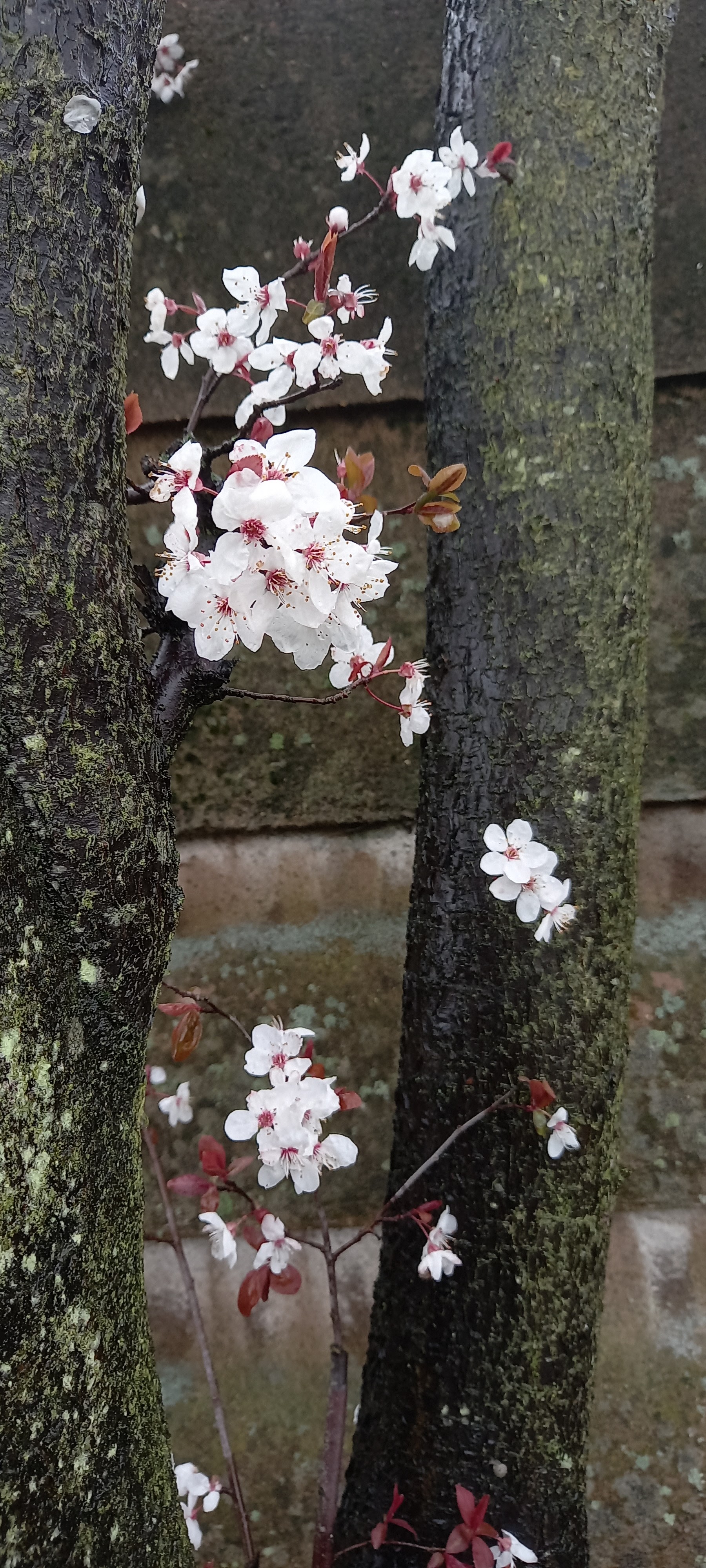
Photo by Sheila Webber: rain-soaked apple blossom, April 2012.
- Greyson, D.L., Cunningham, C. and Morgan, S. (2012) "Information behaviour of Canadian pharmaceutical policy makers, Health Information and Libraries Journal, 29 (1), 16–27.
The journal home page is http://onlinelibrary.wiley.com/journal/10.1111/%28ISSN%291471-1842
Photo by Sheila Webber: rain-soaked apple blossom, April 2012.
Jane Secker new Editor of JIL
Dr Jane Secker has been announced as the new Editor of the Journal of Information Literacy.
Labels:
Information Literacy
Subscribe to:
Posts (Atom)