Showing posts with label Poland. Show all posts

Thursday, September 25, 2025

Combining Information Literacy and Metaliteracy to Advance Transnational Group Learning about AI #ECIL2025

screenshot of IPILM youtube channel

This is Sheila liveblogging on Combining Information Literacy and Metaliteracy to Advance Transnational Group Learning about AI. Learning Process and Learning Outcomes, Results from a Case Study authored by Joachim Griesbaum, Stefan Dreisiebner, Emina Adilović, Justyna Berniak-Woźny, Subarna Bhattacharya, Jini Jacob, Tom Mackey, Tessy Thadathil at the ECIL conference. It was presented by Mackey, Griesbaum and Dreisiebner. They are reporting results from an intercultural course part of the IPILM project, which involves institutions in India, Poland, Germany, USA, Austria and UAE. They noted that the course was worthwhile but demanding, requiring motivated students. The project https://ipil.blog.uni-hildesheim.de/ fosters intercultural learning whilst learning about information literacy and metaliteracy. It is an example of Collaborative Online International Learning which involve course co-creation, interactive learning, accessibility, and students based at the home institution. There is an explanation of COIL here). The course combines information literacy and metaliteracy in a seamless way. Learners work in team find synthesising content and evaluating tools they are using, the learners also have to reflect on themselves and their learning. Outcomes include critical thinking, knowledge production and collaboration.
The concept of IPILM involves the community (including the LMS and other collaborative tools), the learning cycle (course structure) and transnational groups (including learners from at least 2 locations). The idea emerged from the collaboration between universities in Germany and India, and developed in terms of course design (to have a winter and summer course) and to the different countries. This year there were 7 instructors, and 34 students from India, Poland, Germany, USA, Austria, UAE.
They onboard students, then there is the main part where the students collaborate and then a public online conference where the student groups present. The students, who are from different disciplinary backgrounds, are given some initial readings and then the collaborative knowledge construction starts. They build up their knowledge on the allocated topic then present and discuss interim results. Each group has to produce an artefact that addresses the problem and which is accessible to people outside academia. This is usually a video. There is iterative discussion and feedback and then the presentation.
The learning topics addressed by the groups all focused on AI this last time. e.g. AI impact on democracy; Politics; AI impact on local culture: presentations are here.
For their project they have research questions about the IPILM concept and the learning success of students. For the first aspect - they have run IPILM for 7 years and with no funding. They just did per and post surveys and asked learners to write reflections. They only had 1 student dropout after onboarding. The students said they were motivated. 10 out of 19 respondents had had group conflicts, which were addressed by course tutors. The learners judged course structure as good and teaching support as very good. For learning outcomes, they assessed IL and intercultural competency pre- and post-course. There was not a significant increase in IL but was in intercultural competence. This all seemed to show that the IPILM was feasible and enjoyed by the students.

Wednesday, September 24, 2025

“Help RobAI Fix Its System Bug”: An Escape Game Assisting Teaching AI Literacy #ECIL2025

Sheila again logging at ECIL 2025 “Help RobAI Fix Its System Bug”: An Escape Game Assisting Teaching AI Literacy presented by Zuza Wiorogórska (University of Warsaw, Poland), Tatiana Sanches (Universidade de Lisboa, Portugal), Zuzanna “Zu” Sendor (University of Warsaw Library, Poland).
This was a comparative exploratory study with Polish  and Portuguese students. Step 1 was ChatGPT exercises (defining IL in English and asking for articles; asking for info on the instructor; writing an introduction to a topic; shorten a text and translate to your language; summarise english task and assign keywords; and asking ChatGPT to convert a bibliography from one style to another). For each ChatGPT task the students had to assess the results from ChatGPT. The assessments varied between the cohorts from the two countries.
The students found ChatGPT useful for some tasks e.g. translating texts, generating abstracts but also had concerns e.g. innaccurate content, impersonal tone of replies. The overall view was the view that it could support academic but must be used with critical thinking and human oversight.
The second step was an Escape Game. They developed the game themselves with an application. Mission 1 was understanding what influences CHatGPT's responses and how it can support academic work. The 2nd challenge was about truthfulness and the 3rd challenge was identifying true and false statements about GenAI's capabilities and limitations. If you succeeded you got a number that enabled you to tackle the next mission. They had a cute cartoon robot (RobAI) accompanying them, and had, for example, drag and drop answers, answers where you had to choose either the true or false statement. The robot cried if you failed. When you won and fixed the robot it was happy - the students liked this aspect.
The advantage of the game was reinforcing key concepts and enabling reflection on integrating AI in a critical and ethical way. There were some cultural differences between the two cohorts (who were in 2 countries and also one on campus and one online). Future research could explore long term impact and cross-disciplinary use. They gave a link for the game as https://tinyurl.cm/ujp7y278 though it wasn't loading for me (I will try and check up on that).

Monday, September 22, 2025

“Of course, I can do it – I just don’t want to!”: An Emotional and Structural AI Readiness Scale #ECIL2025

Pam McKinney here, live-blogging from the ECIL conference in Bamberg. This was the fourth presentation in the first set of parallel sessions on day one, this is going to be a conference packed with new ideas and research! Anna Mierzecka, Małgorzata Kisilowska-Szurmińska, Marek Deja, Karolina Brylska from University of Warsaw, Poland and Jagiellonian University, Poland collaborated to design an AI readiness scale for academic activities. They used the Technology Acceptance Model to inform the study, which covers concepts such as the perceived usefulness of technology to predict how it will be adopted. They also drew on concepts of critical information literacy and motivational and situational contexts of technology adoption to inform the study. The AI readiness scale covered four areas of academic activity: 1) conceptual tasks, 2) analytical tasks, 3) discussion and conclusion tasks and 4)editing tasks. 

Academic staff at the two universities were surveyed about the 43 factors included in the preliminary model, and 69 complete responses were received. This probably represents a self-selection bias in that the people who responded already had some interest in AI use. The analysis identified three causes of AI readiness: access satisfaction, falling behind and perceived pressure. Job stress and digital change pressure reduced motivation to use AI. Institutional or peer pressure can increase readiness to adopt AI. Academics were most open to using AI for analytical or editorial tasks, but were reluctant to use AI for creative tasks. The authors were keen to stress that this is a preliminary analysis only, and they intend to extend the research in the future.


Photo: Bridges in Bamberg (Pam McKinney)


From Action to Awareness: Ethical AI Literacy in Higher Education #ECIL2025

Pam McKinney here, continuing the live-blogging from the ECIL conference. This presentation was from Monika Krakowska, Magdalena Zych from Jagiellonian University, Krakow, Poland, the lovely location for the ECIL conference in 2023. Monika and Magdalena spoke about their research to understand ethical IL literacy in Higher Education. They wanted to diagnose LIS students' practices in working with Gen AI, and the gaps in students' real-world practices and the ACRL framework for IL. The research questions focused on how students understand authorship and disclosers of AI text production, how they assess the credibility of AI-generated responses and how criticality manifests in AI use. They used selected ACRL frames: information has value, authority is constructed and contextual; research as inquiry and searching as strategic exploration, and tried to understand how they could be reinterpreted in the context of GenAI. 

84 LIS students at various levels of education took part in the research, they had to choose one of three tasks with ethical AI use dilemmas, modelling three roles: science fiction writer, information broker and podcast creator (e.g. analyse the consequences of using AI in video games). The team analysed the chat log from students' interactions with ChatGPT, and analysed this thematically, using the ACRL frames to support coding. Students mostly did not acknowledge the authorship of ChatGPT, did not question the credibility of the information provided by the AI, and did not identify bias. There was little iterative, purposeful prompting and searching, the prompt engineering was not very successful. Simple single-step requests/prompts dominated the chat logs, and usually focused on the format of the responses rather than the content. 

In terms of the ACRL framework, they found that there was a need to examine AI use and how the ACRL framework could be updated and developed. Coming from the research are three central points: the need to recognise non-human contribution, bias and hallucination literacy is needed and prompt engineering competency is needed. The research took place in one university and there is an appetite for extending this to other universities. Future-ready IL must be AI-aware, AI-critical and AI-responsible.

Photo: rainy Monday morning in Bamberg (Pam McKinney)


Monday, October 09, 2023

#ECIL2023 Maturity Model as the Tool For Information/Data Literacy Assessment

 Marek Nahitko from the Jagiellonian University here in Krakow first presented a definition of maturity models as tools to support the assessment of current and future states of a process, person or group. They contain the most important elements of efficiency in the system, and contain successive levels of a desired path. They are usually presented in the form of a matrix where rows describe the dimensions of maturity and the columns describe the levels. It is possible to identify areas for improvement by examining the intersections between rows and columns. Rubrics are used to evaluate information and data literacy, and these are normally used to support the assessment of various activities and develop scoring schemes. There are a lot of similarities between rubrics and maturity models, rubrics are a type of maturity model that focus specifically on the user of information and their training needs.  Marek’s research focused on determining the place and role of digital literacy in existing research data management services maturity models. Dimensions were divided into 4 groups, and compared with a specific technology acceptance model. User characteristics were the least prevalent group, and system characteristics were the most prevalent group. One of the indicators if information system maturity is the information and digital literacy of its users, so research data management developers need to consider user education as an aspect of service development 

Information Mourning Among Retired Faculty Members #ECIL2023

Photo by Sheila Webber Krakow in autumn

Sheila here, liveblogging again from the European Conference on Information Literacy (ECIL) in Krakow, Poland (this is Sheila) is of Information Mourning Among Retired Faculty Members presented by Paloma Korycińska (abstract is here). As someone approaching retirement this had caught my attention! Korycińska picked up on an image and a quote from the keynote speech to emphasise that she was talking about pain and potential healing.
Her research was originally about information behaviour of retired Polish academics, but as she started to carry out her research it emerged that the academics' experience strongly resembled mourning and bereavement. In 2020 she discovered that
- Information and data loss may be preceived and lived as a kairotic change
- retirement may be lived as a kairotic loss
- kairotic change and kairotic loss can lead to experience of mourning and bereavement
Korycińska explained that Kairos was the Greek god of thunder, symbolising a single moment of opportunity and also a sudden unexpected event that erases your existence. Death is not the only type of kairotic event, it can be anything where it feels like your life has been destroyed and you have to be resilient and reconstruct.
Korycińska characterised kairotic (information) loss as: a borderline event; expected and announced, yet unbearable; erasing/ reconfiguring existence; with no template or recipe for coping; no turning back from it; "what was yours does not belong to you any more"; it has to be embraced.
The toolkit used to explore information loss was Sonnenwald's Information Horizons (as modified by Huvila), and then for the revised research project it also included tracking resilient information behaviour, undertaking indepth interviews (note taking only) with 12 retired Polish academics. As well as noting modifications to information horizons, the researcher also undertook metaphor mapping.
Korycińskanoted that she had a providential encounter with a professional therapist at this stage, who warned her about the danger both to participants and researcher in undertaking research which arouses such painful emotions.
For the new study she has a new recruitment method, is undergoing training about how to undertake this kind of research, is taking advantage of supervision/mentoring; is doing indepth biographical interviews with transcription; doing information horizon drawing; will undertake discourse analyis and her interpretation will focus on remedies.
She alerted us to Bowlby's and Parkes' four phases of bereavement (numbness; yearning; disorganisation & despair; Reorganisation. There are also the 5 stages of mourning: denial, anger, bargaining, depression, acceptance. She also presented a diagram showing a bereavement negotiation scheme.
Finally metaphors her particiapants used included: being dis-embedded; being "confronted with my finitude. alone in singularity". A final word "There is no need that scholars should live retirement as an irreversible loss triggering the process of bereavement"
This talk resonated very much with me, which is something I might blog about when I'm not liveblogging. Another delegate (who has a more receptive culture at their institution, it sounded) was talking about how and whether their individual post-retirement scholarship was still relevant and valued by the profession and community of scholars. He mentioned the feeling of being cut off from information sources, from the networks and so forth. The mourning is connected to loss of identity. Korycińska felt that there could be small steps that institutions could take in order to avoid such feelings of loss - she is aiming to discoverthese through her research.
Photo by Sheila Webber: Krakow in autumn

Monday, August 02, 2021

New articles: Data Literacy; the WHY method; IL of first gen students; Librarians as teachers

The latest issue of open-access College and Research Libraries (vol 82 no 5) at https://crl.acrl.org/index.php/crl/issue/view/1602/showToc has the following articles:
- Making Sense of Student Source Selection: Using the WHY Method to Analyze Authority in Student Research Bibliographies by Frank Lambert, Mary Thill, James W. Rosenzweig (WHY= Who wrote each source, How it was edited, and whY it was published)
- Exploring Social Sciences Students’ Perceptions on Information Literacy and the Use of Mobile Technologies in Higher Education by Maria Pinto, Dora Sales, Rosaura Fernández-Pascual, David Caballero-Mariscal
- The Impact of Basic Data Literacy Skills on Work-Related Empowerment: The Alumni Perspective by Marek Deja, Aneta Januszko-Szakiel, Paloma Korycińska, Paulina Deja
- Assessing the Information Literacy Skills of First-Generation College Students by Sarah LeMire, Zhihong Xu, Douglas Hahn, Valerie Balester, Leroy G. Dorsey
- Open but Not for All: A Survey of Open Educational Resource Librarians on Accessibility by Teresa Auch Schultz, Elena Azadbakht
- Using Machine Learning to Predict Chat Difficulty by Jeremy Walker, Jason Coleman 

The previous issue vol 82 no. 4 included
- Epistemology of Teaching Librarians: Examining the Translation of Beliefs to Practice by Mary K. Oberlies, Maoria J. Kirker, Janna Mattson, Jason Byrd
- Preparing the Instructional Librarian: Representation of ACRL Roles and Strengths in MLS Course Descriptions by Sandra J. Valenti, Brady D. Lund
Photo by Sheila Webber: Hydrangea July 2021

Wednesday, June 09, 2021

New articles: Workplace information literacy; Using wikipedia; IL teaching & Web 2.0

The new issue of open access journal Journal of Information Literacy (vol. 15 No. 2, 2021) contains the following (plus book reviews) at https://ojs.lboro.ac.uk/JIL/issue/view/225

- Information literacy of Polish state administration officials in the context of the concept of "good governance" by Zbigniew Osiński.
- Workplace information literacy by Gunilla Widén, Farhan Ahmad, Shahrokh Nikou, Bruce Ryan, Peter Cruickshank. ("This paper brings forward three separate studies, conducted by the authors, highlighting different workplace contexts: small and medium enterprises; universities; and community councils.")
- Exploring effective information use in an insurance workplace by Charles Inskip, Sophia Donaldson.
- Knowing and doing by Ellen Nierenberg, Torstein Låg, Tove Irene Dahl ("3 quantitative measures were developed and tested with several samples of university students to assess knowledge and skills for core facets of IL. ... the tools indicated low to moderate correlations between what students know about IL, and what they actually do when evaluating and using sources in authentic, graded assignments.")
- Web 2.0 tools and information literacy instruction in UK university libraries by William Shire, Pam McKinney.
- Enhancing students’ professional information literacy by Angela Joy Feekery, Katherine Chisholm, Carla Jeffrey, Fiona Diesch (reports on development of an online module).
- Getting to work by Alexandra Hamlett ("The article highlights how collaboration between a librarian and an instructor of a career centered course influenced instructional design for IL instruction in their courses.")
- Using Wikipedia to teach scholarly peer review by Paul Anthony Thomas, Matthew F Jones, Spencer G Mattingly.
Photo by Sheila Webber: wild June rose
.

Tuesday, February 09, 2021

Crisis Situations and Information Science

A special issue of Polish open-access journal ZIN (vol. 58 no. 2A(116A) focuses on Crisis Situations and Information Science. It includes:
- The Impact of COVID-19 on the Information Literacy of Business Sharing Group Users by Dorota Rak
- The Use of Information and Communication Technologies in Academic Libraries in a Crisis Situation: Experiences of the University of Warsaw Library by Anna Kamińska, Anna Książczak-Gronowska, Zuzanna Wiorogórska
- Information Behavior in Crisis Situations by Monika Krakowska
In Polish and English. Click on the UK flag, top right, to get the English version: http://ojs.sbp.pl/index.php/zin/issue/view/75

Wednesday, November 11, 2020

New articles: underserved students; comparing student competencies; collaboration

Foskey, A., & Roper, A. (2020). Constructing authority: Using the ACRL Framework to connect with underserved students. College & Research Libraries News, 81(10), 508. https://doi.org/10.5860/crln.81.10.508 "At the community college level, rethinking library instruction in light of the ACRL Framework for Information Literacy for Higher Education often feels like a puzzle. ... In this column, we outline our library’s outreach efforts to engage with two intersecting and underserved groups: returning adult students and students in the LGBTQ+ community.  ... At our library, engaging with the Framework provided an opportunity to design innovative instruction and programming."

Głowacka, E., Kisilowska, M., & Paul, M. (2020). Patterns of Differentiation of Students’ Competencies: A Comparative Study. College & Research Libraries, 81(7), 1061. https://doi.org/10.5860/crl.81.7.1061 "The aim of the project is threefold. First, it offers a comparative analysis of the information literacy skills of Polish and Spanish students, regarding both their self-assessment and belief in the importance of information literacy. Second, it focuses on differences and unique IL needs of students of courses rooted in social sciences and/or humanities. And third, due to these differences, it discusses the role of academic librarians in profiled IL training, integrated with the specific courses. Quantitative methodology was applied. The comparative study covered subgroups of humanities and social science students from Poland and Spain. Competencies in information searching, processing, evaluation, and communication/dissemination were taken into account. The results indicate some common ways of perception of valuing information competencies and major differences in assessment of IL self-efficacy. Students’ reluctance to visit libraries is another argument to enhance profiled IL training being realized in close cooperation of academic librarians and the faculty."

Tran, N., & Chan, E. (2020). Seeking and Finding Research Collaborators: An Exploratory Study of Librarian Motivations, Strategies, and Success Rates. College & Research Libraries, 81(7), 1095. https://doi.org/10.5860/crl.81.7.1095 "This exploratory study explores librarians’ motivations, strategies, and their perceived or relative success rates for finding collaborations on research projects or library initiatives. Survey results indicate that the most prevalent motivators for seeking a collaborator were to acquire expertise that one lacked, sustain research interest, and obtain a sounding board. Workplace culture, being open to collaborations, and attending conferences and meetings were the top selected strategies for finding research collaborators with the highest relative success rates."

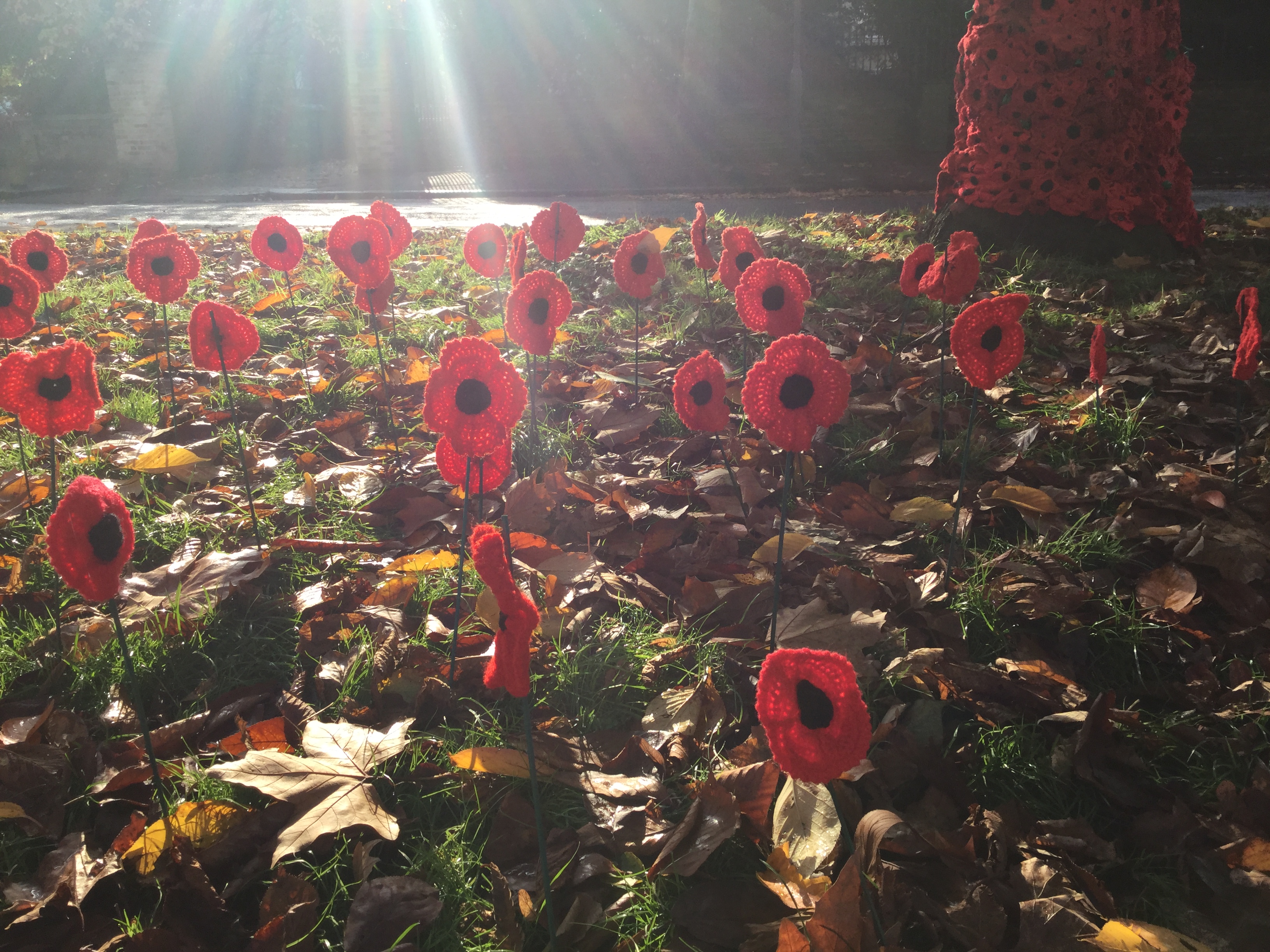
There is also a book review of Julien, H., Gross, M. & Latham, D. (2020). The Information Literacy Framework: Case Studies of Successful Implementation. Lanham, MD: Rowman & Littlefield (ISBN 978-1-5381-2144-3) Photo by Sheila Webber: remembrance poppies and sunlight, November 2020

Monday, October 17, 2016

The framework catalogue of digital competences #ECIL2016


After a few days rest, I'll start to catch up with posts from the European Conference on Information Literacy 2016 which took place last week. A presentation given by Justyna Jasiewicz, Małgorzata Kisilowska and Anna Mierzecka on Relationality is the Key: The Family of Digital Competencies’ Catalogues and Their Potential Applications described initial research (quite substantial) which had gone into developing a set of digital competencies frameworks in Poland. There is a general framework, one aimed at over 50s and one aimed at Small and medium Sized Enterprises (SMEs). There is an English version of the general Framework catalogue of digital competences here: https://mc.gov.pl/files/ramowy_katalog_kompetencji_cyfrowych_final_ang_jj_2.pdf
There is a Polish site here. A distinguishing feature of the framework is that it identifies benefits (ones which had been identified in the research study by participants) and then links the skills to the benefits, which is a neat idea.

Wednesday, September 07, 2011

Polish translation of IL guidelines

Kompetencje informacyjne w procesie uczenia się przez całe życie Wytyczne have just been published: a translation into Polish of the Guidelines on Information Literacy for Lifelong Learning
by Jesús Lau. The translation team was: Ewa Hajdasz, Matylda Filas, Justyna Jasiewicz, Renata Piotrowska, Ewa Rozkosz, Grzegorz Winnicki, Zuza Wiorogórska.
http://www.sbp.pl/repository/SBP/sekcje_komisje/komisja_ds_edukacji_informacyjnej/Wytyczne.pdf
Photo by Sheila Webber: Autumn anemones, September 2011

Tuesday, June 21, 2011

EMPATIC report: IL and virtual mobility

In this post on the EMPATIC project seminar on Information Literacy (IL) in the Schools Sector, held in Krakow, Poland I will summarise some points from about virtual mobility, and examining IL and information behaviour in people having a virtual mobility experience.
Monika Krakowska’s (Jagiellonian University, Poland) talk was entitled Information Literacy development in the international environment of virtual mobility. She started by outlining her ideas on IL. Krakowska had started with the model in The ANZIIL framework (where IL is within independent learning and, more broadly, within lifelong learning). She had added to this model by placing it within a wider framework that included the influence of social, political, individual, environmental etc. issues as well as the impact of scientific and technical developments.
Krakowska went on to discuss Virtual Mobility. This starts with the concept of “mobility” which is important in the European Union context (where encouraging physical mobility, to experience different cultures, is the goal of a number of prgammes). Virtual Mobility is supposed to have some of the impact of physical mobility (in exposing people to different cultures, societies, languages and so forth) but with the use of technology. Virtual Mobility can be implemented in school sectors as well as higher education, and in the educational context it can be “a kind of academic pilgrimage”.
Krakowska has been involved in a virtual mobility initiative, TeaCamp (http://www.teacamp.eu/), with partner Higher Education institutions from Latvia, Lithuania, Portugal, Spain, and Finland, as well as her own university in Poland. There were 14 teachers and 29 students who were studying education or who aimed to work in school libraries (though only 13 students completed the programme). It included modules on learning strategies, cultural models, IL, electronic assessment strategies and others to do with teaching. Krakowska encountered new types of student and student expectation, but the students did not necessarily have good IL skills. She has carried out a case study of this programme, using observation. There was formal communication (including video conferencing and email), and informal communication (including Facebook, Skype and many other channels).
Conclusions included that the students had little awareness of IL except associated with library matters, and did not display many IL skills. They tended to fall back on a few resources, already known to them, and not be so keen on exploring a lot of new ones. This highlights the need for teachers to present new resources. “VLHE module has developed different IL skills (media, digital, library literacy, cultural awareness etc.) that were important for raising IL awareness of teachers, scholars, pedagogy students and LIS students”
Photo by Sheila Webber: Krakow square, June 2011

Friday, June 10, 2011

EMPATIC report: school library initiative in Southern Poland

In this post on the EMPATIC project seminar on Information Literacy (IL) in the Schools Sector, held in Krakow, Poland on 8 June, I will report on the talk by Hanna Batorowska, who had led a long term and successful initiative in school libraries.
Batorowska (Krakow Pedagogical University) talked about Information Literacy Development in Schools. She started by tracking the development of the Polish concept of information literacy (IL). She saw it as both a research area and a set of skills (which meant developing awareness of information competencies). Development of IL policy depended on developing the concept of IL, and she advocated a wider understanding of IL as a discipline. In Polish there are many terms that are used in the area of information and digital literacy, but she stressed that IL was not just about digital matters. She thought the sociological and political aspect was important to develop policy in the area. She talked about some Polish commentators. Waldemar Furmanek, for example, took an IT approach, which she did not agree with. She advocated the concept of Information Literacy which stresses Information Culture (she used the Polish term Kultura Informacyna for IL) . She also mentioned the continuum model of information by Katarzyna Materska.
Batorowska talked about how information literacy was approached in one region of Southern Poland, which she was using as an inspiring case study. She felt that IL initiatives should be created from grass roots, regionally (rather than taking a top-down, one-size-fits-all approach). The initiative she described included giving IL education to trainee teachers (including IL projects), to produce a generation of teachers who could understand IL. The initiative also needed the cooperation of the local authorities (in charge of education) and they had been very supportive. They also had support from the Ministry of Education, particularly in the area of digital literacy. There was cooperation with other agencies, such as local museums. They had organised were national and regional activities, which helped to develop a lobby for information literacy.
Batorowska felt that you could only implement a good IL strategy when you had prepared the ground strategically. All of the initiatives she described took 10 years to fulfill: this was a long-term, not a “quick fix”, approach. It had been particularly important to find a Head of School who realised the importance of IL, though having official funding to support the library activities (focused around a new multimedia library) was also vital, as was development of IL-aware teachers. Promotion and development were active and ongoing, with a lot of publicity for the new & information literacy activities, including in the local press.
One of Batorowska's publications is:
Batorowska, H. (2009) Kultura informacyjna w perspektywie zmian w edukacji. Stowarzyszenia Bibliotekarzy Polskich. ISBN: 978-83-61464-10-5 (which Google translates as: Information culture [I think that should be "Information Literacy"] in the perspective of changes in education)

Wednesday, March 23, 2011

International Workshop on Information Literacy Development in the School Sector

There is an International Workshop on Information Literacy Development in the School Sector taking place at Jagiellonian University in Krakow, Poland, on 8 June 2011. "The Workshop aim is to discuss goals, strategies, models and methods of the Information Literacy (IL) development in the school learning sector. The starting point for the discussion will be selected examples of the appriopriate IL good practices in the education systems in Europe and existing Information Literacy standards for schools of different levels
and types. There is more information at http://empat-ic.eu/eng/Events/International-Workshop-Poland
This is part of the EMPATIC (Empowering Autonomous Learning Through Information Competencies) project. This will "create a framework for the effective exploitation of the results of the Lifelong Learning Programme (LLP) and related programmes relating to Information Literacy. Its main aims are to: improve current perceptions among policy makers in Europe regarding the role, value and implementability of Information Literacy in learning; and to pave the way for the extended piloting and eventual mainstreaming of information competencies in all levels of education and their integration in the reform of curriculum frameworks. There is more information about EMPATIC here in English and here in Polish.
Photo by Sheila Webber: Spring in Sheffield, March 2011

Thursday, November 26, 2009

Alfabetyzacja Informacyjna

There is a new blog on Information Literacy, in Polish, Alfabetyzacja Informacyjna. The blog is produced by Ewa Rozkosz (or Saba Pearl in Second Life, which is where I met her recently!) The blog is at http://alfabetyzacjainformacyjna.
blogspot.com/

Photo by Sheila Webber: late autumn, November 2009 (a rare sunny moment)

Monday, March 23, 2009

Visitors from Poland

Last week we were happy to host Zuzanna Wiorogorska and Agnieszka Wrobel, from the University of Warsaw Library, in my Department , supported by an ERASMUS grant (the previous week they were with Sheffield University Library). They observed some of our classes, including the Information Literacy Research class that I coordinate (and which this week featured Moira Bent talking about her research, and her experience as a practitioner-researcher). Zuzanna and Agnieszka said that at present there is no specific phrase for Information Literacy in Polish and there isn't a conference devoted to information literacy (although the topic is covered in other conferences).

Monday, January 26, 2009

Information Literacy at the cross-road of Education and Information Policies in Europe

A new book: Basili, C. (Ed) (2008) Information Literacy at the cross-road of Education and Information Policies in Europe. Rome: CNR. (ISBN: 978-88-8080-096-5)
Chapters are: Information and education policies in Europe: key factors: influencing information literacy academic policies in Europe (Basili); Theorems of Information Literacy (Basili); Development of information-related Competencies in European ODL Institutions (Virkus); Information literacy programmes in higher education in the Czech Republic: The path of theory and practice (Landová et al); France: the courage to say "Documentation" (Reggiani); Information literacy activities in Germany between the Bologna process and the web 2.0 (Hapke); Joined Planning and Development - Customized Solutions: the North-Rhine-Westphalian Network on Information literacy (Nilges); Information literacy as National Assets: Individual and Cooperative Activities (Katsirikou); Information literacy education of pupils and students in Poland - diagnosis of the educational situation (Cisek et al); Information literacy and Romanian Higher Education System (Rapeanu); The European Area of Higher Education (EAHE), Information literacy and Learning & Research Resource Centers: a triangle of excellence for the development of library services in Spanish universities (Cuevas Cerveró & Vives i Gràcia); Information literacy from the learner's perspective: a UK study (Andretta)
Main information is here: http://www.cnr.it/sitocnr/Iservizi/Pubblicazioni/
Catalogopubblicazioni/Catalogo.html?voce=13&id=612

The price is 20 Euro and the order page is here:
http://www.cnr.it/sitocnr/Iservizi/Pubblicazioni/
Catalogopubblicazioni/ComeAcquistare.html
(unfortunately it is payment by bank transfer)