Showing posts with label Students. Show all posts

Monday, March 30, 2026

Links as Evidence, Ads as Clues: Undergraduate Source Evaluation Strategies #LILAC26

a registration desk with a banner saying LILAC information literacy conference and folding panels for notices

I will be liveblogging from the LILAC information literacy conference, which started today and which is at my university, Sheffield University. Dr Pam Mckinney may also do some liveblogging, but not as much as usual as she was a key member of the organising committee and is super busy with that!
My first session is Links as Evidence, Ads as Clues: Undergraduate Source Evaluation Strategies, presented by Alyssa Russo and Lori Townsend (University of New Mexico, USA), also authored by Amy Jankowski and Stephanie Benee. The abstract is here. The slides are at https://bit.ly/ccg_lilac As I'm liveblogging, these are my immediate impressions.

They explained they were grappling with the problem that students wanted to plunge into content without paying attention to the "packaging" - what kind of information it is e.g. article, report (the "container conundrum"). It was easier to identify information genres when pre-digital and gen-AI has intendified the container conudrum, with faked information getting more difficult to detect.
They wanted to find out what the students were doing, so undertook some research. Research questions included how students perceive info online, how do they decide what to trust, what do they consider when making evaluative decisions. The participants were 15 18-23 year old undergraduates. They were 60% female and the demographic mix was a reasonable match to the UNM population. They carried out semi structured interviews, participants were prompted with possible search topics, then they did google searches and followed up websites from that, speaking aloud and responding to questions as they went along. The researchers did thematic analysis with 2 rounds of coding - some data was collected several years ago before gen AI as life, COVID etc. intervened and the analysis is not yet complete.
The presenters showed emerging findings. This included presenting some video clips e.g. Evergreen was saying why they thought an item on the National Geographic website was scholarly (that it was on a site with reputation, that it had quotes, that it was giving data points, that it gave direct links to sites that were .gov) Townsend noted that the presence of links was often treated as like references, and participants saw .gov (or international equivalents) as being more trustworthy. The researchers wanted to know whether students could recognise genres - one student identified something as like a "yelp page for a dog park" which was pretty accurate.
Another example was a participant talking about how they judged sites by the type of adverts e.g. if the adverts were off topic or loud, that put them off, but if the ads were related to the content on the page then that was seen as more trustworthy. Townsend said that participants reacted adversely if there were prominent, loud, pop-up, bait & switch etc. The participants were thinking about WHY the adverts were in that website. The participant Fir gave reasons for why they would trust the website's creator, based on the detailed information (e.g. personal details, a calendar) and the design quality "I think she's actually trying to help people". Hemlock similarly said "Their main goal is making a difference rather than like drawing the eye".
Participants saw the lived experience, with personal stories, as being more trustworthy. Evidence of purpose was therefore important. Talking about an equality website, looking at the list of board directors, participant Hemlock felt that a foundation that drew on personal experiences was more reliable. Hemlock had less trust for a site that emphasised data (bar charts etc.) rather than personal experience. Elm trusted a website that "provides an area for people who are interested to be able to share their stories" - this was seen as a community which was less biased. This issue of bias detection came up, and "opinions" were seen as bad (e.g. one gave an example of not trusting posts from Twitter or Facebook; another thought that big national news site were biased, trying to attract viewers). Another participant talked about why they trusted an article from the Guardian, but said they thought that complete impartiality wasn't possible.
Students reported that they did sometimes check up on things, and whether did depended on the situation. For example Cottonwood said they would check up on things if it was for work, because it might affect people, whereas if it was a university project they might not. However, Birch said that they would check up if it WAS for a university project. Russo noted how the students also brought their own experience (e.g. Birch recognised the Mayo clinic as trustworthy, as her grandmother had been a patient at a Mayo clinic).
In terms of teaching implications, the presenters advocated starting with "what kind of thing is this?" "what is it trying to do?" type questions. Knowing that "scholarly is good" does not help them tell whether something is scholarly or not. Acronyms like SIFT or CRAAP are rather too simplistic, and you have to acknowledge that source evaluation is complex. However, it can be fun working with the students - as they found in this project.
Photo by Sheila Webber: registration desk before registration started

Thursday, January 22, 2026

New articles: Relationships; Data Privacy; Burnout

a bare christmas tree tucked behind green rubbish bins
The latest issue of open access College & Research Libraries News (volume 87 issue 1) includes:
- Social Network Analysis of Liaison Librarian Relationships by Ellen Hampton Filgo, Joshua Been (investigating "the relationships between liaison librarians and faculty at a university library.")
- Interventions for Reducing, Preventing, or Overcoming Librarian Burnout: A Scoping Review by Natalie Logue, Jessica C. Garner, Stephanie Hendren
- Search Data Privacy in Academic Libraries: Qualitative Perspectives of Members of Marginalized Groups by Laura W. Gariepy
- A review of the 2-volume Training Library Instructors (which I blogged briefly in 2024): the reviewer concludes after a thorough review of both volumes "Regardless of the level of instructional experience, reading these books is a step toward building one’s own instructional capabilities, and the two volumes are useful to library professionals and library learners alike."
Go to https://crl.acrl.org/index.php/crl/issue/view/1689/showToc
Photo by Sheila Webber: Christmas tree thrown out, no. 6 (hiding behind the bins), January 2026

Tuesday, December 23, 2025

Recent articles: Students using TikTok and ChatGPT for information

a front door numbered 23 with a Christmas wreath

 - Brookbank, E. (2025). Is TikTok the new Google? How college students use TikTok to search for information. The Reference Librarian, 1–27. https://doi.org/10.1080/02763877.2025.2554874   
- Shuhas, E. & Forte, A. (2025). ChatGPT is actually my friend: Understanding the information behavior of university students interacting with AI chatbots. In Companion Publication of the 2025 Conference on Computer-Supported Cooperative Work and Social Computing (CSCW Companion '25). Association for Computing Machinery, New York, NY, USA. (pp.282–287). Association for Computing Machinery. https://doi.org/10.1145/3715070.3749239
Photo by Sheila Webber: Christmas wreath at number 23, December 2025

Monday, November 17, 2025

New articles: Health students information behaviour; Government information use; Interpreting positive feedback

two pink roses and a pink rosebud on a climbing rose with a park setting in the background

The latest issue of the open access journal Evidence Based Library and Information Practice, Vol. 20 No. 3 (2025), includes:
- Feel Good Incorporated: Using Positively Framed Feedback in Library Instruction Course Evaluations Using a Survivorship-Bias Lens by Benjamin Grantham Aldred
- "We Don't Like Unanswered Questions”: Information Practices of Students Transitioning to Clinical Education by Nena Schvaneveldt ("Students’ information practices are characterized by three themes. They are motivated to build competency to provide patient care; they operate in dual roles as student and clinician; and they navigate ambiguity, uncertainty, and doubt. They were able to describe the way they experienced information, problems they solved, and the development over time."
- Government Information Use by First-Year Undergraduate Students: A Citation Analysis by Sanga Sung, Alexander Deeke
Go to https://journals.library.ualberta.ca/eblip/index.php/EBLIP/issue/view/1974
Photo by Sheila Webber: autumn roses, October 2025

Wednesday, April 16, 2025

Nurturing the Next Generation of Professionals: Transformative Peer-Based Student Mentoring for Career Development #LILAC25

Pam McKinney here live blogging from the final day of the Lilac conference in Cardiff. Meredith Knoff from Indiana University Bloomington presented on a peer-based learning initiative in the library. Peer-based learning has long been used in academic libraries - peers are seen to be more approachable, and both learners and peer teachers gain a lot from the experience. The research desk in the main library focuses on collaborative learning and support across different support areas in a service hub, e.g. IT, financial wellness, etc. The research desk supports students with inquiry projects and searching for information on an individual basis at any stage of their research process. Students can make appointments or drop in, and they offer in-person and online appointments. The desk is staffed by graduate assistants titled "research assistants" to reflect the higher nature of their work on CVs when they leave the university. The majority of the research assistants are studying in the library programme but include masters and PhD students from other disciplines. 

The desk service is based on 3 learning theories: a humanist person-centred teaching perspective that emphasises choice and addresses the whole person. Secondly it is based on a dialogic learning perspective drawing on the work of Paolo Freire. This positions the librarian as just as much a learner as the students, on the same level, and the student and teacher actively participate in the learning each other. This encourages students to ask different kinds of questions. These one-on-one consultations support the students in developing their questioning techniques. The third philosophy is based on critical reflection, using metacognition to help learners connect their experiences to academic content. This theoretical basis helps students develop higher-level learning strategies that are transferable to other contexts.

The training for the research assistants is a key part. They meet weekly as a cohort and develop relationships with each other. They use activities such as role-playing and discussion to reflect on their own practice and use this as a means to think about how to support others. They also receive specialist training from librarians, e.g. from the Arts librarian. Research assistants are expected to act independently when working at the desk, so the peer network is really important for developing confidence. They are asked to reflect on their practice in research consultations and identify what went well and what could be improved.

Research assistants complete a self-reflection after each consultation, and these are collected, anonymised and analysed by library staff so they can monitor the practices of the research consultation and improve the training for the research assistants. Library staff have identified three key attributes of a successful consultation: Interpersonal communication, source selection and evaluation and self-reflection, with 3 levels - beginner, advanced and expert. 

Meredith shared an example of a self-reflection, which demonstrated a deep reflection on why a particular consultation did not go very well. It demonstrated that the research assistant had engaged with dialogic communication and had developed an advanced mode of engaging with the students and attempting to develop their search practice. Meredith shared another example of a research assistant reflection that was very perfunctory and didn't demonstrate that the research assistant was able to develop a dialogue with the students. One point of learning is that students bring a lot of emotion to their consultations, and it's OK to let the students vent their frustrations and be sympathetic listeners - this is as useful for some students as supporting them in developing a detailed search strategy. 

In the future, they will use this consultation reflection to inform strategic service development. There is potential for this service to be expanded, particularly to develop librarianship students, which will support them to develop as reflective practitioners. There is also the opportunity to develop the service in collaboration with student groups. 


Photo: student voice wall in the Cardiff University Centre for Student Life

Tuesday, February 04, 2025

Rubbish books allegedly about information literacy - and one real book

Whilst searching Amazon for blog fodder, sorting by most-recent, I came across a whole clutch of books which have "Information Literacy" in the title, and which look (from the samples I read) to be AI-generated patchworks, not even stitched together properly. I know that this isn't is a new thing, but I hadn't realised quite how many there were on IL. There is a distinctive look to the covers, and, bizarrely, the "authors" are mostly photogenic US-born women who, after a glittering academic/professional career, settle in the UK. Obviously I won't link to the books, but I can't resist giving one title i.e. Information Literacy: An Interesting Guide for Librarians. Perhaps I should write that book, as a counter to all the (evidently) uninteresting books about information literacy. 

Anyway, I thought I should also feature one of the real books I came across (it has structured chapters! paragraphs! sentences that make sense! was written by someone who knows about the subject!):
DeJong, M. (2024). Information Literacy for Science and Engineering Students: Concepts and Skills. Bloomsbury Libraries Unlimited. ISBN 9781440878763. https://www.bloomsbury.com/uk/information-literacy-for-science-and-engineering-students-9781440878763/
Image by Sheila Webber using Midjourney AI: prompt was: women in a field of flowers, chasing flying books, whimsical --ar 9:16

Friday, January 24, 2025

New articles: Teacher agency; Disciplinary difference; Empathy; Badging

photo of a childs toy coloured snake draped over a street sign

The latest issue of portal: libraries and the academy (priced journal) is vol. 24 issue 4, 2024. Articles include:
- Baer, A. (2024). The Role of Librarian-Faculty Relations in Academic Instruction Librarians' Conceptions and Experiences of Teacher Agency. portal: Libraries and the Academy 24(4), 867-891. https://dx.doi.org/10.1353/pla.2024.a938746 "This article reports on findings of an online survey about academic instruction librarians' conceptions and experiences of teacher agency in relation to their instructional work, and, more specifically, on the role of librarian-faculty relationships in these conceptions and experiences."
- Buckley, C.E., Scott, R.E., Shelley, A., Thayer-Styes, C., & Murphy, J.A. (2024). Disciplinary Differences and Scholarly Literature: Faculty Experiences with Discovery, Browsing, and Formats. portal: Libraries and the Academy 24(4), 737-763. https://dx.doi.org/10.1353/pla.2024.a938741 "The findings detail several ways in which disciplinary and personal experiences shape scholars' practices. The authors discuss the perceived disconnect between browsability, discovery, and access of scholarly literature and explore solutions that make the library central to discovery and browsing."
- Davis, L., Albro, M., Mack, T., & Royse, M. (2024). Authentic Connection: Engaging with Students through Empathy. portal: Libraries and the Academy 24(4), 689-703. https://dx.doi.org/10.1353/pla.2024.a938738.
- Young, L.M. (2024). Digital Badging for Information Literacy Instruction: Diffusion of Innovations Analysis and Case Study. portal: Libraries and the Academy 24(4), 705-723. https://dx.doi.org/10.1353/pla.2024.a938739 "This paper offers an analysis of badging in higher education and considers the strengths and weaknesses of digital badging for asynchronous information literacy instruction by employing Dr. Everett Rogers' Diffusion of Innovations theoretical lens"
Photo by Sheila Webber: lost item series, 2024

Monday, September 23, 2024

Student views on #AI; Webinar on Generative AI and Education

Image by Sheila Webber using Midjourney AI of a man at his computer at home with his yellow eyed tortoiseshell cat sitting by the keyboard done in a watercolour style

A couple of items I got from the Contact North | Contact Nord (Canadian online education) newsletter.
(1) Free webinar on 30 October 2024 at 10am US Eastern time (2pm UK time): Generative AI and Education: The New Hybrid. "Generative AI’s unique capabilities enable the development of new hybrid human-AI models, in which educators interact and collaborate with AI to design and deliver learning that is personalized and adaptive but still grounded in the educator’s domain expertise. ... In this webinar, Dr. Mairéad Pratschke, Professor and Chair in Digital Education at University of Manchester, UK, presents key ideas from her recently published book, Generative AI and Education: Digital Pedagogies, Teaching Innovation and Learning Design. More info at https://teachonline.ca/webinar/generative-ai-and-education-new-hybrid 

(2) An article summarising results from a survey of students asking about how they used generative AI in their studies. There are some some interesting opinions from the students about why it should, or should not, be used.
Janzen, R., Church, C. & Paleja, R. (2024, August 15). Exploring AI: How Would Students Set the Rules? https://forum.academica.ca/forum/exploring-ai-how-would-students-set-the-rules
"This survey was conducted online from March 13, 2024, to April 21, 2024, with Academica’s StudentVu research panel. 881 panelists were included in the final analysis. Data were weighted by gender, institution type, and student status based on the 2021/2022 Postsecondary Student Information System enrolment data to better reflect the perspectives of Canadian postsecondary students. ... Nearly half (46%) said they were allowed to use generative AI tools to at least some degree in their coursework, while another third (32%) said they were not allowed to use it for any of their coursework ... There was also plenty of uncertainty: About one-in-five were unsure about the permissibility of generative AI in the classroom, suggesting that many students would benefit from clarity around whether they can use ChatGPT and similar tools."
Image by Sheila Webber using Midjourney AI, prompted tabby cat helping a man at his computer at home, watercolour style

Monday, July 22, 2024

New articles: Course titles; Rubrics; Over-confidence; Black Students’ Experiences

Photo by Sheila Webber of some dandelions and other decorative weeds growing by a stone wall in Bournemouth in June 2024

New articles from portal: libraries and the academy (priced publication)
- Adams, A.L., Alexander, S., & Radcliff, S. (2024). Student Perspectives on Information Literacy Course Titles. portal: Libraries and the Academy 24(3), 577-611. https://doi.org/10.1353/pla.2024.a931772.
- Hobscheid, M., White, A., & Kerbavaz, K. (2024). Strength in Flexibility: Using a Flexible Programmatic Instruction Rubric to Promote Librarian Autonomy and Assess IL Skills. portal: Libraries and the Academy 24(3), 553-575. https://doi.org/10.1353/pla.2024.a931771.
- van Ingen Lauer, S., & Ariew, S. (2024). Addressing the Dunning-Kruger Effect through Research Logs. portal: Libraries and the Academy 24(3), 633-652. https://doi.org/10.1353/pla.2024.a931774. (that's the effect where students think they are doing better than they are)
- White, D.E., Munip, L., & Paik, E.J. (2024). Black Students’ Experiences and Perceptions of the Library at a Predominately White Institution. portal: Libraries and the Academy 24(3), 613-631. https://doi.org/10.1353/pla.2024.a931773.
Photo by Sheila Webber: Bournemouth, June 2024

Friday, July 05, 2024

New articles: AI literacy; Student needs; Student stress; Workloads

Photo by Sheila Webber of the sand on the path next the beach in Bournemouth in June 2024
The July 2024 issue of open access journal College & Research Libraries (vol. 85 issue 5) includes the following:
- Evaluating AI Literacy in Academic Libraries: A Survey Study with a Focus on U.S. Employees by Leo S. Lo
- Community College Librarian Views of Student Information Literacy Needs by Don Latham, Melissa Gross, Heidi Julien
- Determining Equitable Liaison Librarian Workloads: An Investigation into the Conundrum by Susan Alison Bolton
- Student Stress and the Research Consultation: The Effect of the Research Consultation on Project Stress and Overall Stress and Applications for Student Wellness by LuMarie Guth, Bradford Dennis
- The Faculty Role in College Affordability: Syllabus Creation and Resource Affordability by Sarah Rose Fitzgerald, Christine Turner, Anne Graham
Contents page at https://crl.acrl.org/index.php/crl/issue/view/1661/showToc
Photo by Sheila Webber: sand on the path next the beach, Bournemouth, June 2024

Tuesday, December 19, 2023

New articles: Health literacy in Bangladesh; Postgraduates' information literacy

Firstly, the first issue of open access Journal of Graduate Librarianship is at https://dc.etsu.edu/jgl/. I think that "graduate librarianship" is librarians who are providing services to postgraduate students - Masters or PhD students. The first issue includes
- A Two-Phase Study Examining Graduate Library Student Knowledge Gains and Perceptions of Information Literacy Modules by Holly S. Hebert, Karen V. Nourse, and Kevin S. Krahenbuhl

Secondly the latest issue of the open access IFLA Journal (Volume 49, No. 4 (December 2023) at https://repository.ifla.org/handle/123456789/3159 includes
- Community engagement of public libraries for ensuring tribal women’s health literacy in Bangladesh by  Shamima Yesmin, Md Abdul Karim and Md Atikuzzaman.
Abstract "The main aim of this study is to investigat epublic libraries’ responses and willingness in providing health information services to tribal communities. Data was collected from11 library professionals using a structured interview method and 276 tribal women through a survey. The data was then analysed using the Statistical Package for the Social Sciences (SPSS).The findings show that most of the participating libraries (72.8%) did not provide any specific service for tribal-community engagement, although all of them were very positive in initiating it. On the other hand, the majorityof the tribal women were interested in getting health-related information from public libraries. ‘Community engagement fo rhealth literacy’ could be a new formula for tribal communities in this regard."
Photo by Sheila Webber: autumn leaves in Paris, November 2023

Friday, November 17, 2023

Keeping up with ... peer tutoring

Image by Sheila Webber using Midjourney AI peer tutoring, students, search and evaluating information

The latest in the ACRL keeping up with series is Keeping up with ... peer tutoring which,as usual, has a brief outline of what this means and some useful references and links. Peer tutoring is basically students teaching or supporting other students, including in tasks like searching for, and evaluating, information. The keeping up sheet is here https://www.ala.org/acrl/publications/keeping_up_with/peer_tutoring and an example of peer tutoring they link to is at Penn State University, USA.
Image by Sheila Webber using Midjourney AI - interesting that all the pictures for
peer tutoring, students, search and evaluating information had students looking at print materials

Sunday, October 29, 2023

Global Perspectives on Inclusive Curricula @asist_org #ASIST23

My second liveblog from the ASIS&T conference is on the panel Global Perspectives on Inclusive Curricula: Places, Practices, and Pedagogy – hosted by the European and South Asia Chapters of ASIS&T with Syeda Hina Batool Shahid (University of the Punjab, Pakistan), Julia Bullard (University of British Columbia (UBC), Canada), Jennifer Campbell-Meier (Victoria University of Wellington, New Zealand), Ina Fourie (University of Pretoria, South Africa), Andrea Jimenez and as chair Sophie Rutter (both from my institution, University of Sheffield, UK). I will make the usual caveat that this is my immediate and imperfect impression of what was said.

Bullard started by introducing the Canadian context, and began by acknowledging the traditional holders of the land at her home university. She talked about issues that make inclusive pedagogy critical and challenging, including: the image that Canada projects vs. the reality; the minoritized students' relationships to libraries and archives (they may have felt that the library was a place that made them safe and seen, so being made aware of the problems e.g. with classification schemes can be challenging); the third was relationship between tech courses and diversity & inclusion (realising that tech is not neutral etc.). UBC has had initiatives including: survey of inclusive strategies; creation of internal resources; workshops to support people in changing the curriculum.
Batool talked about the Pakistan context. Firstly she talked about how multicultural the South Asian environment is (e.g. more than 1000 languages). Batool mentioned the work of internationa agencies like the World Bank, USAID and UNESCO though "they were there til the findings were there" i.e. there was a lack of long term impact. She highlighted the ENGAGE project which worked with children in schools. Batool identified that in Pakistan there were well-written policy documents - but these were not translated into actual actions. She also felt that at the basic level there was a lack of sensitivity, for example if you examine textbooks. In rural areas, as another example, there is lack of attention to education for girls (there is no minimum school leaving age). A major problem is lack of infrastructure and inclusive services. From that point of view, there is a need to attend these bigger issues before focusing on an inclusive curriculum.
Campbell-Meier talked about the Aotearoa New Zealand context. She talked about how she needed to place herself within the context, with a Maori introduction of herself, and she started with that for this talk. She talked the policy context in New Zealand and how at the institutional context their whole approach to learning and teaching (and the university atructure) was affected by Maori philosophies and values. In particular this affected ethics, with much more thoughtful consideration of how people will feel protected, safe and with agency in the research process. In terms of assessment, students can hand in oral assessments, and the teachers have to consider how some students will have a focus on orality rather than textual knowledge. Campbell-Meier talked about how all the educators were on a journey, and things can change all the time, so the journey continues.
Fourie talked about the South African context. She identified that different institutions have different approaches, and she focused on the University of Pretoria. The history of Apartheid cannot be ignored. South Africa also has 11 official languages, and many students from other African countries do not speak South African venacuar languages, and may also not want to engage in English. There are also many South Asian students. Thus there are many cultural, language and traditional differences, as well as different religions, backgrounds and physical disabilities as well as learning problems. Additionally many terms are used around this issue. At the University of Pretoria they have a Curriculum Transformation Committee, and have events and inititiatives, but there are still a lot of problems. She gave the example of entering a room where people were speaking in Afrikaans - you might feel excluded if they continued speaking in that language, but also if they switched to English for your benefit. She said they had a module on Indigenous Knowledge, and also that there were attempts to create discussion spaces (third spaces) for students and academics. She mentioned this publication https://link.springer.com/book/10.1007/978-3-031-02327-9.
Jimenez talked about the UK context, mentioning one strand around inclusivity of people with disabilities, and the second strand around decolonisation of the curriculum and the role of universities. Although some commentators saw the latter as involving more than inclusion, these issues are often included in Diversity Equality & Inclusion initiatives in UK universities. Jimenez referred to the policies and practice as regards Inclusion at the University of Sheffield. Sheffield positions itself as celebrating inclusion, but if the you look at the statistics for the UK as a whole, it does not look good e.g. in terms of the percentage of black female professors. One further problem is that some of the action plans for different aspects of inclusion can be in conflict when you put them together. Jimenez talked about a project in the Information School, which started with an annotated bibliography, then there were interviews with staff and students, then they held a coproduction workshop with staff and students. Jimenez also highlighted that students are a diverse group, so they are aiming not to stereotype. They are still working on outcomes from the project.
Questions at the end of the session included - what are the desired outcomes of inclusivity? how can you tell when you are successfully inclusive? There were more comments about language and the difficulty when not everyone speaks the national official language, or when students from outside the home country feel exluded if a local language is spoken. A question of whether the issue was dominated by Western agendas was also raised. Altogether there were a lot of rich and important issues raised.

Wednesday, October 11, 2023

#ECIL2023 How Students Seek Information in the Context of Fitness and Physical Exercise

photo of conference material

Pam McKinney live blogging from the final session of day 2 at the ECIL conference. [Note, due to wifi problems some liveblogs are being posted later] Jose Teixeira from Abo Academi university Finland, where they have a strong research interest in health information and young people, presented about some recent research looking at student information seeking in the context of fitness and physical exercise. There is lots of research into students’ exercise, but there is little looking into this from an information science perspective. Interviews were conducted with 8 students on-site after exercising, 5 male and 3 female. All participants found information on YouTube, TikTok and instagram. There is a university sports centre which is free for students, and many used gym classes as a source of information.
Many of them liked to record their workouts to share in social media, but also to monitor their performance and check their progress. Every student consumes information in a completely different way, social media platforms are highly personalised, interactive and intrusive. Social media and in-person role models were selected on the basis of their physical body. Fitness influencers have a lot of followers and therefore a lot of power, but there was evidence that participants evaluated influencers asking questions about who the content is aimed at.
Photo by Pam McKinney

Thursday, September 14, 2023

Peer-led information services

Photo of rosehips by Sheila Webber

The latest issue of Reference Services Review (priced journal) is vol. 51 issue 2, 2023.This issue focuses on "peer led research" and includes
- Peer teachers taking the lead in classroom instruction: program creation and challenges faced by M. Sara Lowe, Sean M. Stone, Katharine V. Macy
- Peer reference, post reference desk: what is next? An interview with Allison Faix instruction coordinator and librarian at Coastal Carolina University
- Introducing peer-to-peer reference services in a community college library by Allison Scripa, Mary Ellen Spencer
- Better together: experiential learning in peer-led research services by Megan Graewingholt, Jonathan Cornforth, Sarah Parramore
Go to: https://www.emerald.com/insight/publication/issn/0090-7324/vol/51/iss/2
Photo by Sheila Webber: more rosehips, August 2023

Monday, July 10, 2023

New articles: Misinformation; One-shots

The latest issue (vol 84 no 4) of open access College and Research Libraries includes:
- Librarian Perspectives on Misinformation: A Follow-Up and Comparative Study by Laura Saunders. "While academic librarians have been quick to respond to the crisis of misinformation through information literacy instruction and tool development, little research exists on the extent to which they are teaching news literacy skills in the classroom. This study explores academic librarians’ perspectives on misinformation and whether they are addressing misinformation in their teaching. The results are compared to a previous study on faculty perspectives. Findings show that librarians are concerned about misinformation and are integrating it into their instruction."
- Reflection and Transfer Learning in the One-Shot: Demonstrating Student Learning by Karleigh Riesen, Sara Maurice Whitver. "This study examines the use of reflection as a learning theory within the one-shot library instruction classroom to facilitate metacognition and transfer learning. Through the analysis of student work, researchers demonstrate that students connect past skills with current learning and are able to assess what they know and what they need."
Go to https://crl.acrl.org/index.php/crl/issue/view/1642/showToc
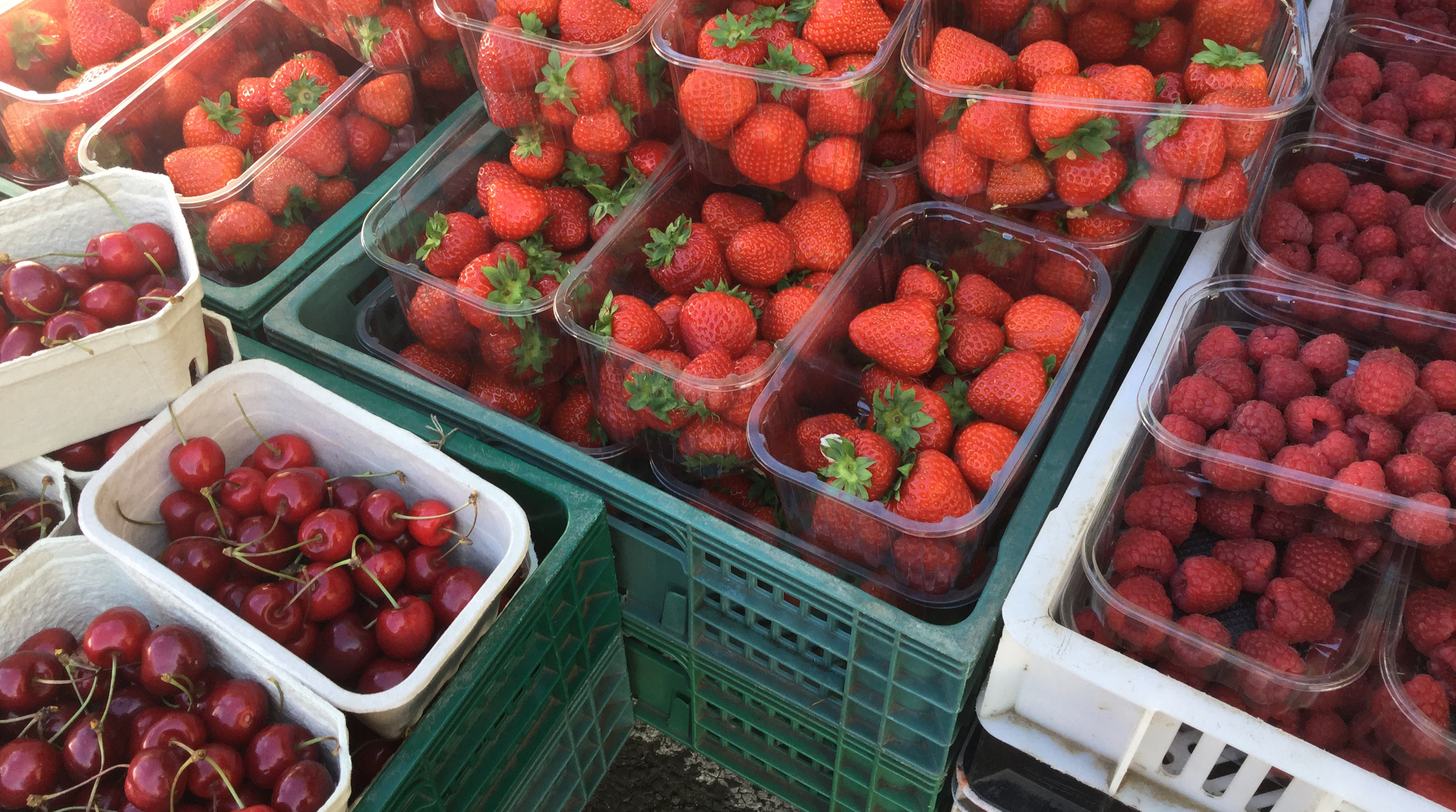
Photo by Sheila Webber: berries at the farmers market, July 2023

Wednesday, June 28, 2023

New articles: Information seeking; Self-efficacy; School to university

Photo by Sheila Webber Rose Judy Dench June 2023

The latest complete issue of the Journal of Academic Librarianship (a priced publication), Volume 49 issue 4 (2023), includes the following:
- In their words: Student reflections on information-seeking behaviors by Sarah P.C. Dahlen, Kathlene Hanson
- Investigating the impact of demographic and academic variables on assessing students' perceived information literacy self-efficacy by Md. Atikuzzaman, S.M. Zabed Ahmed
- What I had, what I needed: First-year students reflect on how their high school experience prepared them for college research by Brenda Boyer, Ewa Dziedzic-Elliott
Go to https://www.sciencedirect.com/journal/the-journal-of-academic-librarianship/vol/49/issue/4

Photo by Sheila Webber: Rose "Judy Dench" (should be "Judi"!), June 2023

Wednesday, April 19, 2023

#LILAC23 How university students use TikTok to search for information

Student award winners

Pam McKinney here live blogging from the #LILAC23. This presentation was led by Elizabeth Brookbank from Western Oregon University, reporting initial results from a study to understand how TikTok might influence IL teaching.
Google are worried about the impact that TikTok could have on their business model, as GenZ are increasingly turning to these new social media for information discovery rather than search engines like Google. In response, Google are changing their algorithm to show more TikTok videos in their search results, and more videos overall. 

Initial conversations took place with students, who reported that it was a lot easier to see what content was paid for on TikTok than on Google. Some thought that using search was pointless on TikTok because of the way the algorithm works, in that it only shows you content in your filter bubble, that you’ve already shown an interest in. It doesn’t allow you to sort results by date, but is useful if you need practical advice on how to do things. There is little published research on how people search on TikTok but one study showed that relevant content is returned faster than on Google, and video content was thought to be easier to engage with than text. The participants didn’t care much about misinformation, and avoid material that is perceived to be risky e.g. health. 

Elizabeth conducted 3 focus groups with students, and these have not been analysed fully; she reported interim results only at the conference. Participants were concerned about spending too much time on the app, and have concerns about the amount of information it harvests. It was seen to be a good way to entertain oneself, and is relaxing. Some participants were TikTok  creators, and used this as a way to share their problems and self-care. Connecting with friends was seen to be a positive aspect of the app, and to find out about the news.
Students were asked if they used TikTok to search for information and half said yes they did, which seemed a little contradictory to Google’s panic about genZ all changing their search interface. TikTok is searched for “how to” videos e.g. for recipes, cleaning, or fixing things or crochet etc. one student used it in a class. Participants were asked about “searching” versus “scrolling”, and reported that TikTok would present them with relevant information if they had been searching for information on other platforms. Students would subscribe to certain hashtags if they had ongoing information needs. Some thought that searching didn’t really work on TikTok.
Comments on other peoples’ videos were useful for gaining a consensus on a topic, and TikTok was seen as a good place to start looking for information, that would be followed up on other platforms. There was a sense that participants were able to judge the authority of content creators, and were sensitive to the lived experiences of certain creators. Aspects such as camera quality, and the look of the video were important ways to judge the quality of the information presented. Political and health information was rarely trusted, generally the participants liked to search for low stakes information on TikTok.
Photo Pam McKinney

Student perceptions of librarian-teacher identity #LILAC23

Poster advertising LILAC

Pam McKinney live blogging from #LILAC23, this session is led by Heather Lincoln and Tiffany Chiu from Imperial College, reporting the results from a Masters in higher education dissertation research project. The study focused on business students’ perceptions of the role of the librarian and how they support learning. Much of the literature focuses on librarians’ perceptions of their role so this is a useful addition to the research base, and could lead to service development. Librarians can suffer from imposter syndrome in relation to their teaching identity. 

Heather conducted 6 focus groups with students studying a variety of programmes in the business school, and analysed the data thematically. Students thought that librarians were approachable, and helped them when they needed it. Students liked their IL teaching, and thought the librarian seemed ‘fun’ and enthusiastic, teaching sessions enabled students to ask questions, which was important to them. Students thought that librarians seemed knowledgeable, and saw their role linked to the library resources and providing access to them. Librarians have an enabling role linked to helping students achieve their learning outcomes. 

Heather framed her research using Lave & Wenger’s theory of communities of practice, saying that librarians were not perceived as part of the students’ academic community of practice. Librarians are seen as “experts” and not part of the community they are mastering. Students were conscious that they could make the librarian feel uncomfortable if they ask about something that the librarian isn’t an expert in. If we look at knowledge as co-constructed, it is useful to think of students as partners in learning, not passive apprentices. In conclusion librarians need to make their areas of expertise obvious to students, and use an approach the co-constructs knowledge with students.
Photo: Pam McKinney

Sunday, July 03, 2022

Recent articles: ACRL Framework; Nursing students; doctoral journeys

The latest issue of Reference Services Review (priced journal) vol. 50 issue 2 includes
- Is the ACRL Framework a teaching tool? Undergraduates’ interpretations of its language and concepts by Jennifer Jarson, Rachel Hamelers. "In this case study, the authors analyzed 25 undergraduates’ reflections on their information literacy learning guided by recommendations for thematic analysis of qualitative data from Braun and Clarke (2006) and Castleberry and Nolen (2018). ... The authors’ analysis of students’ reflections offers insight into how these students interpreted the Framework’s language and related it to their own experience. By noting language that seemed to resonate in this instance, the authors suggest ways in which educators could effectively use the Framework’s language with undergraduates."
- Information literacy: assessment of undergraduate and graduate nursing students by Rabia S. Allari, Khaldoun Hamdan, Maha Alkaid Albqoor, Abeer Shaheen. "Cross sectional-correlational design was utilized. Data were collected using an electronic self-administered questionnaire from graduate and undergraduate nursing students in Jordan. ... Information competency of nursing students was positively correlated with students' age. Significant differences were found in information competency according to the academic level, addressing scientific research and research in databases in the course of the study, frequency of meeting the supervisor to discuss the research and university sector."
- Graduate student intellectual journeys: a functional method to identify library service gaps by Elizabeth Kline
Go to https://www.emerald.com/insight/publication/issn/0090-7324/vol/50/iss/2

Photo by Sheila Webber: Red berries at Farmers Market, June 2022