Showing posts with label LILAC24. Show all posts

Friday, March 29, 2024

#LILAC24 Award winners & 50 years in 50 seconds

LILAC logo

Sheila here - my thanks to @ischoolpam Pam McKinney for her great liveblogging from LILAC. To finish up, I'll mention the joint winners of the Information Literacy award (announced at the conference dinner): the Data Education in Schools team at the University of Edinburgh, Scotland, for their Learning with Data - Data Education in Schools programme (the website is here https://dataschools.education/) and the Digital Learning Practice Team at the University of the Arts, London, UK (the website is here https://12daysofai.myblog.arts.ac.uk/

Also, a reminder about the CILIP Information Literacy Group's 50 Years of Information Literacy in 50 Seconds! campaign, which ends on 3 May 2024.
"We would like contributors to send us a 50 second video about Information Literacy, all of which we will edit into celebratory montage for our YouTube channel and other social media platforms. All entrants will be entered into a prize draw to win one of three Facet books on Information Literacy! As part of your video, we’d like you to consider one or more of the following questions: What does IL mean to you? What do you think have been the key developments in IL over the last 50 years? Where will information literacy be in another 50 years? Please film your video in landscape format and email to cilipilg@gmail.com by Friday, May 3rd 2024"

Wednesday, March 27, 2024

#LILAC24 Cultivating quality: student-driven enhancement of digital learning materials

Pam McKinney live blogging from the final session of the LILAC conference. Rebecca Mogg from Cardiff University is presenting "Cultivating quality: student-driven enhancement of digital learning materials". Rebecca is the education lead for the library at Cardiff University, and supports staff with their information literacy teaching. The university has over 350 digital learning objects across the service, and a lot of resources are offered in both English and Welsh. They want to make sure that there is a constant cycle of improvement and a desire to ensure that students can meaningfully contribute to the design.
They use a SharePoint inventory to keep track of all the digital learning objects, which has an owner for each resource with an annual review date, and records of where the resource is stored and how it is used. Every resource owner gets an automated reminder 30 days before the annual review date, and then more reminders until they update it. They also use Google Analytics on the resources to understand use and engagement of the resources to support continuous improvement.
The library has a policy of co-creating new content with students to make sure it is aligned with student needs, uses accessible language and covers material in ways that students like. Students are also involved in UX activities and take part as actors in the videos. This is funded through the Student Champions scheme at the University which pays students to work.
They gather student feedback on resources with Google Forms, every tutorial has a form embedded in it and these forms are monitored weekly. Since they implemented the forms in August 2021 they have had over 22,000 responses, some responses are minimal, but they do get signposts for improvement.  For example, a piece of feedback they received on the "Welcome to the Library" tutorial was that it wasn't very interactive, and this prompted the team to revise this tutorial, embed a quiz in it and make it a little bit more interactive. Even though these are only small pockets of feedback, it does inform the general improvement of library online materials.
The library can also use the engagement data and student feedback in order to develop their strategic approach to the provision of asynchronous teaching,  They can understand which resources are the most popular, to make sure that these are the ones that are supported first when there are software changes. One issue is the proliferation of platforms on which they provide content, so an activity for the future would be to consolidate these in some way. 


#LILAC24 Playful and compassionate approaches for inclusive Information Literacy instruction

Pam McKinney live blogging from the final day of the LILAC conference in Leeds.  The keynote today is from Andy Walsh @Playbrarian and is titled "Playful and Compassionate Approaches for Inclusive Information Literacy Instruction".  Andy himself is a neurodivergent librarian, and runs the CILIP neurodivergent librarian group, and acknowledged some of the challenges he faces with neurodivergence in the design and delivery of the keynote. He spoke about his working-class origins on a council estate in Birmingham. We took part in a little bit of play, a "gentle Mexican wave" because, as Andy said, some of us were looking a bit tired after the conference party last night! Andy made a point that this was a bit challenging, but it is even more challenging for people who are neurodivergent and are trying to cope with conflicting stimuli. 

Andy passed round some notebooks which the audience was encouraged to write how they are currently being playful in their teaching. Games can be used in teaching as a starting point for engagement.  Games are structured, they have a set of rules and a feedback system, and these mechanics allow play to take place and learning to take place. The games are there to enable the play. Play is an act that is apparently purposeless, voluntary, has an inherent attraction, time free, diminishes self-consciousness, has the potential for improvisation. It can bring all sorts of benefits, but you can't force someone to play! Once people start playing, they tend to want to carry on playing - it can be relatively easy to make play happen. It's easy to lose track of time when you're playing, which can be a bit of a problem in a time-limited teaching session. People can feel braver to express thoughts and ideas in playful situations than they would otherwise do.
Play can be seen to be a mental attitude of "playfulness", and this is often accompanied with humour, and it ca involve setting conditions for play to emerge, and providing opportunities for people to feel comfortable in playing. The notebook activity that Andy set is one example of setting a condition for play, in that we've been invited to write or draw in the notebook, but people could add content that is playful. Once one person has started doing this, others will naturally follow. Andy made the point that even if you use games to facilitate play, it's the play that's important, not the adherence to the rules of the game.

Andy then moved onto the benefits of taking a playful approach to information literacy teaching. Using play differentiates IL teaching, as it's probably not an approach learners will have in other situations. Play can shift power dynamics, it gives learners more power to take their own path and adapt the content to work for them. It can help learners see things from different perspectives, and it encourages creativity. 

Higher Education in the UK seems to be driven by a target approach, money and metrics rather than learning and creating well-rounded members of society.  The concept of compassionate pedagogies originated in the early years sector but could be applicable in HE in terms that we could love our learners. Learning and teaching should be driven by compassion, and recognising the diversity of learners with different strengths and stresses. The way we teach needs to try to reduce stress and recognise this diversity. A new set of notebooks was then passed around the audience for the audience to write about how they show compassion to their learners.
Compassionate pedagogies require a commitment to criticise institutional and classroom systems that place underserved students in disadvantageous positions. Teachers need to be reflexive about this and attempt to welcome and accept people with any kind of disadvantage. Students need to be listened to and valued, and empowered to be who they really are in the classroom. Teachers need to create safe environments in our classrooms, without feeling safe learning can't take place. We need to build relationships with our students, which is tricky for librarians who only see students once or twice a year. Compassionate pedagogies and play go hand in hand. Both seek to transfer power from the teacher to the learner.

Information literacy definitions (e.g. the one from CILIP) do not say that there is one correct way to be information literate. It is not absolute and varies by context. People make choices about their information literacy based on their context and situation. Working in Higher Education can feel as though librarians and lecturers do have an ideal way to be information literate, and position their teaching to transfer this knowledge to students, without trying to understand the needs of their learners. Sometimes people just need to get a bare pass, and adopt information practices that facilitate this, rather than doing the "ideal" literature search with lots of excellent boolean searching. IL teaching needs to be learner-centred.

#LILAC24 I have no idea who I’d even ask": information literacy and dissemination amongst young recently arrived adult immigrants in Montreal, Canada

Pam McKinney here live blogging from the final day of the LILAC conference in Leeds, UK. The first session I'm attending is being led by Marianne Chiu-Lezeau from Montreal University. Marianne has a background as an anthropologist, and this research is an attempt to blend anthropology with information science.  It is an ethnographic approach, a snapshot of some young people's experiences.  Montreal is a francophone city, and has a recent history of immigration with many people on "temporary status" which has implications for access to health, public funds etc. The project sought to understand the information-seeking process of young adult immigrants aged between 18 and 25, interviewing 29 young people and 17 social workers/ community workers. Young adults had a big variety of immigration needs, central life skills but also needs associated with finding themselves and making friends, finding housing, accessing a food bank, how to stay connected with loved ones. Many participants were disoriented, they didn't understand very well "how things work", and there was a a sense of being lost. The information they look for to support decisions they make can have dramatic effects on their lives.  For example, courses taken at university can affect visa status.

Many young people do lots of research, and while some found it easy to find information, others found it very difficult to reconcile their many competing information needs. Young people had a mistrustful relationship with authority and felt they had a problematic relationship with official information and institutions. Some felt they weren't able to ask for help, even though they knew they needed it. Cross-border social media networks were really important, and Facebook groups and WhatsApp groups were really important spaces to share information and ask for advice. Diaspora networks across borders were useful sources of information and provided detailed local knowledge. However, the fluid nature of regulations and laws around immigration meant that knowledge could quickly become out of date. Personal recommendations for trusted contacts were really important, and certain individuals were seen to be "good" people to seek advice from. Information poverty was a big problem, and the disorientation that affected participants and the complexity of their information needs meant that the trusted relationship meant that it was possible to ask for help.

There is a complicated funding environment, and this meant that it wasn't always possible for advice workers to give the support they wanted to, that the new people would need.  Counsellors were terrified of giving the wrong advice because if they gave the wrong information this could lead to someone being deported from the country. Policymakers assume that immigrants are either studying or at work, but this isn't true and these people are much harder to reach. There's a need for digital tools as young people are seeking information in a digital environment.  Digital tools would also mean that information could be updated quickly.  However it was acknowledged that there is a digital divide, and some young people don't have computers, low literacy is a problem. 

The recommendations coming out from the project covered macro, meso and micro level recommendations, recognising that working only at a local level will only be effective with systemic change. Recommendations were co-created with young adults and service providers. At a micro level, it is about fostering mutual aid, and for practitioners to take a holistic approach to supporting service users.  At a meso level, it is about providing services in multiple languages, and offering digital outreach in spaces that are frequented by young people.  programs are needed that answer concrete needs e.g. how does the higher education system work. Information must be shared between different providers and an effective referral system so that young people don't have to repeat their story many times.  This was a fascinating presentation which showed that the issues that young people in Montreal face are similar to the problems faced by immigrants in the UK.


Tuesday, March 26, 2024

#LILAC24 Widening participation, information literacy and the transition to university: reflections and initial findings from Lancaster University’s Library Schools Engagement Project

Pam McKinney live blogging from the second day of the LILAC Information Literacy Conference taking place at Leeds Beckett University. Paul Newnhan (@newnham_p), Faculty Librarian for Lancaster University Library and Clare Shaikh, Library schools engagement officer presented their research project that aimed to develop a programme of support related to the extended project qualification and engage with 6th-form college students and university students from widening participation backgrounds.  The project is ongoing, this is a report from the initial research findings from the first year of the project. The project was sponsored by the widening participation advisory group that supports people from underrepresented groups to apply for and succeed at university. £44,500 of funding was given for this pilot project which funded a full-time engagement officer post. They also received support from the library senior management. The library has a history of working with local schools and colleges and ran study events for 6th form students. Information literacy development, progression, widening participation and employability are the key themes addressed by the project. Equipping students with skills to support their transition to university helps reduce the dropout rate. The journal paper I wrote with Sharon Wagg on her dissertation research on information literacy outreach was cited as a key influence (https://eric.ed.gov/?id=EJ1300584)

They engaged with 3 distinct groups of participants: 6th form college students doing the EPQ qualification; 6th form college staff, and university student employed as library ambassadors. Library research days were used by students to research their EPQs. Outreach visits took place in colleges where university staff supported EPQs in colleges.  In addition, lesson plans and online teaching were developed.

Data was collected through pre- and post-intervention surveys using questions developed from a widening participation question bank. observations took place at the events and outreach/study days focusing on how students interacted with information and the library. There were also focus groups with students and interviews with staff.

Lancaster University information literacy framework was used as a model for the analysis of the data relating to information literacy. There were varying levels of understanding and knowledge about the academic information landscape, but they did develop an understanding over the course of the project and developed familiarity with the language of academic information. Teachers understood this academic language and helped embed this learning. All agreed that refining a topic and developing a research question is difficult for students, and it is tricky to define a topic question at the right size and shape.  This causes students to leave the EPQ programme. This is the first piece of schoolwork that children do that requires this kind of devising of a research question. Many students were familiar with natural language search, but none had experienced searching a library catalogue. Teaching these skills was very well received by students and they recognised the value of the information they found through the library';s One-search. 
Teachers also recognised the value of this teaching, for helping students prepare and make better use of their time. The open access filter of One Search was also seen to be useful as it facilitated access to quality information. that was not behind a paywall. Encouraging students to adopt a more structured approach to their searching was seen to be positive. Students learnt how to manage and organise their material, and developed a range of strategies based on recommendations they were introduced to at study days.  College students used a range of evaluative strategies, that they were introduced to at school and at the study days. These were favourably commented on by the students.
College students find writing up their EPQ challenging and understanding the difference between being descriptive and being analytical. Using reference tables can help students organise their material and engage critically with it. Students developed understanding that work needed to be written and refined and written again, as part of an iterative process of development. There was a good understanding of ethics, referencing and plagiarism from staff, but some students really struggled to understand it. Some students used online tools to help manage references, but it was identified as a key activity that the library could support further development of referencing practices.

The EPQ involves students choosing a topic, then research and undertake the project and present it to a non-specialist audience.  It aims to develop critical, reflective and independent learners.  Students said they struggled with time management and working independently, but could recognise the value of the EPQ to their personal development. The peer support element of the project facilitated knowledge exchange between current university students and college students.

The programme aimed to develop confidence in academic study with college students, and develop a sense of belonging at university.  The peer supporters also developed their employability, they spoke about their passion for the subject and the value of picking a subject that you are really interested in.  They were keen to share their expertise with the college students.  There were some very positive interactions between 6th-form students and university students, but a bit more training in this area has been identified as something to work on for the future. 6th-form students were impressed with the library building, and were surprised by the different learning environments in the library.  The project helped de-mystify the academic library. The EPQ helped students develop confidence, and the outreach activities helped students develop academic confidence. Recommendations have been produced for the project going forwards

#LILAC24: Developing metaliteracy skills with art and design students: findings from an action research project

This is Pam McKinney continuing to liveblog from LILAC. Laura Wood from Leeds Arts University and my @infoschoolsheff colleague Leo Appleton presented about an action research project that took place in Leeds as dissertation research that Laura conducted as part of her MA in Librarianship. Leo has worked in Arts Libraries, has chaired ARLIS conferences, and has an interest in metaliteracy in the context of Art and Design students.  There are a number of Arts education-focused institutions in Higher Education in the UK, and arts departments based in traditional universities. There is recognition that students studying art and design have particular styles of learning, that are different to students studying other subjects, and this is extended to their use of libraries, for example a need and desire for print-based resources. Arts students use information in different ways, to stimulate imaginations and creativity, which is a different way of making sense of meaning. The concept of metaliteracy comes out of the work of Jacobsen and Mackey (2011), which unifies multiple literacies, for example, visual literacy, and object literacy. Metaliteracy includes the idea that one should understand their multiple literacies. In the arts library, many resources are physical that require students to approach them with metaliteracy.

Laura spoke about Leeds Arts University which is the only specialist arts university in the North of England. There are about 2500 students taking a range of Further and Higher education courses. Laura hadn't worked with Arts students before so there was a big learning curve for her in understanding how students engaged with resources. Sessions where students have the ability to interact with the resources are more popular than "traditional" IL teaching. Laura's research focused on student understanding of their existing learning styles and IL development, and chose to undertake an action research methodology, as this would closely connect with her own teaching. Laura adapted a teaching session to focus on interactions with special collections and zines. She has only done one cycle of the action research cycle. The teaching intervention was split into 3 sections: teaching, handling and making. The teaching aspect focused on systems of power that shape the creation of information and having a go at some traditional searching. In the handling phase the students were introduced to collections, students could handle them, look through them, and a search exercise was repeated.  In the making phase, students were invited to create a zine in response to something they had looked at from the collection.  This positioned the students as creators of information and encouraged them to reflect on their role as creators and communicators.

Laura distributed a questionnaire at the start of the session, to understand students' understanding of different literacy types.  Media literacy was understood, but students didn't really have a good understanding of information literacy or search skills. Visual literacy was understood as being explicitly related to art and design. Then Laura hosted a focus group which aimed to discuss what students understood "literacy" to mean and how that related to art and design.  There was recognition that students needed a range of skills and abilities including media and computer literacy. They also discussed learning styles, which students were relatively familiar with, but they were dismissive of these labels and preferred to identify their learning as flexible and multifaceted. They spoke about the supportive nature of art school and the importance of communication and sharing ideas.  Then there was a discussion about the material in special collections, which raised issues of terminology.  After the intervention, they had another focus group, and the students were a little bit more positive about understanding their own abilities and skills.  They enjoyed interacting with the special collections and the blurring of boundaries between form and content.  A second questionnaire revealed that students did have a better understanding of metaliteracy, and their confidence about literacy skills was increased.

Art and design students are aware of the differences in their learning styles, but they don't want to be pigeonholed into one learning style. Awareness of metaliteracy and multiliteracies means that art and design students can navigate their learning more effectively. Art librarians could do more to promote understanding of metaliteracy. Students primarily saw the library as a place to support their academic skills development, rather than as a place that occupies a blurred space between the library and the studio, which is a prevalent view in the literature. Library interventions like Laura's can help students join up their literacies. Art library special collections are a great vehicle for developing understanding of metaliteracies, they can support creative practice and collaboration.


#LILAC24 Keynote 2 - Maha Bali - Teaching critical AI literacy

Pam McKinney continuing live blogging from the second day of the LILAC conference.  Maha Bali is based in Cairo, and is a professor of practice in teaching and learning at the American University of Cairo. She advocates for care, compassion and kindness when working with learners. She inspires the value of taking a critical view of learning technologies, and she has been integral to conversations about openness, inclusion and equality in higher education. Maha ran some Mentimeter polls to understand how the audience is feeling and what we have learned so far from the conference. Then we took part in some polls about AI and the extent to which it is familiar to us, and whether we think it is a seismic shift (3.8 out of 5) or a fad (2.1 out of 5) and an opportunity (4 out of 5).

Maha then began her presentation and reminded us that AI can't be considered inevitable, beneficial or transformative, and we need to acknowledge the risks of AI and stay vigilant. Maha had a visually impaired student who makes use of BeMyAI to provide textual descriptions of pictures, and saying how useful this was to make information more accessible and understand visual information. AI is not a neutral technology, so it's important to think about social justice and take a critical stance towards AI. Learners in different situations have different needs when it comes to being critical towards AI e.g. university students vs school students.  AI is very oriented towards white western knowledge, and less good with knowledge from the global south. We need to adapt, AI is a shock, so we need to be reflective about the impacts of AI and how to adapt creatively and not just apply knee-jerk reactions. We took part in a Mentimeter poll to share our metaphors of AI (see photo!),  and it was clear that there was a lot of ambiguity about our views of AI, people could see the benefits but also the potential challenges, e.g. "double-edged sword" and "a rose with thorns". Maha co-authored a paper "assistant parrot or colonizing loudspeaker" which explores metaphors of AI. It explores how metaphors are used, and then the audience was invited to explore some metaphors using a scale developed in the paper to analyse the extent to which the metaphor is critical or positive and the extent to which it is human or inanimate. Different metaphors will give you a different impression of what AI can do, and whether it is negative or positive. 

Then Maha introduced the metaphor of cake for AI. There are situations where we accept that you don't bake from scratch, sometimes you buy the cake.  With AI it's similar - what are you actually teaching, what do they need to know how to start from scratch, and what can they use AI for, that isn't vital to their understanding.  For example, it might be acceptable to get students to use AI to create titles or help with engineering modelling, but there is still critical input. Assessment design is very important - if students are all using AI to write their assignments then maybe the assessment design needs to change.

Every AI is racist, sexist and abeleist, and riddled with assumptions. Critical AI literacy helps people understand how AI works, not in detail but the basics of how AI is trained from data.  Students need to recognise inequalities and biases in the use of AI, and how the data produced by AI can be inaccurate. There are ethical issues in the design of AI, including unethical employment practices, the data is taken without the consent of the person who has actually created that data.  Sources are often inaccurate, and it can't judge the quality of the source it's taken.  Crafting good prompts is difficult, and students need to understand this as part of critical AI literacy. Students need to understand when it's appropriate to use the AI, and how to adjust the output from AI. Maha recommended the AI pedagogy site to help develop activities to do with students.

Maha spoke a little about some AI tools - ChatGPT is not the only tool available! Maha asked Google Gemini to create a table of text and pictures about  prominent Egyptians, and it found information about Mohamed Ali, but provided a picture of Mohammed Ali the boxer instead of the Egyptian personage. 

One resource that Maha uses with students is called quickdraw which asks users to draw objects and then "learns" how people draw.  It exists in multiple languages, but this is challenging e.g. in the western world a hospital has a cross on it, but in the Arabic world a hospital typically has a crescent. So it is very western-oriented. 

Maha recommended this paper which discussues the concept of "Botshit" which is defined as follows "This means chatbots can produce coherent sounding but inaccurate or fabricated content, referred to as ‘hallucinations’. When humans use this untruthful content for tasks, it becomes what we call ‘botshit’"
It's important to discuss when and why it is suitable to use AI. If it is an unfamiliar area with nuanced answers, it's really difficult to judge the quality of what the AI has produced. A good strategy is to encourage students to use AI and have a critical discussion with them about their use of AI.


#LILAC24 Serendipitous searching: taking art students on a visual research journey

Pam McKinney here live blogging from the second day of #LILAC24 information literacy conference in Leeds. Karen Fisher from Leeds Beckett University presented on Serendipitous searching: taking art students on a visual research journey

How can we embed serendipity in information literacy teaching? Karen Fisher discussed 3 ways to accomplish this. The first involved developing student competence with visual literacy and find images from credible sources.  Students took pictures around campus and then used the photo as a starting point for a research journey, to encourage using images to search. Karen used a phot she had taken as an example and encouraged students to think about words that could be used to describe the photo and open up discussion about keyword terms and narrow and broad terms.  Then students used these words to search on the art store database and chained through images of interest on a visual journey of inspiration.

The second approach was called "the incident room" a teaching design for 2nd year students which allowed the students to present their research in a visual way. This positioned the student as a detective, they were asked to design a re-purposing of a specific building in Leeds.  One week the students had a session on literature searching, and in the second week, the students presented their research to the "chief inspector" librarian as a visual record. This gave the librarian ther opportunity to give feedback and suggest other avenues for research.

The final example is focused on browsing in the library, to encourage students back into the library post-covid, and to use the library stock. They created an area in the library that would be attractive to students and collect journals and magazines that are only available in print to display in this area. The librarians encouraged the academics to also use the space, and bring students in for seminars to get them used to browsing the visual resources.  There is an issue with just searching online as the search is mostly text-based which is quite narrow and doesn't open up access to more visual resources appropriate to art and design students.  


#LILAC24 Generating understanding: opportunities for institution-wide development of information literacy in an age of AI

Pam McKinney live blogging from the Lilac conference in Leeds. Erin Nephim from Leeds Beckett University is presenting on Generating Understanding: Opportunities for institution-wide development of information literacy in an age of AI. There has been a lot of activity in the University to produce guiding principles for the use of AI, and the library has been a key partner in this activity. They are taking a pragmatic approach, in that these tools are here to stay and the focus is on how to use tools ethically and effectively.  The guiding principles encompass critical thinking, ethical use, bias and misinformation and employability.  There is no outright ban on the use of AI or generative AI, but possibly some restrictions in specific circumstances e.g. a coding exam.
Lots of professional services departments have been involved in this activity, including the students' union, IT services, centre for Learning and Teaching. One of the principles is for people to understand how the tools work, and how this affects their use. The success of the programme has been measured through post-session feedback. Colleagues have said that they have a better understanding of information literacy, and IL has been included more overtly in teaching materials. Strategic support and buy-in to this programme has been good, and now there is better sharing of AI issues across the university. 
Now the university is working on a set of prompts that can be used to support academic writing, and people are sharing what went well. Policies on plagiarism and academic misconduct are being adjusted to take account of generative AI. The AI Turnitin detector is enabled, but this isn't the only way to identify unfair use. Erin recommended the JISC National Centre for AI and the ALDinHE AI forum and Community of practice for discussion across institutions.


Monday, March 25, 2024

#lilac24 Plagiarism and AI tools: An example of linking information- and digital literacy in your teaching

 Pam McKinney from the first session after lunch at the Lilac conference, on Plagiarism and AI tools: An example of linking information- and digital literacy in your teaching by Anna-Lena Hoh. Anna is based in the Netherlands at Maastricht University, which is a very international university. She works across the university supporting digital literacy. There is a cross-institutional working group on digital literacy, and there is activity to develop teaching and support in this area. They use the ACRL definition of information literacy, which seems very standard, but there seems to be a wide range of definitions of digital literacy in use in the Netherlands. Anna spoke of the "battle of the literacies" where there are many competing conceptions and definitions of information and digital literacy. She encouraged us to think about the theoretical similarities between these models, for example, academic digital creation, ethics, safety.  All student assessments are digital, so students need support in using digital tools. 

They run a plagiarism workshop which includes elements of how chat GPT can be used ethically.  They asked students to define how ChatGPT tools fit within current definitions of plagiarism, and look in detail at the current rules and regulations and whether the use of chatGPT is allowed.  The IL team worked with Anna to design teaching around use of AI tools. They did some experimentation with a range of AI tools, to see where they thought they could offer meaningful support for the institution.  They have monthly sessions now for staff to encourage critical appraisal of the tools, and explore disciplinary differences in the tools. There is a need to combine information and digital literacy experts in supporting use of AI in the institution.

#LILAC24 Keynote: Artificial intelligence panel discussion

Pam McKinney here live-blogging from the first day of the LILAC conference in Leeds.  The first keynote of the conference is a panel discussion about Artificial Intelligence with Erin Nephin, Sam Thomas, Josh Rodda, Masud Khokhar and Martin Wheatley. Josh Rodda, a learning development librarian at the university of Nottingham was asked to put together some guidance for students about how to use AI tools such as chat GPT, which is now available as an online guide and the basis of a teaching session. His position is as an "AI sceptic" as there are serious questions about the ethics of AI and how it can be used effectively.  Martin Wheatley works as head of digital education and innovation for a group of Further Education colleges in Leeds, this includes the information and digital literacy offer for students. There is a lot of interest in AI from teachers and students, so Martin has done a lot of experimentation with AI to inform himself.  AI is now a strategic priority for the organisation. Masud is university librarian at the University of Leeds: he is an AI optimist but acknowledges the challenges of using AI.
There is a need to de-bunk some of the misinformation shared about AI, and to identify best practice. Erin Nephin works here at Leeds Beckett University, and described their pragmatic approach to the use of generative AI, in that AI is part of our everyday life and it's not always easy to identify AI in systems and services. They advocate a mindful approach, for example, to use AI ethically and to use it to support scholarship not replace it. She mentioned the environmental concerns of AI, the ethical concerns around the training of AI and the costs of the AI.
The first audience question was "Is this a new issue for information literacy, can our existing IL practices address AI?" Martin Wheatley said that AI use in FE is very sporadic, and the use of AI depends on the various accrediting bodies for courses. He sees AI as an opportunity, to ensure that IL teaching is taken up across the different years of courses, and bringing in IL teaching earlier in the curriculum, particularly content around evaluating information. 
Josh spoke about the difference in speed and quantity of AI-generated information, and the implicit bias of the white western perspective of much of the data used to train AI.  These biases exist in literature and academic sources too, so some of the same approaches can be used to address these biases, so encouraging students to be critical of the sources, and reflect on those biases. Masud Khokhar spoke about the "hype cycle" of AI adoption, and the role of information literacy in addressing AI.  It's important to acknowledge that we are all learning together about AI, but we can apply the principles of information literacy to this new technology.  We need to be more comfortable working in a "messy" world, and work with others to try to find a path. 

Josh spoke about the value of AI as a conversation partner, and as a tool to support engagement with learning materials that might otherwise be impenetrable. Masud reflected on the cost of AI, and whether the library should subscribe to a generative AI service on behalf of students, as otherwise there is a problem of unequal access if some students can afford it and some can't. Large Language models are not environmentally sustainable, because of the power required to run them. but they have made it possible to understand what AI can do for us. The future is in small models that can run locally that are not so resource-intensive. Martin Wheatley spoke about the need for people to be digitally literate, and this is important to address before thinking about AI literacy e.g. some teaching staff are still printing materials rather than using Google Classroom, and some students don't have computers at home. 

A question was posed that focused on how to involve all staff at an institution in a conversation about AI and information/digital literacy. Martin Wheatley spoke about this issue in the context of very vocational courses e.g. Bricklaying, but even with these courses it is important that students and staff can engage with digital information, and by extension AI. So you need to work up to AI, through laying a digital literacy foundation. Masud spoke about the need to have open discussions about how technology of all kinds can improve teaching and improve the experience of staff and students.  With any programme of change you need to bring staff through a process of change and transition, this is vital, and you need to recognise that staff are at very different levels of ability with technology. Josh spoke about the need to acknowledge disciplinary differences in the use of AI, so a computer science lecturer who would be incredibly comfortable with AI vs a law academic who is concerned about ethics and accuracy of information, vs an English academic who is sceptical about it. AI development has to be tailored. Erin spoke about the need to remind people about the pervasive nature of AI in our lives, as a route through to supporting AI literacy. 

The next question was about the potential of AI to disrupt traditional research practices. Masud spoke about the disruption to the process of research, so how to improve the experience of researchers and improve the accessibility and reach of research. AI can really help make sense of unstructured data, e.g. transcribing audio data, providing meta-data summaries, translating the transcriptions into other languages, and connect data with relevant images. This could be very powerful, but researchers need to be taught how to do this.  This is not helped by structures in HE support services where IL experts are siloed in particular departments (e.g. the Library). 

Erin spoke about how AI is best used to "high-time low-stakes" activities, e.g. asking AI to help you write a CV, or prepare for job interviews.  But t the same time it's important that students are able to develop summarising and writing skills themselves rather than turning immediately to AI for academic work.  Josh spoke about the need for people to be able to make informed decisions about whether to use AI in a particular situation and the need to consider assessment design. 

Masud finished by encouraging us to think about how AI can augment us, we need to adapt, and think carefully about how we can complement AI with human expertise. Martin spoke about the excitement of AI, and the need for IL professionals to be in this space and re-think how we push the critical thinking agenda in education.

#lilac24 Selling information literacy to the business school

Pam McKinney here live-blogging from the LILAC conference in Leeds. Information school graduate Laura Broadbent presented ‘Selling’ information literacy to the business school through alignment with the employability agenda in higher education" in the first session at this year's LILAC conference. There is a concern that university graduates don't have the skills they need to be effective in the workplace, and the political background to this in the UK is government scepticism about the value of degrees.
The recent Augur review outlined the 6 purposes of post-18 education, however, we need to also consider what students want from their university education, and there is evidence that students want their courses to be employment-relevant. Laura is based at the University of Huddersfield, which has a mixture of international and local commuter-based students.  Most students are young, and there are few mature students. 
Laura was involved in the re-design of the business school curriculum and worked with academic staff to identify modules where students could have information literacy support to link to their curriculum. The module was designed with the principle of constructive alignment to make sure that the activities and assessments are aligned with the learning outcomes. The level 3 curriculum was focused on commercial awareness as a key skill for employability, and it was identified that students needed support in being able to research companies prior to applications and interviews. 
Delegates took part in a sample exercise to identify external factors affecting the chocolate market, which was very much in my comfort zone as it was similar to an exercise I use with the students on my Business Intelligence module, using reports from IBIS World, Mintel and news stories.  It was easy to identify the additional value from the paid-for information sources. When Laura teaches this session with the students she only has 45 minutes which isn't enough, she would prefer a 2 hour session so that she can explore the issues in more depth.

Thursday, January 25, 2024

#LILAC24 programme and registration

The programme for the LILAC (information literacy) conference taking place in Leeds, UK, 25-27 March 2024, has been released at https://www.lilacconference.com/lilac-2024/conference-programme-1 (click on the word doc link for the details) and there are still some delegate places left.
Costs: CILIP Individual Member/ Speaker/ Early Bird Rate Full Conference £430; Non-Member Rate Full Conference £480; CILIP Individual Member/ Speaker/ Early Bird Rate Day Delegate – £205; Non-Member Rate: Day Delegate – £225. Early Bird Rate closes on 26 January 2024. Register at https://www.lilacconference.com/register

Thursday, January 11, 2024

Two sponsored places at #LILAC24

LILAC logo

The CILIP Information Literacy Group offers the Rowena Macrae-Gibson Student Award which provides a sponsored place at the LILAC (Information Literacy) conference taking place in Leeds, UK, 25-27 March 2024. Closing date is 2 February 2024 17.00 UK time. The are awards for two students, who must be registered for a UK-based first degree or taught postgraduate qualification in information/library studies or information literacy (IL). The award includes a full conference place, including social events, and UK travel and accommodation expenses up to the value of £250. Full-time or part-time students can apply (including distance-learners).
More info at https://www.lilacconference.com/awards/student-sponsored-places

Thursday, December 21, 2023

#LILAC24 bursaries

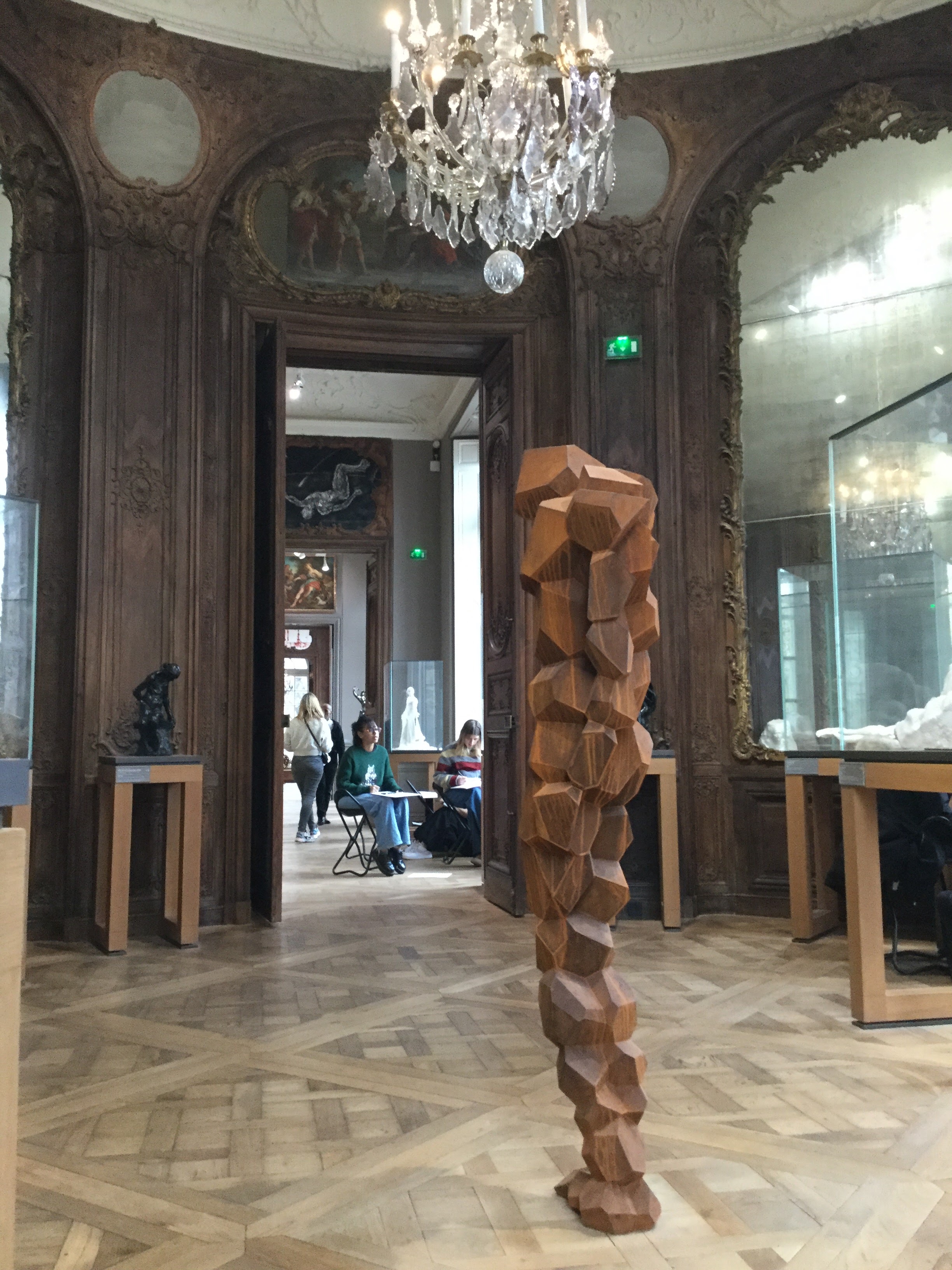
inside the Rodin museum November 2023
Bursaries for the LILAC24 information literacy conference (25-27 March 2024 in Leeds, UK) are available for CILIP (UK) Yorkshire & Humberside members. Applications close on 8 January 2024. There are 2 bursaries (One full conference pass and one one-day pass) for members residing or working in the Yorkshire and Humberside region.
They prioritise: Individuals who have not previously attended a multi-day national/international conference; Individuals from groups underrepresented and/or marginalised in the library and information profession, including (but not limited to): LGBTQIA+, disabled and neurodivergent applicants, and applicants from BAME backgrounds; Student members; New professionals (less than 5 years' experience); Members who earn below £23,000 per annum or are unwaged.
Full info at https://www.cilip.org.uk/members/group_content_view.asp?group=201296&id=1020639.
Photo by Sheila Webber: inside the Rodin museum, November 2023

Tuesday, November 07, 2023

#LILAC24 bursaries

There are bursaries avilable for the LILAC (Information Literacy) Conference which takes place 25-27 March 2024 in Leeds, UK. "To apply for a bursary you must be a librarian, volunteer, or information professional working in the UK." The closing date for applications is 17 November 2023 (17.00 GMT). This year winners will be randomly selected using a lottery system and will be notified early December. 

LILAC Bursaries Five free places for people in the following under-represented groups in the UK: Ethnic minority backgrounds; School libraries; Further Education; Public libraries; Health libraries (e.g. NHS – please note; librarians working in Higher Education who support health subjects are not eligible to apply). The bursary includes the conference plus up to £250 in expenses for travel and accommodation.
Local to LILAC Bursaries "These bursaries are day delegate places, and we are offering two places for each day of the three-day conference. ... We have created these six day delegate places, intended for people who live or work near to the LILAC venue, to have the chance to attend a day at LILAC and experience what the conference offers. Each of the six bursaries will involve a free day place to one day of the conference and £50 for travel expenses."
More info at https://www.lilacconference.com/lilac-2024/bursaries-1

Tuesday, October 03, 2023

Call for proposals: #LILAC24

The call is open for presentations for the UK's information literacy conference LILAC, that will take place in Leeds, UK, 25-27 March 2024. The call closes on 9 November 2023.
You can submit proposals which address information literacy from any sector or context. Formats for submissions are: short or long presentations; workshops; panel discussions; posters; lightning talks; or wildcards (another format proposed by you). You make proposals by submitting abstracts (in each case, of 500 words).
More details here: https://www.lilacconference.com/lilac-2024/call-for-presentations-1