Showing posts with label Discipline - education. Show all posts

Monday, April 15, 2024

Teacher education and IL: Education Companion Document; Pre-service teacher's IL

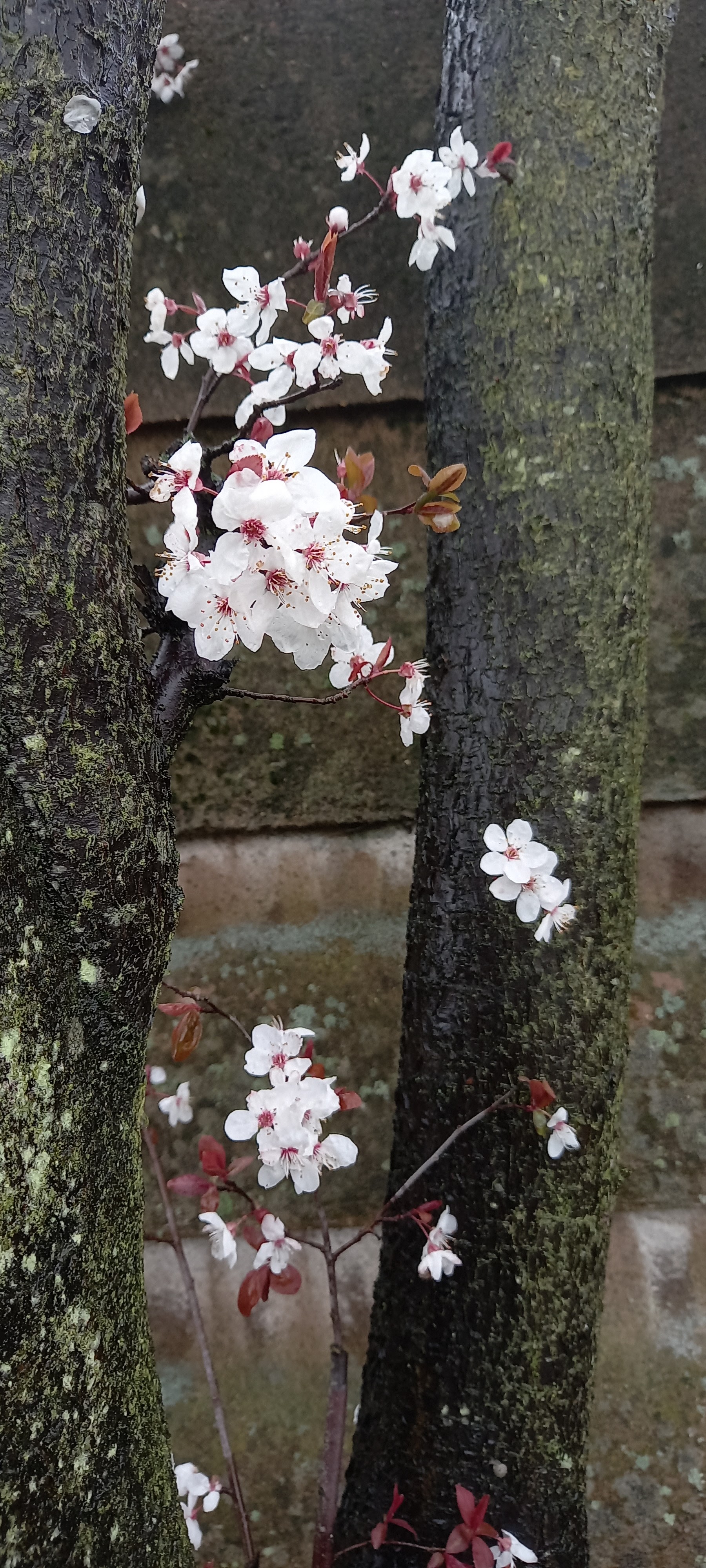
Photo by Sheila Webber of spring blossom and bark in March 2024

Ewing, R., Lehner-Quam, A., James, A., Gregor, M., Rosenzweig, J., & Ditkoff, J. (2024). Teacher Education and Information Literacy: Introducing the Instruction for Educators Companion Document. College & Research Libraries News, 85(4), 139. https://doi.org/10.5860/crln.85.4.139 The companion document itself is here: https://acrl.libguides.com/ed

Trixa, J. & Kaspar, K. (2024). Information literacy in the digital age: information sources, evaluation strategies, and perceived teaching competences of pre-service teachers. Frontiers in Psychology, 15. https://doi.org/10.3389/fpsyg.2024.1336436
"An online questionnaire was presented to participants [371 pre service teachers in Germany] , employing a mixed-method approach. We qualitatively examined the sources of information used by pre-service teachers and the evaluation strategies they employ, while quantitatively analyzing relationships between pre-service teachers’ person-related factors and their perceived teaching competence. " Results "revealed digital media dominance in information acquisition over traditional sources, albeit with a prevalence of surface-level evaluation strategies over reflective approaches. Two distinct dimensions of perceived competence in teaching information literacy emerged: one focusing on information assessment while the other centers on the understanding of news creation processes. Perceived competence in teaching information literacy was significantly associated with self-efficacy in information assessment, perceived informedness, selective exposure to information as well as perceived learning opportunities focusing on information evaluation. Moreover, pre-service teachers employing diverse information evaluation strategies demonstrated a heightened sense of perceived competence in teaching information assessment."
Photo by Sheila Webber: spring blossom and bark, March 2024

Tuesday, December 12, 2023

ACRL companion document: Instruction for Educators

Photo by Sheila Webber Eiffel Tower November 2023

I had missed The Companion Document to the ACRL Framework for Information Literacy for Higher Education: Instruction for Educators which was approved by ACRL in June 2023. It "provides links to standards used in teacher education and connects the standards to the ACRL Framework to make information literacy practical and relevant to teacher education students as they work on course assignments, prepare for careers as teachers, and for work in the classroom."
"The Companion Document addresses three roles that information literacy plays in teacher education: supporting teacher education students' classroom work in their teacher education program; preparing teachers for research skills needed in their career; and preparing teachers to support the information needs and practices of their students."
Go to https://acrl.libguides.com/ed
Photo by Sheila Webber: Eiffel Tower, November 2023

Sunday, June 13, 2021

Free new online books on education and social media from University College London #openacces @UCLPress

A few years ago I highlighted UCL Press (University College London) andd its open source pdfs of books to do with social media - notably focusing on social media in different countries of the world - (which can also be bought in printed form) https://www.uclpress.co.uk/collections/media-studies. It also has books in the education field https://www.uclpress.co.uk/collections/education. I will highlight a few from both of these collections:

- Garvy, P. & Miller, D. (2021). Ageing with Smartphones in Ireland: When life becomes craft. UCL Press. https://www.uclpress.co.uk/collections/media-studies/products/171340 (an ethnographic study).
- Walton, S. (2021). Ageing with Smartphones in Urban Italy: Care and community in Milan and beyond. UCL Press. https://www.uclpress.co.uk/collections/media-studies/products/171345 (an ethnographic study).
- McConlogue, T. (2020). Assessment and Feedback in Higher Education: A Guide for Teachers. UCL Press. https://www.uclpress.co.uk/collections/education/products/111601
- Scott, D. (2021). On Learning: A general theory of objects and object-relations. UCL Press.  https://www.uclpress.co.uk/products/173793
- Savva, M. & Nygaard, L.P. (2021). Becoming a Scholar: Cross-cultural reflections on identity and agency in an education doctorate. UCL Press. https://www.uclpress.co.uk/collections/education/products/130873 (It has chapters from mature students from different parts of the world, on a professional doctorate programme (EdD).
- Brown, N. & Leigh, J. (2020). Ableism in Academia: Theorising experiences of disabilities and chronic illnesses in higher education. UCL Press. https://www.uclpress.co.uk/collections/education/products/123203
Photo by Sheila Webber: floribunda rose and bee, June 2021

Wednesday, September 04, 2019

cfp Shaping the Futures of Learning in the Digital Age

There is a call for contributions of all sorts for a publication, Shaping the Futures of Learning in the Digital Age. It is part of the ShapingEdu initiative and they say it "is an open access, online publication that aims to capture perspectives on what it means to be creating the future of education -- how we do it well, what success looks like, how we overcome barriers, and all of the big questions and ideas that come with transforming an entire ecosystem." The submission deadline to November 1, 2019.
Possible contributions are: "Short 1-2 page papers (e.g., a trends paper focused on something that deserves our attention in this space); Poems; Video stories (include YouTube or Vimeo link in a word doc, with a brief text summary); Podcast episodes you produced (include the link in a word doc, with a brief text summary); Think-pieces or Feel-pieces (We’ll let you decide what that means.); Bold predictions about the future; A research proposal or research findings; Technology architecture blueprints; Write-ups of any projects you’re working on focused on any of the 10 Actions" They urge that the items should address one of the ShapingEdu 10 actions: https://shapingedu.asu.edu/10-actions These don't explicitly include information literacy, but I can see actions which are very relevant to information literacy and libraries. More information at https://shapingedu.asu.edu/open-access-journal
Photo by Sheila Webber: Juliusspital park, Wurzburg, August 2019

Monday, July 15, 2019

Cocreating using Echo360; Group drama to develop intercultural competence; Researchers in residence #RBE2019

My last liveblog today from the Research-Based Education conference at the University of Adelaide, Australia.
Harrison Lees and Dalestair Kidd talked about employing students to co-create learning material with Echo360, in modules that they had already taken. The student creators gave feedback that they had benefited with having the additional interaction with lecturers, and it helped them understand the subject more. The students who were using the student-co-created Echo360 activities gave mainly positive feedback, appreciating actitivities like quizzes. Echo360 has inbuilt note taking software, and one message was to make students aware of this, also to introduce the activities early on so they get used to using them. This was part of the University of Adelaide's Students as Partners initiative, and students get paid: this was seen as important, so students did not feel exploited. The student presenters also urged academics to be receptive to students' new ideas and to follow up with the student.
Kayoko Enomoto and Richard Warner (University of Adelaide) presented on Living the language: an innovative group drama project for students to step into the shoes of others. They were talking about a group project designed to develop employability skills in an undergraduate module in a Japanese programme. They were aiming to develop discipline specific skills, intercultural competence, teamwork/ communication skills and critical thinking and research skills. Intercultural competence is seen as important to enrich linguistuc competence (although it was highlighted that the concept of IC is the subject of debate).The speakers identified the difficulty of "selling" group work to students (something that has come up in most of the sessions at the conference so far!). A four stage loop model of intercultural competence by Deardorff was used.
In this project, groups of 4-5 students (in a class of about 60, with different disciplinary backgrounds) had to write a drama scenario in Japanese, which focused on a selected socio-cultural issue. A list of issues was given, from which the students chose; examples are shut-ins, maternity harassment (forcing women to resign when they get pregnant), the ageing population. The students have to do searches for evidence for their dramas, using search skills and critical thinking. The drama format enables the "shoes of others" element.
Students are not necessarily interested in socio-cultural issues when they start the module (they might just want to learn the language). Bringing in Japanese exchange students was one strategy to motivate interest, and video presentations from previous cohorts were shown. The groups had to draw up a group contract, and do a storyboard (using a template), and these counted towards the final mark, as did the final drama (which they had to perform). There was an element of peer assessment. Student feedback indicated that the exercise did contribute to the development the tutors wanted, and also that some quieter students performed enthusiastically in the drama element.
Finally, Brendan Bentley (University of Adelaide) talked about Researchers in residence. This is an initiative in a Masters of Teaching degree. The student, who has to produce a 20,000 word dissertation, is placed with an employer (school) to undertake context-relevant research. This may be the same school as where the student does a placement, but not always. Bentley stressed the importance of having a programme coordinator who can main good connections with employers and understands the needs of the schools and thus the research questions that need to be pursued. It was also important to understand the skills that the preservice teachers do (and do not) have. The data that is analysed by students in usually secondary data. An executive summary of the research is given to the host school, and findings are presented at a conference of fellow students and other stakeholders.
Monday, December 05, 2016

New articles in Journal of Information Literacy: political information, flipping, health literacy, evaluation, German IL concept

The new issue of the open access Journal of Information Literacy has been published (vol. 10 no. 2, 2016). Articles include:
- School libraries, political information and information literacy provision: findings from a Scottish study. Lauren N. Smith
- Health literacy: a cross-disciplinary study in American undergraduate college students Rachel Joseph, Samantha Fernandes, Lauri Hyers, Kerri O'Brien
- Flipping the classroom in business and education one-shot sessions: a research study Madeline E. Cohen, Jennifer Poggiali, Alison Lehner-Quam, Robin Wright, Rebecca K. West
- An assessment of library instruction: its influence on search behaviour of first- and third-year students Torunn Skofsrud Boger, Hanne Dybvik, Anne-Lise Eng, Else Helene Norheim
- Rethinking the concept of "information literacy": a German perspective Rares G Piloiu
There are also conference reports and book reviews. Go to https://ojs.lboro.ac.uk/ojs/index.php/JIL
Photo by Sheila Webber: books created for Harry Potter sets, November 2016

Tuesday, April 12, 2016

New articles: teachers and IL in South Africa; Information seeking anxiety

Articles in the latest issue of Libri, volume 66 issue 1 (April 2016, priced) include:
- Zinn, Sandy / Stilwell, Christine / Hoskins, Ruth. Information Literacy Education in the South African Classroom: Reflections from Teachers’ Journals in the Western Cape Province (pp31- )
- Naveed, Muhammad Asif. Exploring Information Seeking Anxiety among Research Students in Pakistan (pp73-)
http://www.degruyter.com/view/j/libr.2016.66.issue-1/issue-files/libr.2016.66.issue-1.xml
Photo by Sheila Webber: Ireland's eye, march 2016

Friday, May 09, 2014

#loex14 tweeting

The major US information literacy conference, LOEX, is taking place at the moment in Michigan USA (8-10 May). You can follow the twitterstream using https://twitter.com/search?f=realtime&q=%23loex2014&src=hash
I had a really packed day so I haven't been able to follow it live, but I've picked out a couple of links. It was a bit like a detective puzzle: I think that this evaluation survey in one tweet must be of the people who were taking the Professional Skills for Educators Certificate Program described in this blog post. The blog post has links to course materials.
Also, some tutorials from Loyola Marymount University: http://library.lmu.edu/research/researchtutorials/
Photo by Sheila Webber: Jasmine outside the door, May 2014 - pity I can't include the jasmine fragrance!

Thursday, March 06, 2014

Appropriating Facebook: Enacting Information Literacies

An interesting study newly published (open access) on Human IT:
Hanell, F. (2014). Appropriating Facebook: enacting information literacies, Human IT, 12 (3), 5–35. http://etjanst.hb.se/bhs/ith/3-12/index.htm The focus is a Facebook group set up as a course support for a class taken by trainee teachers, where students and two lecturers were participating. After examining in detail the ways in which the Facebook group was being used, the author explores what being information literate with Facebook means in this context.
"Abstract: The aim of this paper is to describe and analyse the repurposing of Facebook into a tool for learning in teacher training, and how information literacies are enacted in the process. The study is informed by a socio-cultural view on information literacy which implies that learning and literacies are situated, tool-based practices. An ethnographic study of a Facebook Group with two hundred Swedish teacher trainees and two educators is conducted. Five semi-structured interviews contextualize and validate the online material. 201 conversations from the Group during April and May 2012 are analysed using the theoretical concept appropriation and the empirical lens of information literacy. The Facebook Group can be appropriated as a problem-solving tool and a relation-building tool. Depending on the mode of appropriation, different information literacies including different conceptions of credibility are enacted in the Facebook Group."
Photo by Sheila Webber: a lost pig, March 2014 (it had disappeared by next day, I hope it had found its home again)

Wednesday, July 31, 2013

Facebook articles (student engagement; review on students' and teachers' use)

A couple of interesting papers I encountered whilst searching for something else. They are in priced publications:

Junco, R. (2012) "The relationship between frequency of Facebook use, participation in Facebook activities, and student engagement." Computers and Education, 58 (1), 162-171. This study partly used the student engagement questionnaire that is a standard tool in the USA. There was an interesting correlation between people doing more active things on Facebook (e.g. signing up for events) and engagement. "This paper fills a gap in the literature by using a large sample (N = 2368) of college students to examine the relationship between frequency of Facebook use, participation in Facebook activities, and student engagement. Student engagement was measured in three ways: a 19-item scale based on the National Survey of Student Engagement, time spent preparing for class, and time spent in co-curricular activities. Results indicate that Facebook use was significantly negatively predictive of engagement scale score and positively predictive of time spent in co-curricular activities. Additionally, some Facebook activities were positively predictive of the dependent variables, while others were negatively predictive." http://www.sciencedirect.com/science/article/pii/S0360131511001825

Hew, K.F. (2011) "Students’ and teachers’ use of Facebook". Computers in Human Behavior, 27 (2), 662–676. This is a very useful review article. http://www.sciencedirect.com/science/article/pii/S0747563210003651
Photo by Sheila Webber: hydrangea, Sheffield, July 2013

Tuesday, June 04, 2013

Intellectual freedom; Sharing information; peregrines

A couple of new open-access articles:
- Meyer N, and Bradley, d. (2013) "Collaboratively Teaching Intellectual Freedom to Education Students" Education Libraries, 36 (1) http://education.sla.org/?page_id=727 (includes links to material they used with the students)
- Sar, R. and Al–Saggaf, Y. (2013) "Propagation of unintentionally shared information and online tracking" First Monday, 18 (6). http://firstmonday.org/ojs/index.php/fm/article/view/4349/3681
A useful piece of research if you are stressing the ease with which we "leak" information about ourselves. "Various pieces of information are being shared online while users browse the Internet. Previous studies have demonstrated that as social networking sites (SNS) became popular, the information being leaked or shared is becoming more personal (including names and e-mail addresses). Users’ information is being shared or leaked from visited sites (both SNS and non-SNS) to third party sites (such as advertisers) in a number of ways including via the HTTP header. The intent of this study is identify the privacy implications of browsing the Internet within a single browsing session of a group of commonly visited sites (both SNS and non-SNS) doing activities common among most online users. We analysed the HTTP headers resulting from the first author’s browsing and reported on the types of information being shared or leaked, and to whom. We observed that within just a single browsing session of some sites, both the user’s identifiable and non-identifiable information are being leaked to various third party sites and also propagated to more than just one level of third party site. We also found that some SNS are also able to track user’s browsing activities not only within the SNS but also beyond it -particularly among web sites that use SNS widgets."
- Also I can't remember whether I said that ALISS Quarterly (a journal with short articles, aimed at librarians in the social sciences) makes its issues open access after a year, so the January 2012 issue on New Developments Library Orientation/ Information Literacy is now open: http://alissnet.org.uk/aliss-quarterly/aliss-quarterly-past-issues/
Photo from the University of Sheffield webcam that is following the progress of a nesting pair of peregrine falcons, on the building (a converted church) next to my department. They had 3 chicks, which are growing at an enormous rate - they were tiny balls of white fluff a couple of weeks ago. The live webcam is at http://efm.dept.shef.ac.uk/peregrine/ and they are likely to fly the nest in about 10 days. Two of the chicks are tucked at the side of the nest box in this picture. The "disturbing images" mentioned on the webcam page are when they get fed bits of (mostly) pigeon.

Monday, December 17, 2012

New issue of Education Libraries: video games, preservice teachers, High School programme

Education Libraries (open access) Volume 35, No. 1-2, Summer-Winter 2012 has been published. Articles include:
- Beyond a Fad: Why Video Games Should Be Part of 21st Century Libraries By Kym Buchanan and Angela M. Vanden Elzen
- Information Literacy Outreach: Building a High School Program at California State University Northridge By Coleen Meyers Martin, Eric P. Garcia, and Marc McPhee
- Information Literacy Skills for Preservice Teachers: Do they transfer to K-12 classrooms? By Marcia Stockham and Heather Collins.
http://education.sla.org/?page_id=493
Photo by Sheila Webber: Festive lampost, Toronto, Canada, December 2012

Wednesday, June 13, 2012

IL for psychology students and pre-service teachers

Some recent articles from Behavioral and Social Sciences Librarian (a priced publication at http://www.tandfonline.com/loi/wbss20). We don't subscribe to it at Sheffield, so I can only go by the abstracts.
- Gordon, L. and Bartolia, E (2012) "Using Discipline-Based Professional Association Standards for Information Literacy Integration: A Review and Case Study". Behavioral and Social Sciences Librarian, 31 (1), 23-38. "This article describes the outcome of a collaboration between a faculty member and a librarian to integrate information literacy into a graduate counseling psychology program. This collaboration used discipline-based standards from a professional association (the Association of Counselor Education and Supervision, ACES) to provide instructional goals, rather than utilizing the more traditional Association of College and Research Libraries (ACRL) standards. The authors discuss how using the discipline standards allows for a richer, more authentic collaboration, especially in a graduate program geared toward students who are already working in their field. Ultimately, using discipline standards could be a more effective way to promote information literacy in graduate and professional programs."

- Lee, E., Reed, B. and Laverty, C. (2012) "Preservice Teachers’ Knowledge of Information Literacy and Their Perceptions of the School Library Program." Behavioral and Social Sciences Librarian, 31 (1), 3-22. "Graduating preservice teachers were surveyed regarding their knowledge of information literacy concepts, the pedagogy of information literacy, and the role of the teacher librarian and school library programs. The preservice teachers felt poorly prepared to teach information literacy to pupils, had a limited array of information skills, and held a narrow view of the role of the school library. In response to these findings, the education librarians revised their instruction to the preservice teachers by moving the focus from information literacy skills for teachers to strategies for teaching information literacy skills to K–12 students."

Currently they also have a call for papers on "Critical information literacy" reported at http://www.personal.psu.edu/dxf19/blogs/dolores_list_of_cfps/2012/06/critical-information-literacy-in-the-social-sciences.html
Photo by Sheila Webber: Busy bee, Sheffield Botanic Gardens, June 2012.

Saturday, December 17, 2011

Libguide on lesson planning & Poll Everywhere

There is a nice Libguide on lesson planning resources for trainee teachers at http://libguides.geneseo.edu/content.php?pid=82567&sid=619491 from Michelle Costello, Milne Library, State University of New York. This was mentioned by her in the context of an ili-l discussion about using Poll Everywhere as a tool in information literacy sessions; she uses it on this site to get ideas (not, in this case, about information literacy). The majority of people in the ili-l discussion felt that using Poll Everywhere was better than using "clickers" (personal response devices), but that you couldn't assume that all students had mobile phones, so you needed to enable those without mobiles to access the poll in other ways.
Photo by Sheila Webber: Festive items in Second Life

Wednesday, August 17, 2011

Education Libraries, new issue

Volume 34, number 1, Summer 2011, has been published of Education Libraries. It includes:
Dissertation 101: A Research and Writing Intervention for Education Graduate Students: by Anne Switzer and Sherry Wynn Perdue
The Role of Multicultural Information in Experiential Learning: by Lan Shen
Identifying Information Behavior in Information Search and Retrieval Through Learning Activities Using an E-learning Platform Case: Interamerican School of Library and Information Science at the University of Antioquia (Medellín-Colombia): by Alejandro Uribe Tirado and Wilson Castaño Muñoz.
It can be downloaded at http://units.sla.org/division/ded/educationlibraries/34-1.pdf
Photo by Sheila Webber: Bamboo graffiti, Puerto Rico, August 2011

Friday, July 17, 2009

LTEA conference: academic literacy

Here is another report from the Learning Through Enquiry Alliance conference in Reading 14th-15th July.
Cathy Burnett, Fufy Demisse, Mary Haynes and Sheila Sharpe (Sheffield Hallam University) presented "Now I feel like I'm really at University": using a community of enquiry approach to promote enagement and academic literacy amongst undergraduate students.
The approach they used was adopting the idea of "philosophy for children in schools", feeling it was actually useful for their grown-up students (trainee teachers). The idea is to probe concepts (e.g. "friendship" or "beauty"), encouraging children to form and chose questions for discussion. Underlying the approach are the principles: Critical, Creative, Collaborative and Caring (the 4Cs): there is a society to support this approach SAPERE.
The role of the tutor is to set ground rules and to encourage the "4Cs" in discussion (so students ask critical questions, solve problems collaboratively, are creative in approaching the questions, and caring with each other).The role of students is to pose questions, chose questions and offer suggestions and justify viewpoints using the 4Cs.
The presenters then talked about using it in teacher training at Sheffield Hallam University. At the time celebrity chef Jamie Oliver was doing one of his meals investigations in Rotherham (which is near Sheffield and some students came from there). The general issue of children and junk food was proposed as a topic, then students had to generate a number of possible questions in the first stage, and choose between the possible questions to determine the one they would debate in depth. The question "Is this child abuse?" (i.e. giving them junk food) was chosen.
Ranging through the discussion were issues to do with the value of fast food and it led to debate about what could be done about these issues in the actual school curriculum (i.e. the curriculum the students would in future be contributing to).
Students commented on the seating format (in a circle) and the process structure, as enabling more people to feel it was OK to contribute without anxiety. There was also an interaction between what happened in this seminar and what happened outside: students felt they were learning more about each other as developing professionals and people. Students also noticed the ownership they had of the process, finding information themselves and presenting it to each other (rather than relying on the teacher givingthem material). The multiple perspectives encouraged them to think critically about their own perspective. Therefore this exercise seemed powerful in a number of ways.
If you have sufficient time and control, this seems a good framework for an information literacy exercise, since probing the information need ("what is the question") is prominent, and if information literacy is the focus there could be a particular emphasis on finding and sharing evidence to support your (or other people's) viewpoint.
Photo by Sheila Webber: Pre-conference-dinner - Pimms on the balcony at Henley-on-Thames.

Thursday, March 05, 2009

New book: Information skills for education students

A recently published book:
Richardson, L. and McBryde-Wilding, H. (2008) Information skills for education students. Exeter: Learning Matters. ISBN 978184451906 (paperback, 104pp, £10) info@learningmatter.co.uk (As the title implies, this is specifically for students studying education)