Showing posts with label Indigenous peoples. Show all posts

Thursday, November 10, 2022

Recent articles: Epistemic curiosity; Spotting misinformation; LibGuides for indigenous studies; Students' data practices

The latest issue of open access journal College & Research Libraries (Vol 83, No 6, 2022) has been published. It includes:

- Investigating Nontraditional First-Year Students’ Epistemic Curiosity During the Research Process: An Exploratory, Mixed-Methods Study by Michelle Keba Knecht
- Diving Deep into Dissertations: Analyzing Graduate Students’ Methodology and Data Practices to Inform Research Data Services and Subject Liaison Librarian Support by Mandy Swygart-Hobaugh, Raeda Anderson, Denise George, Joel Glogowski
- Preparing College Students for a Digital Age: A Survey of Instructional Approaches to Spotting Misinformation by Nadav Ziv, Emma Bene
- From Pathfinder to Indigenized: An Assessment of LibGuides for Indigenous Studies by ARL Member Institutions by Kristen J. Nyitray, Dana Reijerkerk
Go to https://crl.acrl.org/index.php/crl/issue/view/1627/showToc
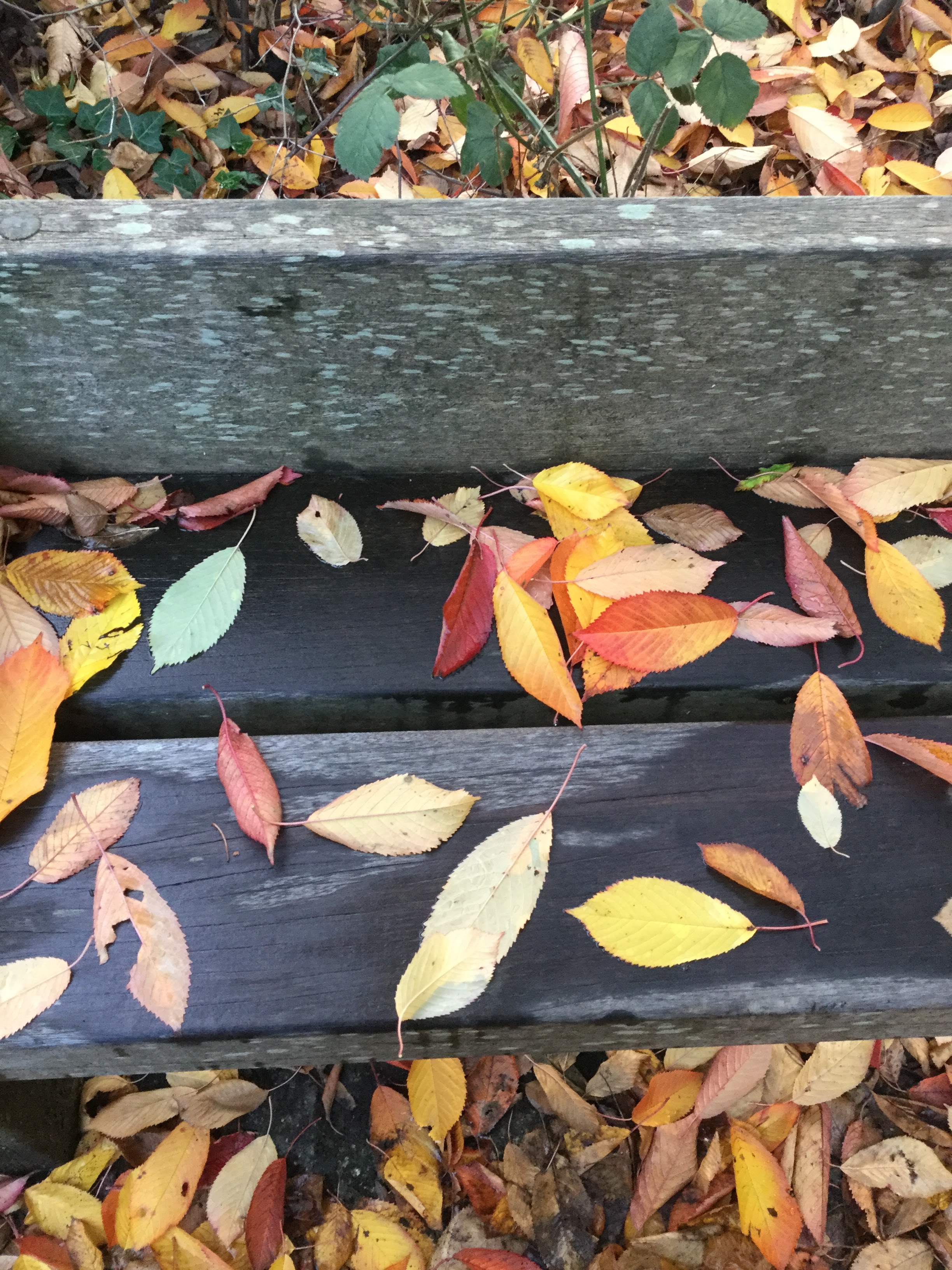
Photo by Sheila Webber: autumn leaves on the bench, October 2022

Sunday, January 24, 2021

Indigenous information literacy: recording and resources

There is a recording of the webinar from Rachel Chong (Kwantlen Polytechnic University, Canada), delivered on 22nd January 2021, on Indigenous information literacy at https://media.kpu.ca/media/Indigenous+Information+Literacy+-+Background/0_r9ac5esu. The first 25 minutes is her presentation about developing videos and then there is about 30 minutes of interesting questions and comments. You can also access the videos she made, embedded in an Indigenous Studies Libguide here https://libguides.kpu.ca/indigenous/indigenousinformationliteracy and in their own video channel at https://media.kpu.ca/playlist/dedicated/133875/0_3vccum6n/0_pd2m69be. The videos include: source evaluation; Finding Indigenous Voices; Elders and respectful research; TCPS2 and Indigenous Research (TCPS2 is the Canadian guideline on ethical research); How to cite elders in various different bibliographical styles (APA etc.).

Photo by Sheila Webber: in winter, looking forward to spring (this hopeful mimosa tree is in flower...), January 2021

Tuesday, July 10, 2018

New articles: lessons from a viral cat; indigenous matters; buttons; distance learning outreach; popping in

The latest issue of open access journal College and Research Libraries News (volume 79 issue 7, 2018) includes:
- Going viral: Copyright lessons from Max the Cat by Rebecca S. Wingo, Alexis Logsdon, Christopher Schommer. This starts "On November 29, 2017, a photo of a sign asking library patrons “please do not let in the cat” went viral. It wasn’t long before the Internet lore surrounding Max the Cat exceeded the scope of the original post." One of the lessons is "If students see your slides without citation, and yet you dock their final grade because they didn’t cite their sources, then you’re not modeling good behavior"
- Collective leadership and participation with indigenous matters: Redefining indigenous literacy by Te Paea Paringatai
- Outreach, engagement, learning, and fun in 60 seconds: Button making at the Rutgers University Libraries by Megan Lotts, Tara Maharjan (that's pin-on buttons with slogans, pictures etc. on them)
- Being there at a distance: Connecting the academic library to students who study abroad by Celia Emmelhainz, Marilyn R. Pukkila
- Encouraging users to pop in: Popcorn Day in the medical library by Natasha Williams, Shalu Gillum
Go to https://crln.acrl.org/index.php/crlnews/issue/view/1099/showToc
Photo by Sheila Webber: Deck chair, Palace Pier, Brighton, July 2018

Wednesday, August 19, 2015

Diversity, Recognition, Respect: Embedding Indigenous Services #wlic2015

Catching up with a final post from the IFLA Indigenous Matters Special Interest Group at  the World Library and Information (IFLA) Conference. The presentation Diversity, Recognition, Respect: Embedding Indigenous Services at the State Library of New South Wales, Australia was made jointly by Kirsten Thorpe and Monica Galassi (Indigenous Services, State Library of New South Wales, Australia).

The speakers started by acknowledging the traditional holders of the land and placing themselves. They introduced the services of the State Library of New South Wales (NSW). The aboriginal studies collections are among its strengths: they provide evidence from the colonial past and from current days of resistance and protest. In NSW in 2011 2.9% of the population were indigenous, and the speaker highlighted the districts which are most disadvantaged, which often have high percentage aboriginal population.

The library has developed and indigenous services business plan, with indigenous people and communities as partners. The libararians brainstormed, had focus group sessions, did benchmarking and a literature review, and evaluated past services.

Their vision is that “indigenous people are connected, engaged and represented within the library, collections and services. The vision is everybody’s business.” They are working first to implement the ATSILIRN protocols. Secondly they are developing a collection strategy. Thirdly they are investigating needs for digital resources preservation, creation and access (with emphasis on local keeping places). Their Indigenous Languages website is here http://indigenous.sl.nsw.gov.au/ (they showed a video celebrating indigenous languages at a symposium) and their Tumblr blog (which includes a word of the week feature) at http://indigenous-services-slnsw.tumblr.com/

Curating with Community: Indigenous Knowledge Informing Cultural Collections #wlic2015

More liveblogging from the IFLA Indigenous Matters Special Interest Group session at the World Library and Information (IFLA) Conference taking place in Cape Town, South Africa. Curating with Community: Indigenous Knowledge Informing Cultural Collections was presented by Damien Webb (State Library of Western Australia, Australia). There is a paper at http://library.ifla.org/1143/ Although Webb was not present, he had recorded the presentation, starting with a traditional welcome to the country.
The State Library's four key areas are: heritage and history; creative community engagement (cultural events, outreach etc.); supporting the public library network; championing literacy and learning. He was presenting the Storylines project at the State Library of Western Australia, an online keeping place: http://www.slwa.wa.gov.au/for/indigenous_australians/storylines
They have developed software collaboratively with the community, and there is a central archive (with things kept private if it is culturally sensitive) and community keeping places (the librarians help the community set up the system locally). After digitisation, items are repatriated to communities if they wish it (digitally or sometimes physically). The speaker showed how the system allowed rich information to be presented with the photographs and documents to explain their context and place. You can see this by exploring the website.

Webb highlighted that there were geographical barriers to enabling people to have physical access to libraries. Language was also a challenge, as there were more than 100 language groups and English is often a 2nd and 3rd language. Before the storylines project, people would have had to travel far and negotiate alien systems to get access to photographs of their family that the library might have.

However, Storylines has made this material more accessible, and local language overlays are also being worked on, so a high degree of literacy is not required. The service has built in cultural restrictions and sorrow protocols, with secret or sacred material kept private. Community ownership has been vital in the success of the project. Storylines also works as a platform for digital and information literacy training.

Management of Indigenous Knowledge in Primary Healthcare #wlic2015

A new day of liveblogging from the World Library and Information (IFLA) Conference taking place in Cape Town, South Africa. Management of Indigenous Knowledge in Primary Healthcare: Bridging the Gap between Library and Alternative Healthcare Practitioners in Nigeria was a paper presented by Ebijuwa Adefunke (Ladoke Akintola University of Technology, Nigeria). The setting is an inland state in Nigeria. Here the traditional doctors are important providers of healthcare, with knowledge orally transmitted through generations. The speaker saw libraries as agents of access, development and transformation, and this involved developing the role of librarians too.
She quoted the the World Bank's definition of indigenous knowledge.(IK) She defined traditional healthcare as derived science. In Nigeria 80% use traditional herbs as primary health care. Traditional healthcare providers are custodians of IK sytems. However these healthcare providers do not necessarily think of the sustainability of the herbs they use.
Adefunke identified the role of the library in preserving IK for the future, helping to manage it, so that it is not lost. Therefore she has done a study to idenify the needs and means of preserving this knowledge. 400 heathcare providers had questionnaires administered. Most were male, some had formal education, documentation was through writing in books, and preservation was mainly through storytelling and oral instruction. Barriers include language, illiteracy and financial barriers. There was also reluctance to share with outsiders. Ways out for libraries were seeing as identifying with practitioners, collaborating with them and demonstrating the need to the communities. Alternative healthcare providers could be trained in systematic management of traditional knowledge.
There is a paper at  http://library.ifla.org/1145/

Tuesday, August 19, 2014

Supporting and working effectively with indigenous students #wlic2014

Liveblogging at the World Library and Information Conference (IFLA) 2014 in Lyon, France, I attended a session of the IFLA IndigenousMatters special interest group. Camille Callison (Indigenous Services Librarian and Liaison Librarian for Anthropology, Native Studies and Social Work, University of Manitoba, Canada; pictured at the lectern) talked about Supporting and working effectively with indigenous students whilst building and strengthening relationships between indigenous communities and the academic library. She felt that libraries and archives play a vital role in helping preserving and honouring indigenous culture and history. At Manitoba they wanted to be a centre of excellence for indigenous education and research. This includes engaging with the community, and ensuring that indigenous cultures and knowledge are integrated into work and study. Here is the link to their Indigenous Connect website: http://umanitoba.ca/indigenous/. Callison identified the history of distrust and cultural imperialism, and a "culture of whiteness" in crricula and library holdings, which all provide barriers to achievement.
One way in which these barriers are addressed is through a home and community (Bald Eagle Lodge). They have also attempted to decolonise the library, although this is a slow process (for example classification systems e.g. that indigenous people are "ghettoised" in "History"; the confusion about cvarious LC subject headings to do with indigenous people).

Callison said that the library aims to address the unique needs of the indigenous students. Strategies include: recognising bias; bringing the library to students by having sessions in the Migizii Agamik (sitting by the lift to catch them on their way to coffee!) and having special sesions in the library; dialogue e.g. in the classroom, working with them on assignments; having a special Facebook group; relationship building with the local indigenous community; holding an Aboriginal Archives Day and a storytelling event.

She visits schools and other recruitment events so the prospective students know they will be supported. Collection development is also important, in the general collections and special collections e.g. graphic novels. Collison also talked about the library's role in terms of preserving and giving access to indigenous knowledge.The third photo here shows a statement about indigenising the academy (which I wasn't quick enough to transcribe)
She mentioned a book in which she has a chapter Aboriginal and visible minority librarians book and the International indigenous librarians Forum to be held in 2015.