
Showing posts with label Spain. Show all posts
Showing posts with label Spain. Show all posts
Friday, March 07, 2025
Alfamed


Monday, February 12, 2024
Seniors United Against Misinformation

Seniors United Against Misinformation: A European Initiative for Media Literacy. An interesting project "We are a EU-funded project that unites three partners from diverse backgrounds and industries. We are united by a strong belief in the power of collaboration and knowledge sharing to tackle society's biggest challenges. We welcome the opportunity to share our experiences with any organization interested in joining us on this journey."
https://www.wearesum.eu/
Photo by Sheila Webber: snow, February 2024
Thursday, July 28, 2022
Climate Action in Libraries: Creating a More Sustainable Future by Engaging and Inspiring Youth #WLIC2022

The last formal session I attended at WLIC in Dublin was Climate Action in Libraries: Creating a More Sustainable Future by Engaging and Inspiring Youth, organised by the IFLA Environment, Sustainability and Libraries Section, Libraries for Children and Young Adults Section. There were six short talks
1. The Libraries Inspiring Young People toward Sustainable Futures: A Danish Example from Søren Dahl Mortensen, Odense Central Library, Denmark. The focus of their project was sustainability and also new ways of lending. They decided to make recycling kits for lending out, asking young people about what should be in the kit. The first is a DIY kit has tools and guides useful for when you move away frm home e.g. drill, tool box, instructions so people can do practical things like put up pictures and shelves. The 2nd is a Party Kit with popcorn/candyfloss machine, lights etc. There is also an Outdoor kit, a food/gastronomy kit and a Scrap Sculpture kit. There were discussions abut whether these were things for libraries to do, but the answer is, yes they are!
2. Coatian Libraries Engaging Youth in Sustainable Practices from Alica Kolaric, University of Zadar, Croatia . The speaker identified that there were lots of library initiatives and she highlighted some of them. (1) "we sow and plant" sowing and monitoring growth of plants (2) Celebration of World Bee Day (3) Children learning about local meadow plants (planting some more bee-friendly plants) and bees (4) Creating a picture book with stories from local folk tales and ecological messages (5) Making a wooden composter (6) Ecologically themed puppet show (7) Stribor Forest project, an instructive trail - the library collaborating with a local hiking group (8) Book shelves aith ecologically themed books (9) Lavender days - children harvesting this local crop and making lavender bags etc. in the library (10) Eco themed storytelling (11) Green library project in Zagreb with exhibitions, walks etc.
3. Training for Teachers and Librarians About Sustainability Through Picture Books and Comics. An Example from the Bibliothéque Nationale de France (BnF) from Emilie Bettega, Bibliothèque Nationale de France, France. She provided a full text paper here https://repository.ifla.org/handle/123456789/1998 She highlighted that the new Bibliothéque Nationale building contains in the middle an urban forest with cute animals! There is a reading room for sustainable development and also a section of the website devoted to sustainable development. They collaborate with the EAC on training teachers about how to use picture books and comics in sustainability education. Also they collaborated with Cite des sciences et industrie, and a key part of this was enabling teachers to help pupils create their own comics, learning how to use an app that supports creation of comics. This led in turn to the idea of having training for librarians.
4. Youth and Environmental Emotions Project – Public Libraries Supporting Youth to Treat and Express Their Emotions and Views Concerning Environmental Issues from Veera Visuri, Helsinki City Library, Finland. There also is a paper for this https://repository.ifla.org/handle/123456789/1957. This started from the fact that young people are experiencing climate anxiety and thinking about the role of public libraries in countering this anxiety. The project involved libraries in 4 cities: main target groups were people aged 13-20 an also librarians (who can continue the work). They carried out a survey to get the young people's own ideas. There were lots different ideas (see the picture above) in libraries, some also in schools and youth centres. They also used social media e.g. TikEok, Instagram, Youtube etc. on themes such as tips, environmental feelings. They had campaigns which solicited questions and then experts answered them in videos. Providing the information, events etc. where the young people were situated was important (physical and virtual places). They are publishing a practical guide to events and activities, to support people organising these.
5. Tales, Videos, Games and Environmental Education to Engage Children and Young Adults: Looking for Funny Approaches to get Involved With SDGs from RECIDA (Spain) from Rosario Toril Moreno, National Centre of Environmental Education, National Parks Autonomous Agency, Ministry for the Ecological Transition and the Demographic Challenge, Spain (coauthored with her collagues). There is a full text paper here https://repository.ifla.org/handle/123456789/1962. RECIDA is a network of green libraries with working groups for different projects. Their website is http://www.recida.net and they participate in a lot of social media platforms. They loan collections, suitcases with different materials in them, have mobile libraries and run things like environmental storytelling. They have incorporated SDGs into readings that teachers can use, and create videos e.g. on how to take care of animals and the forest. They have created games e.g. SDG escape room. They encourage young people to carry out investigations and activities e.g. creating gardens, monitoring air quality.
6. Green Initiatives Towards a Sustainable Future: Insights From Libraries in Kenya from Arnold Mwanzu, Aga Khan University, Kenya. His paper is here https://repository.ifla.org/handle/123456789/1956. As not much was known what was being done in Kenyan libraries to address these green issues, they did some research. They used interviews, observation and document review and looked at libraries in a variety of sectors. May librarians were not familiar with the concept of green libraries, but in fact they were carrying out green library practices. Examples are rain harvesting, using natural lighting, tree planting inside the library (all had planting either or inside the library, and sometimes students were involved), discouraging printing and generally using less paper, using solar energy. Young people are involved in greening events (e.g. collaborating with a school on tree planting). They propose more involvement of young people, having performance evaluation for the green aspect of libraries and maintaining the green library standards.
Wednesday, June 29, 2022
New articles: The disinformation society: The impact of fake news on the public sphere

- Creators and spectators facing online information disorder. Effects of digital content production on information skills by Gabriela Taddeo | Belinda de-Frutos-Torres | María-Cruz Alvarado https://doi.org/10.3916/C72-2022-01
- Unraveling disinformation: Notions and discourses from the Spanish population by Lidia Valera-Ordaz | Marina Requena-i-Mora | Dafne Calvo | Guillermo López-García https://doi.org/10.3916/C72-2022-02
- Russian disinformation in Eastern Europe. Vaccination media frames in ro.sputnik.md by Andreea-Alina Mogoș | Teodora-Elena Grapă | Teodora-Felicia Șandru https://doi.org/10.3916/C72-2022-03
- Rhetoric of parliamentary disinformation on Twitter by Eva Campos-Domínguez | Marc Esteve-Del-Valle | Cristina Renedo-Farpón https://doi.org/10.3916/C72-2022-04
- Quality recognition as a prescriber against disinformation by Dolors Palau-Sampio | Adolfo Carratalá | Raquel Tarullo | Paz Crisóstomo https://doi.org/10.3916/C72-2022-05
- The life of COVID-19 mask memes: A diachronic study of the pandemic memescape by Marta Dynel https://doi.org/10.3916/C72-2022-06
- Virtual reality with distractors to overcome public speaking anxiety in university students by Emma Rodero | Olatz Larrea https://doi.org/10.3916/C72-2022-07
- Political hate speech of the far right on Twitter in Latin America by Enrique Díez-Gutiérrez | María Verdeja | José Sarrión-Andaluz | Luis Buendía | Julián Macías-Tovar https://doi.org/10.3916/C72-2022-08 - Smartphones in Higher Education. A longitudinal qualitative study by Irina Salcines-Talledo | Natalia González-Fernández | Laura Díaz-Herrera | Manuel Area-Moreira https://doi.org/10.3916/C72-2022-09
- Interdisciplinarity of scientific production on hate speech and social media: A bibliometric analysis by Antonia Ramírez-García | Antonio González-Molina | María-del-Pilar Gutiérrez-Arenas | Manuel Moyano-Pacheco https://doi.org/10.3916/C72-2022-10
Photo by Sheila Webber: ferns, May 2022
Sunday, March 27, 2022
New articles: hate speech

- Adolescents’ motivations to perpetrate hate speech and links with social norms by Sebastian Wachs, Potsdam (Germany), Alexander Wettstein, Berna (Switzerland), Ludwig Bilz, Senftenberg (Germany) & Manuel Gámez-Guadix, Madrid (Spain).
- Hate speech and social acceptance of migrants in Europe: Analysis of tweets with geolocation by Carlos Arcila-Calderón, Salamanca (Spain), Patricia Sánchez-Holgado, Salamanca (Spain), Cristina Quintana-Moreno, Salamanca (Spain), Javier-J. Amores, Salamanca (Spain) & David Blanco-Herrero, Salamanca (Spain).
- Hate speech analysis as a function of ideology: Emotional and cognitive effects by Natalia Abuín-Vences, Madrid (Spain), Ubaldo Cuesta-Cambra, Madrid (Spain), José-Ignacio Niño-González, Madrid (Spain) & Carolina Bengochea-González, Madrid (Spain).
- A systematic literature review of the representations of migration in Brazil and the United Kingdom by Isabella Gonçalves, Mainz (Germany) & Yossi David, Mainz (Germany).
- When negativity is the fuel. Bots and Political Polarization in the COVID-19 debate by José-Manuel Robles, Madrid (Spain), Juan-Antonio Guevara, Madrid (Spain), Belén Casas-Mas, Madrid (Spain) & Daniel Gómez, Madrid (Spain).
- Twitter and human trafficking: Purposes, actors and topics in the Spanish-speaking scene by Alba Sierra-Rodríguez, Granada (Spain), Wenceslao Arroyo-Machado, Granada (Spain) & Domingo Barroso-Hurtado, Cáceres (Spain).
- Special Education Teacher’s professional development through digital storytelling by Ozgur Yasar-Akyar, Ankara (Turkey), Cinthia Rosa-Feliz, Santo Domingo (Dominican Republic), Solomon Sunday-Oyelere, Luleå (Sweden), Darwin Muñoz, Santo Domingo (Dominican Republic) & Gıyasettin Demirhan, Ankara (Turkey).
- Detection of traits in students with suicidal tendencies on Internet applying Web Mining by Iván Castillo-Zúñiga, Aguascalientes (Mexico), Francisco-Javier Luna-Rosas, Aguascalientes (Mexico) & Jaime-Iván López-Veyna, Zacatecas (Mexico).
- Booktokers: Generating and sharing book content on TikTok by Nataly Guiñez-Cabrera, Chillán (Chile) & Katherine Mansilla-Obando, Santiago (Chile).
- The relationship of Twitter with teacher credibility and motivation in university students by Facundo Froment, Sevilla (Spain), Alfonso-Javier García-González, Sevilla (Spain) & Julio Cabero-Almenara, Sevilla (Spain).
Go to https://www.revistacomunicar.com/index.php?contenido=revista&numero=71&idioma=en Photo by Sheila Webber: trees, Chapelgarth, March 2022
Wednesday, January 19, 2022
New articles: Media education; Multiliteracy; Disinformation; Teachers' digital and media and information literacy

The new issue of the open access journal Comunicar (vol 30 no. 70, 2022) has a focus on New challenges for teachers in the context of digital learning.
Articles are in English and Spanish - if you want to change the language, click the flag on the top right of the screen (e.g. a Union Jack for English).
Articles include:
- Disinformation and multiliteracy: A systematic review of the literature
Jesús Valverde-Berrocoso, Cáceres (Spain), Alberto González-Fernández,
Cáceres (Spain) & Jesús Acevedo-Borrega, Cáceres (Spain).
https://doi.org/10.3916/C70-2022-08
- Critical media literacy to improve students' competencies
Walter-Antonio Mesquita-Romero, Sibundoy (Colombia), Carmen
Fernández-Morante, Santiago de Compostela (Spain) & Beatriz
Cebreiro-López, Santiago de Compostela (Spain).
https://doi.org/10.3916/C70-2022-04
- Teachers' perspectives for a critical agenda in media education post COVID-19. A comparative study in Latin America
Julio-César Mateus, Lima (Peru), Pablo Andrada, La Serena (Chile), Catalina González-Cabrera, Cuenca (Ecuador), Cecilia Ugalde, Cuenca (Ecuador) & Sebastián Novomisky, La Plata (Argentina).
https://doi.org/10.3916/C70-2022-01
- ICT and Media competencies of teachers. Convergence towards an integrated MIL-ICT model
Alfonso Gutiérrez-Martín, Segovia (Spain), Ruth Pinedo-González, Segovia (Spain) & Cristina Gil-Puente, Segovia (Spain).
https://doi.org/10.3916/C70-2022-02
The whole issue is at https://www.revistacomunicar.com/index.php?contenido=revista&numero=70
Photo by Sheila Webber: Christmas trees out for collection no. 3, January 2022
Tuesday, December 21, 2021
Recent articles: Journalism; active learning; disciplinary standards; teaching assistants; international students

The last issue of priced journal Portal: libraries and the academy (volume 21 issue 4) includes:
- Redesigning a Journalism Course to Integrate IL: A Case Study by Piotr S. Bobkowski, Karna Younger, John C. Watson
- Participation and Presence: Interrogating Active Learning by Alison Hicks, Caroline Sinkinson
- Teaching Assistants’ Research Assignments and Information Literacy by Glenn Koelling, Alyssa Russo
- An Analysis of References to Information Literacy in National Disciplinary Standards by Kendall Faulkner, Tiffanie Ford-Baxter
- Understanding Ethics and Quality in Information Literacy: A Multidimensional Approach by María Pinto, Dora Sales, Rosaura Fernández-Pascual
- “Hay muchos Méxicos”: A New Approach to Designing International Information Literacy Instruction by Alison Hicks, Bronwen K. Maxson, Betsaida M. Reyes
- Effects of Students’ Demographic and Academic Characteristics on Library Use: A Perspective from Pakistan by Alia Arshad, Faiqa Mansoor, Khalid Mahmood
Go to https://muse.jhu.edu/issue/46379
Photo by Sheila Webber: the wreath & bells at number 21, December 2021
Monday, August 02, 2021
New articles: Data Literacy; the WHY method; IL of first gen students; Librarians as teachers

The latest issue of open-access College and Research Libraries (vol 82 no 5) at https://crl.acrl.org/index.php/crl/issue/view/1602/showToc has the following articles:
- Making Sense of Student Source Selection: Using the WHY Method to Analyze Authority in Student Research Bibliographies by Frank Lambert, Mary Thill, James W. Rosenzweig (WHY= Who wrote each source, How it was edited, and whY it was published)
- Exploring Social Sciences Students’ Perceptions on Information Literacy and the Use of Mobile Technologies in Higher Education by Maria Pinto, Dora Sales, Rosaura Fernández-Pascual, David Caballero-Mariscal
- The Impact of Basic Data Literacy Skills on Work-Related Empowerment: The Alumni Perspective by Marek Deja, Aneta Januszko-Szakiel, Paloma Korycińska, Paulina Deja
- Assessing the Information Literacy Skills of First-Generation College Students by Sarah LeMire, Zhihong Xu, Douglas Hahn, Valerie Balester, Leroy G. Dorsey
- Open but Not for All: A Survey of Open Educational Resource Librarians on Accessibility by Teresa Auch Schultz, Elena Azadbakht
- Using Machine Learning to Predict Chat Difficulty by Jeremy Walker, Jason Coleman
The previous issue vol 82 no. 4 included
- Epistemology of Teaching Librarians: Examining the Translation of Beliefs to Practice by Mary K. Oberlies, Maoria J. Kirker, Janna Mattson, Jason Byrd
- Preparing the Instructional Librarian: Representation of ACRL Roles and Strengths in MLS Course Descriptions by Sandra J. Valenti, Brady D. Lund
Photo by Sheila Webber: Hydrangea July 2021
Sunday, December 27, 2020
Digital Native News Media: Trends and Challenges

Volume 8 issue 2 of the open access journal Media and Communication was devoted to the theme of Digital Native News Media: Trends and Challenges (by which is meant news media that are "born digital", not media aimed at digital natives, looking particularly at hispanic contexts). The articles include:
-Information Quality in Latin American Digital Native Media: Analysis Based on Structured Dimensions and Indicators by Claudia Rodríguez-Hidalgo, Diana Rivera-Rogel and Luis M. Romero-Rodríguez
- Cross-National Similarities and Differences between Legacy and Digital-Born News Media Audiences by Alfonso Vara-Miguel
- Business Model Innovation in News Media: Fostering New Relationships to Stimulate Support from Readers by Giuliander Carpes da Silva and Gabriela Gruszynski Sanseverino
- Why Do Digital Native News Media Fail? An Investigation of Failure in the Early Start-Up Phase by Christopher Buschow
- Behind the Comments Section: The Ethics of Digital Native News Discussions by Orge Castellano Parra, Koldobika Meso Ayerdi and Simón Peña Fernández
- Media Roles in the Online News Domain: Authorities and Emergent Audience Brokers by Sílvia Majó-Vázquez, Ana S. Cardenal, Oleguer Segarra and Pol Colomer de Simón
- Between Self-Regulation and Participatory Monitoring: Comparing Digital News Media Accountability Practices in Spain by Pedro-Luis Pérez-Díaz, Rocío Zamora Medina and Enrique Arroyas Langa
Go to https://www.cogitatiopress.com/mediaandcommunication/issue/view/174
Photo by Sheila Webber: crib (the basis of which is a set I was given by an aunt when I was about 7), December 2020Monday, December 07, 2020
New articles: Information Literacy bibliography 2019; business students; undergrads IL; Attitudes to Google Scholar

The latest issue of priced publication Reference Services Review is Volume 48 Issue 4. It includes
- Library instruction and information literacy 2019 by Tessa Withorn, Joanna Messer Kimmitt, Carolyn Caffrey Gardner, Anthony Andora, Cristina Springfield, Dana Ospina, Maggie Clarke, George Martinez, Amalia Castañeda, Aric Haas, Wendolyn Vermeer. This is the latest of the annual annotated bibliographies published by RSR. "This year, 370 articles, books, reports and dissertations are annotated and organized in the following categories: K-12 Education, Children and Adolescents (31); Academic and Professional Programs (257); Everyday Life, Community and the Workplace (30); Libraries and Health Information Literacy (23); Multiple Library Types (13); and Other Information Literacy Research and Theory (16)." As usual, this is not a comprehensive listing of all articles to do with information literacy from 2019, but it covers English-language LIS journals well and is very useful. When I accessed it the pdf was of the article from the previous year, but the web version was correct, hopefully it will all be correct by the time you look at it.
- Relating library user education to business students’ information needs and learning practices: a comparative study by Yifei Zhang, Patrick Lo, Stuart So, Dickson K.W. Chiu
- Belief in importance of information literacy abilities among undergraduates. Underlying factors and analysis of variance by Maria Pinto, David Caballero, Dora Sales, Alicia Segura
- OhioLINK librarians and Google Scholar over time: a longitudinal analysis of attitudes and uses by David Luftig, Joan Plungis.
Go to https://www.emerald.com/insight/publication/issn/0090-7324/vol/48/iss/4
Photo by Sheila Webber: I made the Christmas puddings a week ago, using my mother's recipe. They are now all cooked (steamed) and maturing.Wednesday, November 11, 2020
New articles: underserved students; comparing student competencies; collaboration
Foskey, A., & Roper, A. (2020). Constructing authority: Using the ACRL Framework to connect with underserved students. College & Research Libraries News, 81(10), 508. https://doi.org/10.5860/crln.81.10.508 "At the community college level, rethinking library instruction in light of the ACRL Framework for Information Literacy for Higher Education often feels like a puzzle. ... In this column, we outline our library’s outreach efforts to engage with two intersecting and underserved groups: returning adult students and students in the LGBTQ+ community. ... At our library, engaging with the Framework provided an opportunity to design innovative instruction and programming."
Głowacka, E., Kisilowska, M., & Paul, M. (2020). Patterns of Differentiation of Students’ Competencies: A Comparative Study. College & Research Libraries, 81(7), 1061. https://doi.org/10.5860/crl.81.7.1061 "The aim of the project is threefold. First, it offers a comparative analysis of the information literacy skills of Polish and Spanish students, regarding both their self-assessment and belief in the importance of information literacy. Second, it focuses on differences and unique IL needs of students of courses rooted in social sciences and/or humanities. And third, due to these differences, it discusses the role of academic librarians in profiled IL training, integrated with the specific courses. Quantitative methodology was applied. The comparative study covered subgroups of humanities and social science students from Poland and Spain. Competencies in information searching, processing, evaluation, and communication/dissemination were taken into account. The results indicate some common ways of perception of valuing information competencies and major differences in assessment of IL self-efficacy. Students’ reluctance to visit libraries is another argument to enhance profiled IL training being realized in close cooperation of academic librarians and the faculty."Tran, N., & Chan, E. (2020). Seeking and Finding Research Collaborators: An Exploratory Study of Librarian Motivations, Strategies, and Success Rates. College & Research Libraries, 81(7), 1095. https://doi.org/10.5860/crl.81.7.1095 "This exploratory study explores librarians’ motivations, strategies, and their perceived or relative success rates for finding collaborations on research projects or library initiatives. Survey results indicate that the most prevalent motivators for seeking a collaborator were to acquire expertise that one lacked, sustain research interest, and obtain a sounding board. Workplace culture, being open to collaborations, and attending conferences and meetings were the top selected strategies for finding research collaborators with the highest relative success rates."
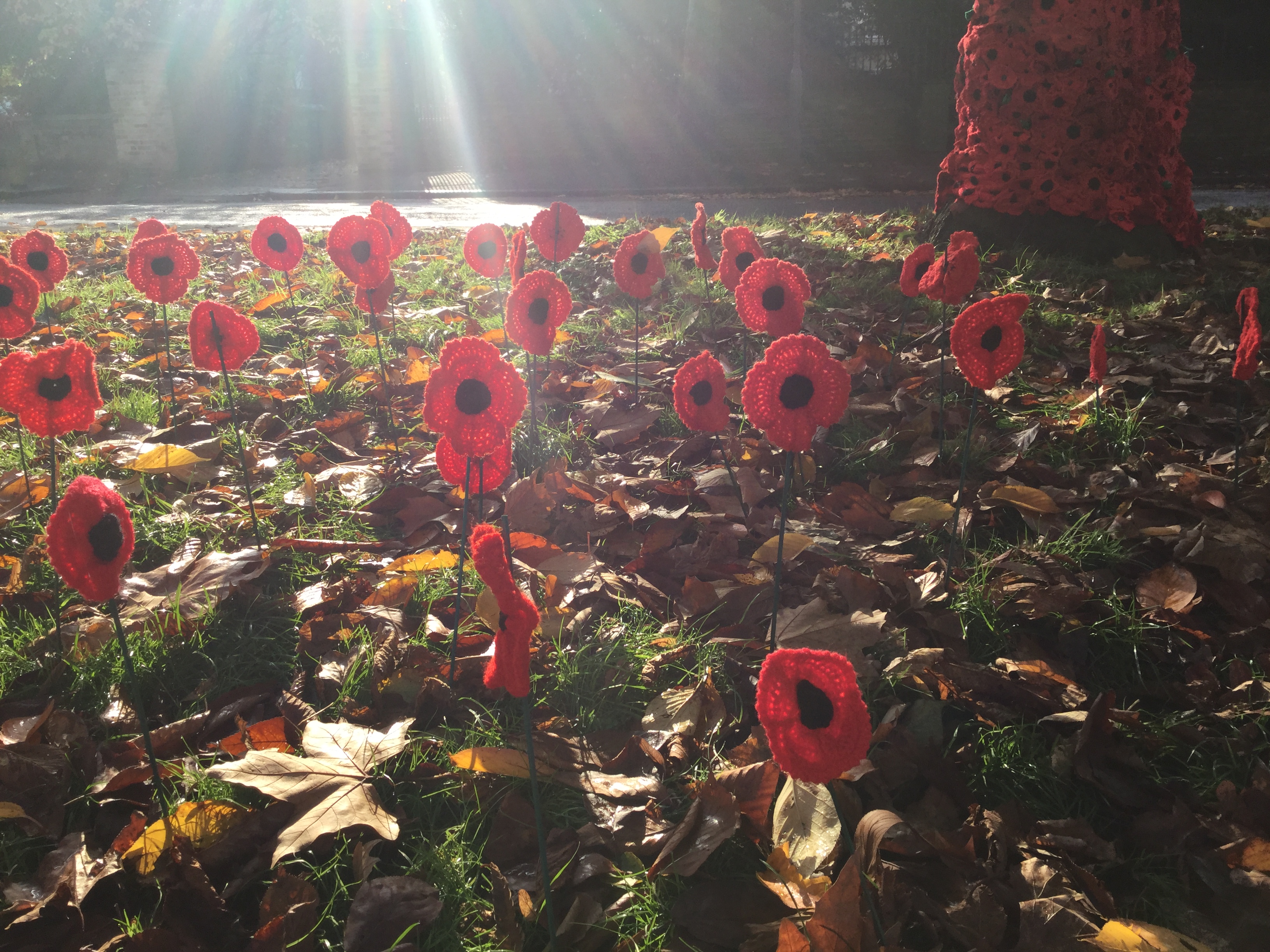
There is also a book review of Julien, H., Gross, M. & Latham, D. (2020). The Information Literacy Framework: Case Studies of Successful Implementation. Lanham, MD: Rowman & Littlefield (ISBN 978-1-5381-2144-3) Photo by Sheila Webber: remembrance poppies and sunlight, November 2020Friday, March 27, 2020
New articles: Students friending lecturers; Gender equality; SEO and news media

Ser o no ser amigos de los profesores en redes sociales: Las perspectivas de los estudiantes universitarios/ To-friend or not-to-friend with teachers on SNSs: University students' perspectives by Zeynep Turan, Erzurum (Turkey), Levent Durdu, Kocaeli (Turkey) & Yuksel Goktas, Erzurum (Turkey). https://doi.org/10.3916/C63-2020-08 "The most prominent finding is that the students were mostly opposed to their teachers’ sharing their political and religious views; however, they were in favour of teachers sharing information about their personal life. Despite some students displaying some hesitation, especially concerning the level of respect between them, the majority of students had a positive outlook towards teacher-student friendships. The students indicated that being friends on SNSs would increase their motivation towards the course."
SEO y cibermedios: De la empresa a las aulas/ SEO and the digital news media: From the workplace to the classroom by Carlos Lopezosa, Barcelona (Spain), Lluís Codina, Barcelona (España), Javier Díaz-Noci, Barcelona (Spain) & José-Antonio Ontalba, Valencia (Spain). https://doi.org/10.3916/C63-2020-06 "this study explores perceptions and applications of search engine optimization (SEO) in the online news media and identifies the future training needs of journalists in this sector."
Igualdad de género y TIC en contextos educativos formales: Una revisión sistemática/ Gender equality and ICT in the context of formal education: A systematic review by María-Paz Prendes-Espinosa, Murcia (Spain), Pedro-Antonio García-Tudela, Murcia (Spain) & Isabel-María Solano-Fernández, Murcia (Spain). https://doi.org/10.3916/C63-2020-01 "Among the main results, we highlight that most of the good practices in the different educational levels are related to the use of web 2.0. and STEM competences. Finally, we recommend the design of proposals that work on gender through ICTs, with the “smart classroom" as an interesting suggestion that is part of the emerging pedagogies."
Photo by Sheila Webber: a shy violet in the curb, March 2020
Monday, October 14, 2019
Encontrar información no es solo darle al botón de buscar
A Spanish-language page describing the issues around alerting children to the problems of fake news, it incorporates a cartoon video (... should you share that post about sandwiches containing dog meat???) and an infographic. It is on the site of is4k (Internet Security for Kids) https://www.is4k.es/blog/encontrar-informacion-no-es-solo-darle-al-boton-de-buscar
Wednesday, January 09, 2019
Recent articles: Digital media and learning

- Designing for deep learning in the context of digital and social media by James-Paul Gee, Tempe (United States) & Moisés Esteban-Guitart, Girona (Spain) https://doi.org/10.3916/C58-2019-01 "Deep learning and change are hard, and people will avoid them unless they are highly motivated to take on the challenge. The very basis of effective deep learning design is to attract and hold (some) people in space/site/activity through an emotionally-charged socially-shared “affinity” for a cause, idea, or endeavor and with the sorts of people who pursue that idea, endeavor, or cause. However, to truly motivate humans, that affinity needs “legs”, it must offer to take them to better places, to transport them on a journey with others with whom they feel valued and vice-versa."
- Google or Gutenberg Generation: Chilean university students’ reading habits and reading purposes by Giovanni Parodi, Valparaíso (Chile), Tomás Moreno-de-León, Valparaíso (Chile), Cristóbal Julio, Valparaíso (Chile) & Gina Burdiles, Concepción (Chile). https://doi.org/10.3916/C58-2019-08
- Connected learning ecologies as an emerging opportunity through Cosplay by Sophia Bender, Bloomington (United States) & Kylie Peppler, Irvine (United States). https://doi.org/10.3916/C58-2019-03
- Young people learning from digital media outside of school: The informal meets the formal by Sara Pereira, Braga (Portugal), Joana Fillol, Braga (Portugal) & Pedro Moura, Braga (Portugal). https://doi.org/10.3916/C58-2019-04
- Distributed digital contexts and learning: Personal empowerment and social transformation in marginalized populations by Arul Chib, Nanyang (Singapore), Caitlin Bentley, Canberra (Australia) & Reidinar-Juliane Wardoyo, Nanyang (Singapore). https://doi.org/10.3916/C58-2019-05
- Exploring the influence of the teacher: Social participation on Twitter and academic perception by Sonia Santoveña-Casal, Madrid (Spain) & César Bernal-Bravo, Madrid (Spain). https://doi.org/10.3916/C58-2019-07
- Multiple intelligences and video games: Assessment and intervention with TOI software by Pablo Garmen, Oviedo (Spain), Celestino Rodríguez, Oviedo (Spain), Patricia García-Redondo, Oviedo (Spain) & Juan-Carlos San-Pedro-Veledo, Oviedo (Spain). https://doi.org/10.3916/C58-2019-09
Contents page at https://www.revistacomunicar.com/index.php?contenido=revista&numero=58&idioma=en
Photo by Sheila Webber: Maryon Park, December 2018
Wednesday, October 04, 2017
Recent articles: peer evaluation of teaching; Educational story; Competency diagnosis; Scholarly communication

- Peer Evaluation of Teaching in an Online Information Literacy Course by Susan A. Vega García, Kristine K. Stacy-Bates, Jeff Alger, Rano Marupova (pp. 471-483)
- Educational Story as a Tool for Addressing the Framework for Information Literacy for Higher Education by Joshua J. Vossler, John Watts (pp. 529-542)
- A Diagnosis of the Levels of Information Literacy Competency among Social Sciences Undergraduates by María Pinto, Rosaura Fernández-Pascual (pp. 569-593)
http://muse.jhu.edu/issue/36615
In an earlier issue this year (2017): Portal: libraries and the academy (Volume 17, Number 1)
- What Do Undergraduate Students Know about Scholarly Communication?: A Mixed Methods Study by Catherine Fraser Riehle, Merinda Kaye Hensley (pp. 145-178)
http://muse.jhu.edu/issue/35630
Photo by Sheila Webber: Michaelmas daisies, September 2017
Sunday, April 17, 2016
3 articles: public libraries and IL in Kenya; Faculty perceptions in Spain; IL for distance learning

Pinto, M. (2016). Assessing disciplinary differences in faculty perceptions of information literacy competencies. Aslib Journal of Information Management, 68 (2), 227 - 247. http://www.emeraldinsight.com/doi/full/10.1108/AJIM-05-2015-0079 (priced) "Uncovering faculty members’ conceptions of Information Literacy (IL), as well as exploring their perceptions with regard to the importance given to a previously defined set of core IL competences grouped into four categories: searching, evaluation, processing and communication and dissemination. Ascertaining the possible differences among the five knowledge branches (arts and humanities, sciences, social and legal sciences, health sciences, and technical disciplines); and understanding the importance granted to a set of learning improvement initiatives by the faculty. The paper aims to discuss these issues.
Design/methodology/approach - The survey was completed by a set of faculty members from the University of Granada (Spain). ... Results suggest that more than half of the surveyed faculty have what the authors define as an Academic Concept of IL."
Reichart, B. and Elvidge, C. (2015). Information Literacy in the Changing Landscape of Distance Learning: The Collaborative Design of a Flexible, Digital, Asynchronous Course. Pennsylvania Libraries: Research & Practice, 3 (2), 144 - 155. Available at: http://tinyurl.com/z3yenb7 (open access) "This paper offers a case study of the collaborative development of an information literacy course for students enrolled in an online, proprietary college. This credit-bearing course was created in accordance with ACRL’s Information Literacy Competency Standards for Higher Education as well as the newly adopted Framework for Information Literacy for Higher Education. The course treats information literacy as a meta-competency that encourages students to explore a variety of research tools, from social media to scholarly journals, and to develop critical thinking and research skills. In order to incorporate current best practices in information literacy pedagogy into the course itself, institutional factors needed to be addressed; these factors are reviewed here. This paper also explores implications for the future of the course, including assessment, the need to constantly adapt to the changing needs of students, and the ever-changing digital environment."
Photo by Sheila Webber: butterfly and blossom (1) April 2016
Monday, January 18, 2016
Recent open access items: ACRL and UDB; Spanish school teachers' perceptions; Zotero; faculty-librarian collaboration

Kraft, A and Williams, A. (2016). #Shelfies are encouraged: Simple, engaging library instruction with hashtags. College and research libraries news, 77 (1), 10-13. http://crln.acrl.org/content/77/1/10.full
Clements, N. and Guertin, L. (2016) Science literacy meets information literacy: Using Zotero as a teaching tool. College and research libraries news, 77 (1), 4-16. http://crln.acrl.org/content/77/1/14.full
Sullivan, B. and Porter, K. (2016). From one-shot sessions to embedded librarian: Lessons learned over seven years of successful faculty-librarian collaboration. College and research libraries news, 77 (1), 34-37. http://crln.acrl.org/content/77/1/34.full
McMichael, J. and McGlynn, L. (2015). Information Literacy by Design: Unlocking the Potential of the ACRL Framework. [Presentation] https://docs.google.com/presentation/d/1P0PAuI-zkDmcM2tkc4XFruItFAdK2tjyZ4iXmUarZ1M/edit#slide=id.g35f391192_00 (looks at the Understanding by Design approach to teaching).
Photo by Sheila Webber: daffodils flowering much too early, Blackheath, January 2016
Monday, July 13, 2015
Older people and technology; infolit of teachers

- Use, Consumption and Knowledge of New Technologies by Elderly People in France, United Kingdom and Spain by Cristina González, Carlos Fanjul, Francisco Cabezuel
- Internet and the Elderly: Enhancing Active Ageing by Carmen Llorente, Mónica Viñarás, María Sánchez
- Active Ageing and Access to Technology: An Evolving Empirical Study by Raquel Casado Fernando Lezcano, María José Rodríguez
- From Digital Divide to Psycho-digital Divide: Elders and Online Social Networks by Begoña Peral, Jorge Arenas, Ángel Francisco Villarejo
- A Mobile Augmented Reality Assistive Technology for the Elderly by Rafael Saracchini, Carlos Catalina, Luca Bordoni
- Using Technology to Connect Generations: Some Considerations of Form and Function by Mariano Sánchez, Matthew Kaplan, Leah Bradley
and a number of others all at http://www.revistacomunicar.com/index.php?contenido=revista&numero=45
There are also some articles outside the main theme, notably:
Álvarez, J.F. and Cervera, M.G. (2015). Information Literacy Grade of Secondary School Teachers in Spain: Beliefs and Self-Perceptions. Comunicar, 23 (24), 187-194. http://dx.doi.org/10.3916/C45-2015-20 The abstract reads "Information Literacy is one of the dimensions of digital competence and, in today’s information and media-based society, it should be a skill that everyone develops, especially secondary school teachers due to their influence on this crucial stage of student development. In this investigation we aim to determine the current level of information literacy of secondary school teachers in Spain. For this purpose we have designed a questionnaire (n=2,656) which is divided into two parts: the first asks questions related to belief and self-perception of information literacy indicators, and the second presents practical cases in which the teachers have to demonstrate their skills in information literacy. The results confirm that secondary school teachers’ beliefs show rather high values but that, even if the level of information literacy that the teachers have is acceptable, there are certain aspects of the indicators related to assessment, management and transformation of information in which the teachers display serious shortcomings. This highlights the need to establish a training plan for information literacy for secondary school teachers in Spain."
Photo by Sheila Webber: pink dahlia, July 2015
Friday, January 23, 2015
Tendencias en Alfabetización Informacional
For Spanish speakers: a 25 minutes radio interview with Felicidad Campal, Biblioteca Pública de Salamanca, in which she talks about Tendencias en Alfabetización Informacional (trends in information literacy). I am afraid that my Spanish aural comprehension is too rudimentary to tell you much more than that.
http://www.universoabierto.com/17729/tendencias-en-alfabetizacion-informacional-planeta-biblioteca-20150121/
http://www.universoabierto.com/17729/tendencias-en-alfabetizacion-informacional-planeta-biblioteca-20150121/
Tuesday, December 30, 2014
New articles: Journal of Academic Librarianship

Student Confidence/Overconfidence in the Research Process by Valeria E. Molteni, Emily K. Chan
Promoting Academic Library Research Through the “Faculty-Member-In-Residence” Program by Brian Detlor, Vivian Lewis
Library Instruction and Themed Composition Courses: An Investigation of Factors that Impact Student Learning by Erin E. Rinto, Elisa I. Cogbill-Seiders
Applications of Mobile Social Media: WeChat Among Academic Libraries in China by Jianhua Xu, Qi Kang, Zhiqiang Song, Christopher Peter Clarke
Relationship of Library Assessment to Student Retention by Elizabeth M. Mezick
Finding the Right Notes: An Observational Study of Score and Recording Seeking Behaviors of Music Students by Kirstin Dougan
The Shift of Information Literacy Towards Research 2.0 by Tibor Koltay, Sonja Špiranec, László Z. Karvalics
Interactive Training Materials Developed by Spanish University Libraries by Marta Somoza-Fernández
Go to http://www.sciencedirect.com/science/journal/00991333
Photo by Sheila Webber: Stone stairs, Walton Hall, December 2014
Subscribe to:
Posts (Atom)