Monday, February 26, 2007

Items in Update

A few items in the latest Update (magazine of the UK's CILIP) , March 2007

Crawford, John and Irving, C. (2007) "IL and the petition to the Scottish Parliament" Library and information update, 6 (3), 40-41. It is also available online.
Allen, P. (2007) "Developing the best blend? From blended e-learning to blended learning." Library and information update, 6 (3), 26-28. It is also available online

Only available in print: Godwin, P. (2007) "Information literacy and the internet generation." Library and information update, 6 (3), 36-39.

There is also a news snippet on page 3 (thanks to James O'Brien for alerting me to this) "Schhools breakthrough" saying that "CILIP's Information Literacy Group has persuaded the DfES (Department for Education and Skills) that the school curriculum in England needs to incorporate effecrive information literacy training when changes are made in 2008-9". This is not absolutely definite, but things look more hopeful than they did before the CILIP group had its meeting with the DfES.
Photo by Sheila Webber: Geneva University library, entrance hall, February 2007 (I was there for an IFLA Management & Marketing Section meeting)

Tribute

Photo by Sheila Webber: in memory of Steven Pimlott
Photo by Sheila Webber: in memory of Steven Pimlott, an old friend of my husband who died aged 53.
Here is a link to the Gilbert and Sullivan Archive home page to reflect one of his interests.

Friday, February 23, 2007

Enquiring minds

I have blogged about CILASS, which is focused on inquiry based learning. A project which is exploring an inquiry based approach in schools is Enquiring Minds a "£1 million three-year research and development programme to investigate how children can be effective in shaping their own learning." It is funded by Microsoft, which means there is the occasional oddity (e.g. "Wizard prompts" being identified as enabling tools rather than manifestations of the evil one which should be hunted from your MS Windows/Vista desktop on sight) Nevertheless, some interesting stuff. http://www.enquiringminds.org.uk/
Photo taken at the CILASS Academy in the Lake District in January "the inquirers set out on a walk."

Thursday, February 22, 2007

US Information Literacy Summit

The sixth annual Information Literacy Summit in Illinois, USA, Working Together for Lifelong Learning will be held in three locations, on April 3 (Illinois Central College), 19 (Moraine Valley Community College), and 24 (John A. Logan College), 2007. The registration fee is $15 and includes materials, continental breakfast, and lunch. Go to http://www.morainevalley.edu/
library/informationliteracysummit2007.asp
Snowflake that I created at Make-a-flake http://snowflakes.barkleyus.com/

Wednesday, February 21, 2007

Academic/ public collaboration wins award

On February 9th, Association of College and Research Libraries (ACRL) announced the 2007 ACRL Instructional Section Innovation award winner, The Community Workshop Series, created by the University of North Carolina-Chapel Hill Library’s Instructional Services Department. The award "recognizes a project that demonstrates creative, innovative, or unique approaches to information literacy instruction or programming." The press release is at http://www.ala.org/ala/pressreleases2007/
february2007/ISInnovationwinner.htm


The website for the initiative between the University and public libraries to offer free public workshops is here: http://www.lib.unc.edu/instruct/community_workshops/
Photo by Sheila Webber: Euphorbia, which seems to be blooming a little early?

LOEX sold out

If you were interested in going to the LOEX (information literacy) conference on May 3-5 in San Diego, USA, tough luck, as it apparently sold out very shortly after opening online booking on February 9th. Still, you can tantalise yourself with the programme here:
http://public.csusm.edu/acarr/loex/index.html

Tuesday, February 20, 2007

The Scottish Information Literacy Project

Photo by Sheila Webber: Sheffield morning, Feb 2007.The Project Information literacy: the link between secondary and tertiary education is now The Scottish Information Literacy Project: working with partners to create an information literate Scotland. "The project was originally set up to devise an information literacy framework linking secondary and tertiary education, the (Scottish) National Information Literacy Framework. The first draft of this is now almost complete and it is hoped to pilot it with partners in academic year 2007-8. The Project has now expanded to include the role of information literacy in the employability and workplace agendas, in lifelong learning, in continuing professional development and the adult literacies agenda. Advocacy workhas also been undertaken including a petition to the Scottish Parliament. Project funders include Eduserv and Learning and Teaching Scotland." The website is at http://www.gcal.ac.uk/ils/

Photo by Sheila Webber: Sheffield morning, Feb 2007.

Monday, February 19, 2007

[Mis]Information Fantasy in Science Fiction

An article which might be useful as a discussion-starter with some audiences is one by L.E Modesitt, a science fiction / fantasy author. It is called [Mis]Information Fantasy in Science Fiction. Modesitt criticises some sf authors and reviewers for assuming that every useful piece of information can be googled, whereas "the difficulties in obtaining the "right" information and data lie not just in the technology, but in the economics, in human nature, and in the requirements of society itself". Modesitt identifies issues of verification, information hoarding & secrecy etc.
He gives examples from some sf books to illustrate his points e.g. "In Neuromancer, [William] Gibson presents a world in which the problems of availability and accessibility are largely solved on a technical level, but for all that, Case, the one-time information/net "cowboy," cannot "Google" for the important information, even when his very life is at stake. In fact, the entire novel deals with all of the effort involved with just one information/data/AI management issue." The article was first published in the New York Review of Science Fiction, issue 220 (2006, vol 19, no. 4, p1-4). He has also published it in 2 parts (14th February 2007 and 17th February 2007) on his blog at http://www.lemodesittjr.com/blogs/blog/index.html

Photo by Sheila Webber: New Information Commons at Sheffield University, opening in April.

Thursday, February 15, 2007

Marketing information literacy

There are some PowerPoint presentations mounted from the CAVAL Reference Interest Group conference in November 2006 Getting Your Foot in the Door: Marketing Skills for Liaison and Information Literacy. This was held in Melbourne, Australia. The ppts are:
Angela Bridgland, University of Melbourne: Marketing information literacy: necessity or hype?
Craig Anderson, RMIT: Would you like fries with that? Are liaison librarians really salespeople in disguise?
Jenny Cameron, Victoria University: Keeping your foot in the door: 101 ways to connect with your clients
Carolyn McSwiney, Deakin University: More than meets the eye: Benefits of direct feedback from incoming international students at Deakin University Library.

This conference is at the top of the 2006 CRIG past events page: http://www.caval.edu.au/members/wpr/crig/pa/2006_papers.shtml
Further down the page, by the way, are some audio & ppt files recording four talks at an August 2006 seminar about new technologies (subjects were podcasting, RSS etc.)
Photo by Sheila Webber: St Kilda, Melbourne, Australia, Nov 2005 (taken when Bill Johnston and I were presenting at the previous CRIG annual conference).

Wednesday, February 14, 2007

Carribean IL

Photo by Sheila Webber: Weston park
Three items: two recent articles -

Hosein, S. (2006) "Teaching Information Literacy at the University of the West Indies in Trinidad." Information development, 22 (2), 110-115.

Durrant, F. (2006) "The World Wide Web Enhancing E-government in the Caribbean: an assessment of government portals or gateway websites." IFLA Journal, 32 (3), 240-250. Whole issue at http://www.ifla.org/V/iflaj/IFLA-Journal-3-2006.pdf

Thirdly, a UNESCO initiative that I found out about from an entry on Michael Lorenzen's blog. The progamme "targets primary school students and community residents within the vicinity of the [Tunapuna Public] Library and aims to empower the local community through access to information and knowledge, while improving Information Literacy skills." http://portal.unesco.org/ci/en/ev.php-URL_ID=23864&URL_DO=DO_TOPIC&URL_SECTION=201.html

Photo by Sheila Webber: Weston park, Feb 2007.

Tuesday, February 13, 2007

Dutch schools Information Literacy

This interesting (ENSIL: European Network for School Libraries and Information Literacy) blog entry is by Helen Boelens of Kalsbeek College, The Netherlands (a secondary school with about 2300 pupils). It has introduced an information literacy framework, and the information specialist (Boelens) has been using action research on this as the focus of her doctoral studies. "The model used for the information literacy instruction is known as the KILM (Kalsbeek Information Literacy Matrix). A detailed description of the KILM will be published on 31 January 2007, during a meeting of Dutch school librarians and other visitors." Her entry has links at the bottom to articles by Boelens on the situation of IL in schools in the Netherlands, and her work.
http://vvbad.typepad.com/ensil/2007/02/the_school_libr.html

[Apologies to those of you who saw a more enigmatic form of this entry that I meant to save as "draft" last night, but this morning I realised I'd saved it as "publish". At least it didn't have rude words in it or anything]

Photo by Sheila Webber: photo of snow falling on the front yard last week.

Monday, February 12, 2007

Talk at LIS show

My colleague Professor Sheila Corrall is giving a free talk at the Library + Information show on 18th April at the National Exhibition Centre, Birmingham, UK, Developing Information Literacy: Our Mission for the 21st Century . "Information literacy is recognised internationally as an essential competence for participation in a democratic society. Promoting the profession’s role in IL is one of CILIP’s strategic objectives. Discussion about IL usually concentrates on educational settings. This presentation takes a broader perspective in exploring how all information workers can contribute to developing information literate communities. "
Photo by Sheila Webber: Firth Court, Sheffield University, Feb 2007.

Sunday, February 11, 2007

New semester, new search engine

Last week was week 1 of out Spring semester, and was a busy teaching time for me. I was starting off the undergrad and postgrad versions of the Business Information module (my colleague Kendra Albright is coordinating the latter this time around, but she's doing project work in Africa at the moment), leading part of the first session of our new Inquiry in Information Mangement module, having the first session of the Information Literacy research module and also doing a short session on blogging in our Educational Informatics module. The good thing was that all of these are smallish classes (though as in particular the PGs are changing their choices, there's the issue of establishing who is in/out of a class). We use WebCT, which of course means more work managing that, but although I have many criticisms of WebCT, I HAVE now come to rely on it as well as part of my approach to teaching.

In a number of these sessions, a key task was asking students to create group mini-presentations on their existing knowledge/interests in the area. So, in the Inquiry in IM module, our first year BSc IM students were, individually and then in groups, mindmapping their current concepts of IM. There were similar exercises (though not involving mindmapping) in the Business Information and the IL Research modules. The postgraduate Business Information module is at least 50% international students, so people were able to contribute their observations on issues with business information in China, Poland, Greece and Zambia (for example, that businesses in Zambia were mostly owned by external investors, or the different cultures and market characteristics in different regions of China). These exercises help to raise issues for further discussion, and enable us to get to know the perspectives and knowledge of students.
So, finally to the "new search engine". I've also been updating material for Monday's Business Information lab, which includes looking at what search engines are useful for. One place I recommend to students, and use myself, is Karen Blakeman's blog at http://www.rba.co.uk/rss/blog.htm. She regularly posts the "top ten tips" of the participants in her training sessions. This alerted me to a metasearch engine that I really ought to have known about & which I immediately saw the use of, as it enables you to switch between many of the useful engines quickly AND you can tweak your search at each individual engine easily. This is Crossengine at http://www.crossengine.com/
Photo by Sheila Webber: Catkins in the snow, Feb 2007 (snow has melted now).

Saturday, February 10, 2007

Corporate blogging again

To continue the theme of a few days ago - a PowerPoint on corporate blogging, of the "how to" variety from JPB Public Relations: http://www.jbp.co.uk/documents/
Blogging-jbp-bristol%20seminar.ppt

Friday, February 09, 2007

UK IL courses

CILIP’s Community Services Group’s Information Literacy Group has got a free event, Information Literacy in Schools and Further Education, on 12 March 2007 10am-4pm, in London, UK. Numbers are limited to 25. To book your place please contact Helen Harrington h.harrington@imperial.ac.uk The speakers are:
Professor Dorothy Williams. Making connections: information literacy through the eyes of school teachers.
Dr Andrew Madden. Tracking School Children through the Information Maze.
Lynn Barrett. Assessment and Progression: Where are they and how do we move them forward?
Anne-Marie Tarter. Joined up thinking: librarians and teachers working together to deliver IL


There is also an event aimed at those in higher education Teaching IL effectively in HE on 26th February at St Martin’s College, Carlisle, UK, with cost of £50 or £60 depending on whether or not you are a member of CILIP CSG. Speakers are: Gwyneth Price, Lyn Parker, Chris Powis and Ginny Franklin. Further details at the above page.

Photo by Sheila Webber: first snowdrops, February 2007.

Petition against BL budget cuts

Although the Government has been shaving the British Library's budget, in the sense that it wasn't necessarily covering inflation with increases, it hasn't actually cut the budget before. However, this year it wants to. If you agree this is a bad thing, please consider signing an official online petition. You have to be a UK citizen to sign this. Info on the BL's view is at http://www.bl.uk/spendingreview.html and the petition is at http://petitions.pm.gov.uk/library/ If you felt strongly you could also email chief-executive@bl.uk with your name, contact number and a message about why the BL is valuable to you.
Photo by Sheila Webber: The British Library

Thursday, February 08, 2007

Information Literacy and IT course

Photo by Sheila Webber: It snowed today a bit,
Picked up from the IFLA list "This four-week course organised on behalf of IFLA ALP is now in its fifth year in New Zealand. The overall theme is information literacy, with special reference to needs and developments of countries in Asia and Oceania. The course will cover the basics of information literacy and information literacy training skills needed by information professionals in a variety of settings, as well as current IT applications in libraries." The course includes visits to ther libraries and is held at the Victoria University of Wellington Library. For information on the 2006 Workshop, go to http://www.ifla.org/VI/1/conf/Literacy_IT/index.html

A fee of US$2600 covers all tuition & accommodation. Potential participants should send an email message outlining (1) professional education, (2) professional work experience, (3) level of English ability, (4) reasons for wishing to attend the course, (5) self-assessed IT capabilities and (6)source of funding. Please email this information to: Professor GE Gorman or Dr Daniel Dorner, Asia-New Zealand Informatics Associates, Wellington, New Zealand, Email anzia@xtra.co.nz

Photo by Sheila Webber: It snowed today a bit, so we have "transport chaos" plus lots of news pictures of (in combination) small children, animals, robins and snowmen. I used my red umbrella. (Sheffield, Jan 2007)

Enterprise blogging

Someone whose blog I'm amazed at is that of Daniela Barbarosa, who works with Factiva (now part of Dow Jones) in California. Factiva is a top source for business information (news in particular), something I have to come back up to speed with, as Semester 2 is when I teach Business Information (and lots of other things...). She evidently puts in more than a full days work, and yet she blogs immensely just about every day, including multimedia entries (e.g. an entry which combines web 2.0 and cookery).

Periodically I try to catch up, and today I notice that she did an entry on 28th January about blogs in the corporate sector, with some useful links plus some observations from her work with corporate clients. The entry is at http://danielabarbosa.blogspot.com/2007/01/enterprise-blogging-looking-for-use.html The blog home page is at http://danielabarbosa.blogspot.com/
Photo by Sheila Webber: frosted plants, Weston Park, Sheffield, yesterday morning.

Wednesday, February 07, 2007

Information Literacy : Making a Difference?

Photo by Sheila Webber: Newcastle-upon-Tyne, with Baltic on the far right, Dec 2006.
Information Literacy : Making a Difference? will be held on 2 April 2007, Newcastle University, UK, 9.45am-4.00pm. Key speakers for this event will be Christine Bruce (Associate Professor in the Faculty of Information Technology at QUT, Brisbane, Australia) and Sally Brown (Pro Vice-Chancellor and Professor of Higher Education Diversity in Teaching and Learning at Leeds Metropolitan University). The event will be chaired by Moira Bent. This day long event is open to both internal and external delegates at a cost of £40 per person payable in advance. More info at http://www.ncl.ac.uk/quilt/events/occasional/infolit/infolit.html
Photo by Sheila Webber: Newcastle-upon-Tyne, with Baltic on the far right, Dec 2006.

Tuesday, February 06, 2007

Culture, Assessment

The latest issue of the IFLA journal has a couple of articles on information literacy:

Dorner, D.G. and Gorman, G.E. (2006) "Information Literacy Education in Asian Developing Countries: cultural factors affecting curriculum development and programme delivery." IFLA Journal, 32 (4), 281 - 293. (This seems to be the same as the IFLA paper presented at the 2006 IFLA conference: http://www.ifla.org/IV/ifla72/papers/082-Gorman_Dorner-en.pdf. An interesting paper this, in relating cultural issues to pedagogic approaches to information literacy.

Murta, L., Stec, E. and Wilt, M. (2006) "Using Assessment as a Tool to Improve Learning: an IFLA Workshop." IFLA Journal, 32 (4), 294-307. "Assessment" here means both assessment and evaluation (of teachers/programmes). It arises from the workshop at the 2003 IFLA conference in Berlin.

You download the whole issue (not individual articles) at http://www.ifla.org/V/iflaj/IFLA-Journal-4-2006.pdf. I was at that workshop, mentioned above, and this is where I stayed in Berlin during the conference.

Monday, February 05, 2007

Two videos

Two youtube.com videos to recommend. One I heard about on the jill/txt blog, and now seems to be recommended all over the place: anyway, it's Web 2.0: the machine is us/ing us by Michael Wesch, at Kansas State University and you can find it at http://www.youtube.com/watch?v=6gmP4nk0EOE. I already blogged about it on the Inquiry based learning blog, so you can go here for a little more info http://cilass.group.shef.ac.uk/?p=141

The second is recommended by Vivienne Bernath at Monash University, Australia, and it's from the health literacy site Media doctor http://www.mediadoctor.org.au/ It's a spoof doco about a new "epidemic" at http://www.youtube.com/
watch?v=RoppJOtRLe4
. Some of the commenters on Youtube don't seem to have spotted the spoofiness, but one commenter helpfully mentioned the spoof article in the BMJ that was part of the same campaign against "diseasemongering", so I tracked it down:
Moynihan, R. (2006) "Scientists find new disease: motivational deficiency disorder." British medical journal, 332, 745. (nb the date of publication is 1st April, i.e. April Fool's Day). There is also a follow-up editorial commenting on how the authors of the spoof were surprised how many people were taken in, and there are a couple of amusing follow-up letters in BMJ istelf.
Photo by Sheila Webber: Plane tree in early morning, Blackheath, January 2007.

Sunday, February 04, 2007

Participatory media literacy

I was alerted by Dr Joolz' blog to the Participatory media literacy site, which (insofar as it has a Syllabus page) seems to be based aound a course. Anyway it's a wiki-type thing with a lot of useful links to good sites & resources to do with wikis, blogs etc, plus some explanatory text. It's also obviously interesting in outlining another literacy, namely participatory media literacy, meaning (I think) ability to use web-based social & communication tools (like blogs) in order to create, communicate and "participate", as well as using them to get information. Howard Rheingold appears to be lead person. The site is at https://www.eu.socialtext.net/medialiteracy/index.cgi
Photo by Sheila Webber: Garden slippers in dappled sunlight, Kyoto, Japan, July 2005.

Saturday, February 03, 2007

Umbrella 2007

CILIP's Umbrella conference takes place 28-30 June 2007 in Hatfield, UK, and it has an information literacy track running throughout. There are contributions relating to different library sectors, health, public library, higher education etc. The programme can be seen at
http://www.umbrella2007.org.uk/

Photo by Sheila Webber: another view of my bird-of-paradise umbrella.

Friday, February 02, 2007

Research in practice

Research in practice is a project I came across because one of our technical people is working there as e-learning coordinator. I thought is was interesting because if its evidence-base into practice focus. It is "the largest children and families research implementation project in England and Wales. It is a department of The Dartington Hall Trust run in collaboration with the Association of Directors of Social Services, The University of Sheffield and our network of over 80 participating agencies in the UK. ... Our mission is to promote positive outcomes for children and families through the use of research evidence. ... Our purpose is to identify effective methods of understanding and using research by providing services to a collaborative network of committed agencies." http://www.rip.org.uk/index.asp
Photo by Sheila Webber: Ducks on jetty, Lake District, Jan 2007.

Wednesday, January 31, 2007

Journal of information literacy is launched!

Today saw the launch of volume 1 issue 1 of the Journal of Information Literacy, a new open-access (free on the web!) journal that focuses on all aspects of information literacy. I am the Editor and here is my Editorial. It accepts refereed articles and "articles from practice" (shorter articles from practitioners discussing their experiences, often experiences of teaching information literacy). There are also three book reviews in the first issue and the articles are as follows (the first two are refereed):

An evaluation of an information literacy training initiative at the University of Dar es Salaam. By E. Wema and M. Hepworth.
Using online collaborative learning to enhance information literacy delivery in a Level 1 module: an evaluation. By G. Walton, J. Barker, M. Hepworth, and D. Stephens.
Show them how to do it: using Macromedia Captivate to deliver remote demonstrations. By S. Patalong, and O. Llewellyn.
Transform your training: practical approaches to interactive Information Literacy teaching. By R. Jones, K. Peters, and E. Shields.
Online information literacy learning for nurses: exploration of an RCN learning area. By C. Lynch and A. Perrett.
The Information Literacy Resource Bank: re-purposing the wheel. By C. Jackson and R. Mogg.
Embedding Information skills into the Year nine PSHE/ Citizenship curriculum at Malvern Girls' College: integrating learning styles with pupil research. By R. Jones.

The Journal of information literacy is at http://www.informationliteracy.co.uk/JIL.aspx
Photo by Sheila Webber: Ambleside, Lake District, Jan 2007.

Monday, January 29, 2007

Creating an impact: enhancing teaching to large groups

On 16 February 2007 at St William's College, York, UK, there is an event for law librarians: Creating an impact: enhancing teaching to large groups. "Law librarians are frequently called upon to teach to large groups of students. The main aim of this event is to look at ways in which large groups can be managed in a way that enhances both the teaching and learning experience. In addition there will be a session on overcoming the perils of speaking in public. The day will conclude with a briefing on the OSCOLA training materials and a roundup of developments in e-learning technologies."
Non-BIALL members: £150.00; BIALL members: £120.00
More info at http://www.ukcle.ac.uk/newsevents/ukcleevent.html?event=432

Photo by Sheila Webber: Stockghyll, rivulet , Lake District, Jan 2007.

Saturday, January 27, 2007

ACRL conference

Photo by Sheila Webber: Roast squashThe Association of College and Research Libraries (ACRL) conference takes place March 29 - April 1st in Baltimore, USA. There are various Information Literacy talks and events e.g. the workshop Tossing a Life Preserver! Using Characteristics of Best Practices to Assess Your Information Literacy Program and the session Rocking the Boat & Catching the Wave: A Gaming Solution for Library Instruction ("Because computer games are popular among “millennials,” University of Cincinnati librarians created an online interactive game that actively engages students in learning about plagiarism. The panel will discuss the creation of the game, share assessment results and will demonstrate it.") Information is at: http://www.ala.org/ala/acrl/acrlevents/
baltimore/program07/program07.htm

There is also a conference wiki http://wikis.ala.org/acrlbaltimore/index.php/Main_Page

Photo by Sheila Webber: Roast squash, filmgrain effect, Jan 2007.

Friday, January 26, 2007

Experience of learning

A seminal work is The experience of learning, which appeared in two editions. There were imporatnt contributions from Entwistle, Hounsell, Marton, Dahlgren, Laurillard etc. Since it is now out of print in both versions, they have put it free on the web. Their suggested reference is:
Marton, F., Hounsell, D. and Entwistle, N., (eds.) (2005) The Experience of Learning: implications for teaching and studying in higher education. 3rd (Internet) edition. Edinburgh: University of Edinburgh, Centre for Teaching, Learning and Assessment.
http://www.tla.ed.ac.uk/resources/EoL.html

Photo by Sheila Webber: Shrine in Hakone, Japan, July 2005.

Thursday, January 25, 2007

Netskills Schools Information Literacy Projects

I forgot to report that Netskills announced a month or so ago that they had published final reports on two projects, one on a programme of workshops Exploring and Deterring Plagiarism in Schools. There is a report and a description of the workshop.
Similarly, Netskills first did an online survey on teachers' information use, followed up by interviews, and then ran two pilot workshops on Information Skills for Teachers, aimed at secondary school teachers (I think that would be "K12" in the USA). Go to: http://www.netskills.ac.uk/content/
projects/eduserv-info-lit/index.html
Photo by Sheila Webber: Plane trees at dusk, Blackheath, December 2006.

Wednesday, January 24, 2007

Shock of the social

My colleagues Phil Levy, Andrew Cox and Peter Stordy and I have had a paper accepted on The use of blogs in inquiry based learning at a one-day conference. The rest of the programme looks interesting too, but unfortunately I have a faculty teaching quality committee that day so it looks like I won't be able to go ;-( but I know my colleagues will do a good job.

The Shock of the Old 6: The Shock of the Social at Said Business School, University of Oxford, March 22 2007. "Shock 6 will explore the issues arising from the rise of social networking tools, Web 2.0 software and related collaborative technologies, and how best to make use of these innovative tools in teaching, learning and research." http://www.oucs.ox.ac.uk/ltg/events/shock2007/
Photo by Sheila Webber: Near Higham Hall, Lake District, Jan 2007.

LILAC programme available

The programme for the LILAC (Information Literacy) conference to be held in Manchester, UK, 26 - 28 March 2007 is now online, and there is a booking form online as well. Ross Todd and Christine Bruce are among the keynote speakers and I am speaking at the conference as are some of my colleagues at Sheffield University.
http://www.cilip.org.uk/specialinterestgroups/
bysubject/informationliteracy/lilac/lilac2007

Photo by Sheila Webber: Winter hills, Ambleside, Jan 2007.

Tuesday, January 23, 2007

Inquiry-based learning (2)

I've just read the first posting on the CILASS blog about the CILASS academy that I attended last week. The posting is here http://cilass.group.shef.ac.uk/?p=135 and it has a group photo taken at the front of the building. Included are me, and also my colleagues from Information Studies, Andrew Cox and Philippa Levy (Phil is also Academic Director of CILASS, so that takes up most of her time currently), and Peter Stordy from the Library. My photo here is of sheep near Higham Hall.

One of the "tangible" outcomes I had resulted from a pair activity in which I developed more fully a piece of assessment for a forthcoming Business Information Module. I have done away with the exam, and in addition to the existing coursework (an analytical reprt on a company, together with a short reflection on the student's information literacy in carrying out the work) each student will also be doing a short, critical media report. I had already decided I wanted the students to compare news reports about their chosen company with what the company said about itself. Marie Kinsey (a lecturer in Journalism) helped me to develop my idea further, so now I will be telling the students to focus on a financial announcement (annual accounts or interims) and specific types of media. This activity is already supported by various elements in the lecture sessions and labs, but I will further tweak the curriculum in order to encourage students to prepare themselves and gather data.

Evaluation of information literacy questions

An interesting document on the Higher Education Academy site:
Stubbings, R. and V. Franklin (2006) Overview of the HEA Development Fund project: Critical evaluation of information literacy questions used to support the Department of Politics, International Relations & European Studies (PIRES). Information and Computer Science Subject Centre of the Higher Education Academy.

"Loughborough University Library and the Department of Politics International Relations & European Studies (PIRES) wished to enhance second year student information literacy skills, so that they were able to produce good quality research dissertations. To achieve this, information literacy skills were embedded into the EUB608: Research Methods module and was delivered via the University’s Virtual Learning Environment (VLE), called Learn. The student understanding of the principles of information searching was assessed using computer aided assessment (CAA)." http://www.ics.heacademy.ac.uk/projects/
development-fund/final_reports/65ov_rstubbingsoverview.pdf
.
Photo by Sheila Webber: Near Higham Hall, Lake District, Jan 2007, lightly photoshopped.

Monday, January 22, 2007

Lifelong learning in Scotland

Photo by Sheila Webber: Jemima Puddleduck and friends
A consultation exercise is taking place in Scotland on lifelong learning. Themes covered include: Engagement with Employers; Flexible Learning Opportunities, Entitlement and Discretionary Support; Information, Advice and Guidance; Community Learning and Development; Journeys into and through Learning. There are some questions suggested, but comments outside these questions are welcomed. The closing date for responses is 12 February 2007.
Lifelong Learning - Building on Success: a discussion of specific issues related to Lifelong Learning in Scotland. http://www.scotland.gov.uk/Publications/2006/11/06141044/10
Photo by Sheila Webber: Jemima Puddleduck and friends, Lake Windemere, Jan 2007.

eIFL Handbook on Copyright and Related Issues for Libraries

Photo by Sheila Webber: Stockghyll waterfall, Ambleside, January 2007
The eIFL (Electronic Information for Libraries) Handbook on Copyright and Related Issues for Libraries has been published. "Sponsored by the UNESCO Information for All Programme, this is a practical guide to topical legal questions affecting the information work of libraries in the fast moving digital environment. Each topic is described briefly, the main policy aspectsfor libraries are outlined, and there are links to library policystatements for further reading. Where there are special issues for developing or transition countries, these are covered." The complete Handbook, as well individual chapters (available as web pages or in pdf), can be downloaded from the eIFL website: http://www.eifl.net/services/handbook.htm

eIFL is interesting in itself: it arose out of a Soros foundation initiative and its members are "local library consortia that are in charge of national licenses for e-resources", with an emphasis on Eastern & Central Europe and Africa.
Photo by Sheila Webber: Stockghyll waterfall, Ambleside, January 2007.

Sunday, January 21, 2007

Inquiry-based learning

There has been a bit of a gap in blogging, because I have been at an "academy" organised by the Centre for Inquiry-Based Learning in the Arts and Social Sciences for some of the people involved in CILASS e.g. academics from departments (archaeology, English, education etc) who have been implementing CILASS projects. The academy was held at Higham Hall in the Lake District, which is lovely (see fire assembly point, right & nearby field, below), but there was no internet access (broadband had gone down) so my dreams of blogging were doomed. You had to go to the end of the drive for mobile coverage too.

Anyway, it was avery stimulating event, with about 25 participants (a nice number) and two excellent guest facilitators/speakers in Angela Brew and Carolin Kreber. One thing this kind of event can do is remind you of the student experience e.g.

1) I realise I misunderstood the "homework" we were asked to do, writing about an experience of collaboration. I thought it meant you were collaborating to teach, whereas in fact it was supposed to be the students collaborating to learn. Fortunately I didn't look a complete idiot, since my example was an exercise in which students design, respond to and critique a questionnaire (in order to learn about questionnaire design) and there was student colloaboration as well as teacher collaboration (the description is here if you are interested).

2) In one of the first exercises (which was something like "write down one thing which inquiry-based learning means to you" on a post-it note, then swap it round til you don't know whose you've got, then put the post it on the board reading out the statement loudly) my mind went a complete blank. Help! I hadn't got my head round it and everyone else was swapping! Would anyone notice I hadn't handed round a note and didn't post anything?! (they didn't)

I think it is salutary to be in this sort of position periodically, to remind one of real anxieties first hand! More about the positive experiences anon.

Wednesday, January 17, 2007

Request for workplace partner

Photo by Sheila Webber: Dusk, Couthurst Road, Blackheath
I am passing on this request from John Crawford: "I am interested in undertaking a small(ish) scale study/ies on the use of information literacy in the workplace and problems encountered in promoting the understanding of it. It is part of the project Information literacy, the link between secondary and tertiary education. See http://www.gcal.ac.uk/ils/
I am looking for partners in the work situation either in not for profit or commercial organisations and would welcome outline expressions of interest from workplace librarians or people with appropriate contacts. If it proves possible to recruit a partner(s) it would then be a case of seeking funding and prospective partners would have to be prepared to be named in Applications. "
Please contact Dr. John Crawford , Library Research Officer, Glasgow Caledonian University,
Room 302, (3rd floor) 6 Rose Street, Glasgow, G3 6RB . Email: jcr@gcal. ac.uk
Photo by Sheila Webber: Tree & telephone wires, dusk, Couthurst Road, Blackheath, December 2006.

Tuesday, January 16, 2007

IL events at Staffordshire

fiacre, Vienna
There are two Information Literacy Community of Practice at Staffordshire University (UK) events coming up:
28 February afternoon: The speakers are Lucy McKeever (Netskills, Newcastle University) discussing the work Netskills have undertaken on the JISC i-skills project and Julie Adams (Learning Support, Information Services, Staffordshire University) discussing approaches to integrating IT into Learning Support.

18th April afternoon: Jo Parker (Information Literacy Unit Manager, Open University) discussing the rationale behind the Open University's new module TU120 Beyond Google and the emerging tools which students are now encountering in their everyday lives to deliver the IL message, and Andrea Hatton (Learning Support, Information Services, Staffordshire University) discussing how we learn about the learner and exploring the way in which we teach information literacy.

Go to http://www.staffs.ac.uk/infolitconf/events/index.php for more details
Phot by Sheila Webber: Matched greys drawing a fiacre, Vienna, December 2006.

Article on blogs

Ramos, M. and Piper, P.S. (2006) "Letting the grass grow: grassroots information on blogs and wikis." Reference Services Review, 34 (4), 570 - 574.
"The purpose of this paper is to illustrate some of the major uses and limiting factors of blogs and wikis, as well as the ways that these resources can be used by librarians and educators."

Monday, January 15, 2007

Health information literacy

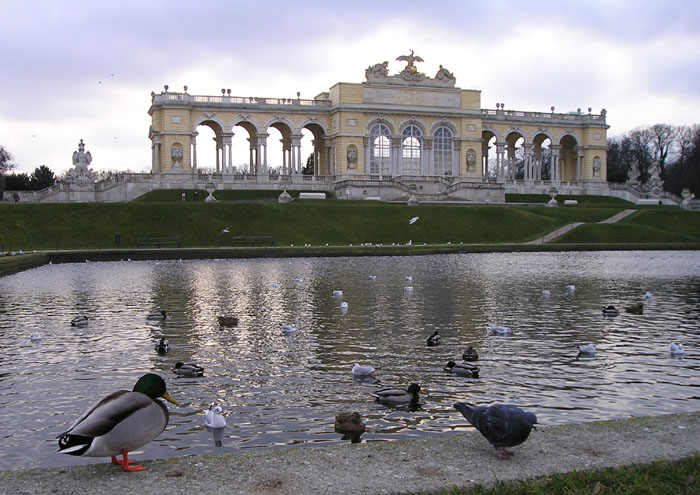
Photo by Sheila Webber: Schonbrunn Palace, Vienna

Thanks to Michael Lorenzen for bringing this paper to my attention: it is available full text on the web. Ivanitskaya, L, O'Boyle, I and Casey, A. (2006) "Health Information Literacy and Competencies of Information Age Students: Results From the Interactive Online Research Readiness Self-Assessment (RRSA) ." Journal of medical internet research, 8(2). http://www.jmir.org/2006/2/e6/

"The Research Readiness Self-Assessment (RRSA) is based on the [ACRL] Information Literacy Competency Standards for Higher Education, and it measures proficiency in obtaining health information, evaluating the quality of health information, and understanding plagiarism. [...] This study aimed to measure the proficiency of college-age health information consumers in finding and evaluating electronic health information; to assess their ability to discriminate between peer-reviewed scholarly resources and opinion pieces or sales pitches; and to examine the extent to which they are aware of their level of health information competency." 308 students participated. As well as being asked some multiple choice questions and doing some short exercsies, the students were asked "How do you rate your research skills?" . "Most respondents (84%) believed that their research skills were good, very good, or excellent. Students’ self-perceptions of skill tended to increase with increasing level of education. Self-reported skills were weakly correlated with actual skill level, operationalized as the overall RRSA score..."

Photo by Sheila Webber: ground of Schonbrunn Palace, Vienna, December 2007.

Sunday, January 14, 2007

Recent articles, mostly academic libraries

Stevens, C. and Campbell, P. (2006) "Collaborating to connect global citizenship, information literacy, and lifelong learning in the global studies classroom." Reference Services Review, 34 (4), 536 - 556.
"The purpose of this paper is to critically examine the concepts of lifelong learning, information literacy, and global citizenship, making explicit connections among them via theories of social capital. It then presents a model of librarian-faculty collaboration that relies upon information literacy as a framework for fostering lifelong learning and global citizenship." (I thought this paper was particularly interesting, and it describes the tasks and assignments in some detail.)

Boyd, J. et al (2006) "The One-Box Challenge: Providing a Federated Search That Benefits the Research Process." Serials review, 32 (4), 247-254.
Five US librarians briefly describe comment on their institution's implementation of federated searching, including some observations about the relationship with information literacy.

Harrison, J. and Rourke, L. (2006) "The benefits of buy-in: integrating information literacy into each year of an academic program." Reference Services Review, 34 (4), 599 - 606.
"The purpose of this paper is to describe the integration of information literacy into each year of a Bachelor of Arts and Science (BAS) program at the University of Guelph, Ontario, and to explain the role of librarian mentors in this program. "

Jackson, L. and Hansen, J (2006) "Creating collaborative partnerships: building the framework." Reference Services Review, 34 (4 ), 575 - 588.
"The paper seeks to explore the nature of a collaborative relationship among school and academic librarians in order to enhance the information literacy skills of students as they matriculate to college ... [it] discusses collaboration among school librarians in Madison County, Illinois and one academic library."

Saturday, January 13, 2007

5 things about me

While I was away, I was blog tagged by Brian Kelly. There is a meme going round where bloggers give 5 things that people are not likely to know about them. Although it’s several weeks now since I was tagged by Brian, I can’t resist joining in.
1) I was born in Essex, and am therefore an Essex girl. For Australian visitors, Essex Girl means much the same as I believe a “Sheila” does in Australia. However, I attempt to subvert the stereotype by wearing long skirts and sometimes dress head to toe in black (see photo, by the Strauss memorial in the Stadtpark).
2) I am a fan of Babylon 5, and not only have the TV series 1-5 (i.e. all of them) on DVD but am collecting the script books as they come out.
3) I played Anne Frank in an amateur production of the play about her story, shortly after leaving university.
4) The last play I saw was Grillparzer’s “Konig Ottokar’s Gluck und Ende” in the Burgtheater in Vienna at Christmas (just showing off, there ;-)
5) There appears to be a sort of “5 things” competition going on about who did the first internet course in the UK (see Brian's, Phil Bradley’s and Karen Blakeman’s "5 things" blog entries). Actually I can’t compete there, as I did my first talk about Business Sources on the Internet in 1994 and I don’t think I started doing courses on business sources til the following year, but I think I might have had the first UK site with annotated links to Business Information Sources on the Internet (ftp in 94 and a website in 95). In its heyday (it is dead now) it was listed in the Rough Guide to the Internet & the Economist guide to the internet, as well as being on the initial "Business" page in the Yahoo! directory. Happy days.

One is supposed to tag other bloggers, and I choose 5 information literacy-ish people: Yazdan Mansourian, Thomas Hapke, Michael Lorenzen, Moira Bent and Julio Anjos (that is his personal blog in Portuguese, he has information literacy sites including http://www.infolitworldnews.com/)

Friday, January 12, 2007

Horizon report

Thanks to Dave Parkes, Head of Learning Support, Information Services at Staffordshire for alerting me to "an interesting report from NMC and Educause which celebrates the need for Information literacy. The annual Horizon Report is a collaborative effort between the New Media Consortium (NMC) and the EDUCAUSE Learning Initiative (ELI). Each year, the report identifies and describes six areas of emerging technology likely to have a significant impact on teaching, learning, or creative expression in higher education within three adoption horizons: a year or less; two to three years; four to five years.

The areas of emerging technology cited for 2006 are: Social computing; Personal broadcasting; Cell-phone-accessible educational content and services; Educational gaming; Augmented reality and enhanced visualization; Context-aware environments and devices."

He was delighted to highlight the paragraph (in the "Critical challenges" section): "Information literacy should not be considered a given, even among "net-gen" students. The skills of critical thinking, research, and evaluation of content, not to mention creative demonstration of mastery or knowledge, are needed more than ever; yet these very skills are underdeveloped in many students. Techniques for finding and assessing relevant information from the array of resources available both on- and offline are crucial, especially in light of the rising trend toward collaborative work. "

New Media Consortium and EDUCAUSE Learning Initiative. (2006) The horizon report: 2006 edition. Austin: NMC. http://www.educause.edu/
content.asp?page_id=666&ID=CSD4387&bhcp=1


Photo by Sheila Webber: Winter moon through tree, Couthurst Road, Blackheath, December 2006.

Thursday, January 11, 2007

Name Assessment Exercise: a proposal

[Some whimsy for British readers] In UK universities we have something called the Research Assessment Exercise, and teaching quality assessments too. These cause a tremendous amount of angst & breakdown for staff and cost huge amounts of money and time. I just had a brilliant idea that would cut all of these down to a minimum, which would be to replace them all with a Name Assessment Exercise, whereby a Department gets points for having staff members with the same name. For example we have 4 Peters, 3 Andrews, 2 Sheilas and 2 Pauls. I might score the Department some bonus points for having another colleague with the same initials as me. You would achieve a top score by having everyone in the department with the same name (cross-gender names like Chris or Phil, say, which would enable one also to maintain equal opps). This would mean that staff recruitment costs would be cut, as obviously someone with a name that was going to give the dept bonus points would become the lead candidate, and you wouldn't have to bother with references, presentations and so on.

It would personalise the department e.g. we might become known as Peter the information or (in deference to the Head of Department, in this case my colleague Professor Sheila Corrall) Sheila the library. Academic plans, another bane of one's life, would become so much simpler e.g. "Recruit more staff called Peter" (rather than a load of stuff about enhancing the student learning experience and engaging in cutting-edge research). There would have to be some regulation forbidding changing your name by deed poll immediately prior to the NAE, of course. If any reader from the Higher Education Funding Council for England wishes to give me large amounts of cash for researching the feasibility of this option, I will be happy to oblige....

Photo by Sheila Webber: Johann Strauss' grave, Vienna, Dec 2006. He would of course count as "John" in the NAE.

IL in German academic libraries

A resource I'd missed on the German information literacy site http://www.informationskompetenz.de/ is a full text Masters dissertation.
Hütte, M. (2006) Zur Vermittlung von Informationskompetenz an Hochschulbibliotheken: Entwicklung, Status quo, und Perspektiven. [Facilitating information literacy in academic libraries: development, status quo and perspectives.] Köln: Fakultät für Informations- und Kommunikationswissenschaften, Fachhochschule Köln. Linked from http://www.informationskompetenz.de/aufsaetze-vortraege.htm

The dissertation is in German, but the English abstract reads: "The present Master’s Thesis deals with information literacy in academic libraries. Following the description of theoretic principles, development and current state of discussion in the US are compared to the situation in Germany, drawing on important surveys, strategic papers and models. The main distinctions between both countries are the different historic initial conditions and the varying general frameworks. The current practice of information literacy in university libraries and libraries of universities of applied sciences in the state of Northrhine- Westphalia is explored within the empiric part by website analysis. It shows that manifold activities to enhance information literacy can be identified, whereas the usability of the websites can be improved. The final part oft the survey outlines possibilities for further improvement of general information literacy in Germany."

Photo by Sheila Webber: Beethoven House in Heiligenstadt, Vienna, Austria, December 2006.

Wednesday, January 10, 2007

Articles on academics' perceptions

Stadtpark, ViennaThanks to Chris Armstrong for highlighting this article from Claire McGuinness' doctoral work:
McGuinness, C. (2006) "What faculty think: exploring the barriers to Information Literacy development in undergraduate education. Journal of Academic Librarianship, 32 (6), 573-582.
Abstract: "This paper reports findings from a recent Irish-based study into faculty-librarian collaboration for information literacy (IL) development. Qualitative analysis of comments made by Sociology andCivil Engineering academics shows how entrenched beliefs and perceptions may adversely affect the potential for collaboration, and prevent the inclusion of information literacy in undergraduate curricula."

In checking this I also noticed:
Gullikson, S. (2006) "Faculty perceptions of ACRL's Information Literacy Competency Standards for Higher Education." Journal of Academic Librarianship, 32 (6), 583-592.
Abstract: "Faculty were asked how important for their students the Association of College and Research Libraries' Information Literacy Competency Standards'outcomes are, and when students should display the relevant skills. Faculty believe most of the Standards' outcomes are important but show little agreement on when students should acquire them."

Photo by Sheila Webber: Stadtpark, Vienna, Johann Strauss memorial in background, December 2006.

Tuesday, January 09, 2007

ic3 submission deadline

The deadline for submissions to the Information: Interactions and Impact (i3) conference, 25 - 28 June 2007, at the The Robert Gordon University, Aberdeen, Scotland is 22nd January 2007. Preference will be given to papers which address two or more of the following conference themes: the quality and effectiveness of user/information interactions (e.g. information literacy); patterns of information behaviour in different contexts; impact of information or information services on people, organisations, communities and society (e.g. social, learning, cultural and economic outcomes of engagement with information). The conference website is at http://www.i3conference.org.uk/

Photo by Sheila Webber: I was using my bird-of-paradise umbrella today, bought in Australia in June. Here it is in its country of origin, pictured with some actual b-o-p flowers.

Sunday, January 07, 2007

Teaching information skills

The Higher Education Academy (HEA) Centre for Information and Computer Sciences (ICS) together with the Engineering Subject Centre is running a workshop on Teaching information skills at the University of Northampton, UK, on 7thFebruary 2007. The workshop is aimed at librarians and information professionals who teach information literacy and is suitable for those in a new role with little or no previous experienceof teaching, as well those with more experience who want to enhance their teaching skills. As well as providing an opportunity to share good practice this workshop will showcase some of the projects being undertaken by a number of librarians who have been awarded National Teaching Fellowships. Speakers are Chris Powis, Jo Webb, Moira Bent and Gill Needham, with a workshop session "How does critical thinking fit into information literacy?" led by Ruth Stubbings. The event is free, too, so it looks very attractive! Go to http://www.ics.heacademy.ac.uk/
events/displayevent.php?id=156
for more details.

Photo by Sheila Webber: Zeitgeisty or what: someone using a wireless laptop/camera for a video conversation in Weston Park, Sheffield this morning. Well, it IS a nicer background than an office. Bit cold, though.

Saturday, January 06, 2007

SCONUL web addresses

Since SCONUL redesigned its site a few months ago the web addresses for key publications have changed (I was just checking one I was citing). Here are the current web addresses of:

Peters, J. (ed) Learning outcomes for information literacy. London: HEA/SCONUL. pp22-30. http://www.sconul.ac.uk/groups/
information_literacy/papers/outcomes.pdf


SCONUL (1999) Information skills in higher education: a SCONUL position paper. London: SCONUL. http://www.sconul.ac.uk/groups/information_literacy/
papers/Seven_pillars2.pdf


The section which has the downloadable "7 Pillars of IL" graphic and other 7 Pillars material is at http://www.sconul.ac.uk/groups/
information_literacy/seven_pillars.html

Photo by Sheila Webber: Zemlinksy's grave (composer of the opera "The dwarf" etc), graveyard, Vienna, Austria, December 2006.

Friday, January 05, 2007

Indian workshop report

A 100 page document was published in December 2006, containing papers presented at a workshop held in India for information professionals providing services to disabled people. There is not actually so much focusing specifically on IL education for disabled persons, but some papers more generally on what IL and why it is important, material on services to the disabled, information about initiatives in India, papers on assistive technology and the relevance of IT to the lives of the disabled. The workshop was organised by the Society for the Advancement of Library & Information Science (SALIS), the Madras School of Social Work (MSSW) andUNESCO.

Organising Committee of the Workshop. (2006) Workshop on Information Literacy Competency Development for Library & Information Science Professionals and Special Educators (Southern-States): 6-10, Nov., 2006: Chennai, India. Paris: UNESCO.

Photo by Sheila Webber: Vienniese underground, Austria, December 2006.

Thursday, January 04, 2007

Swedish dissertation on blogging

Thanks to the Swedish IL blog (see link on the right) for reference to a Swedish Masters dissertation on blogging in libraries in Sweden.
Swedman, Angelica. (2006). Bloggtider för bibliotek och bibliotekarier?: studie om bloggars användbarhet i bibliotekssektorn. Boras: Hogskolan i Boras.
It is in Swedish, but with an abstract in English "The purpose of the study is to examine the Web phenomenon: Weblogs, and their significance for a total of 11 Library Heads and librarians together with their view on the Weblog activity at each library connected Weblog, to get comprehension and new knowledge on the usability of Weblogs in the library sector ... From the result and analysis can be found that Weblogs serves a purpose as virtual arenas, where people can meet, communicate, discuss and exchange information along with networking. The Weblog is a complement to other information channels as for example Web, e-mail and intranet. Weblogs are used for the purposes of communication and information, for marketing and for pedagogical activities. My conclusion is that for libraries and librarians the Weblog activity means a new way of communication and dialog with the surrounding world. The Library Sector can make its activities come into sight and the librarians can inform and communicate with colleagues and users." The web address is https://dspace.hb.se:8443/dspace/
bitstream/2320/1724/1/06-128.pdf


Photo by Sheila Webber: Gloriette, Vienna, Austria, December 2006.

Wednesday, January 03, 2007

Standards for teaching in lifelong learning sector

After a consultation process, in December 2006 LLUK published standards for those engaged in any type of teaching in the further education sector. They "describe, in generic terms, the skills, knowledge and attributes required of those who perform the wide variety of teaching and training roles undertaken within the sector with learners and employers." (pII) Five "domains" are identified, with standards for each domain: Domain A: Professional values and practice; Domain B: Learning and teaching; Domain C: Specialist learning and teaching; Domain D: Planning for learning; Domain E: Assessment for learning; Domain F: Access and progression.

This is obviously interesting for those in further education, but I think can also be of interest to other sectors. There is interest both for librarians (and information departments) considering what librarians need to know as teachers, and in terms of implications for curricula that librarians might be teaching into. Unfortunately the document does not seem to specifically identify librarians as people who sometimes have a teaching role, but it says that these standards apply to anyone who teaches. It identifies information skills as being part of Domain B (Learning and Teaching) so you would expect to see information skills incorporated into curricula for further education teachers. I think that Chris Armstrong had mentioned that there was input from the library and information sector to the consultation. The specific standards relating to information are (BK5.1 are the standrad numbers, in this case standard 5.1 relating to knowledge in domain B):

In terms of knowledge "Teachers in the lifelong learning sector know and understand:
"BK 5.1 The impact of resources on effective learning.
"BK 5.2 Ways to ensure that resources used are inclusive, promote equality and support diversity."
and in terms of progfessional practice "Teachers in the lifelong learning sector:"
"BP 5.1 Select and develop a range of effective resources, including appropriate use of new and emerging technologies.
"BP 5.2 Select, develop and evaluate resources to ensure they are inclusive, promote equality and engage with diversity." (p6)

Lifelong Learning UK (2206) New overarching professional standards for teachers, tutors and trainers in the lifelong learning sector. London: LLUK. http://www.lifelonglearninguk.org/standards/new_prof_standards.html

Photo by Sheila Webber: Tree and telephone wires, dusk, Blackheath, December 2006.

Happy new year!

I'm just back at work, being horribly reminded of all the work I left to do "after Christmas"...

Looking back on 2006, interest in Information Literacy still seems to be growing, as does the concern about things I would see as being part of (or closely related to) information literacy e.g. media literacy. Nevertheless, there are still struggles to get, or keep, information literacy on the agenda in some institutions. What I find most depressing is when well-established, influential librarians are publically dismissive of information literacy and librarians' teaching role, and see the future just in repositories and other more depersonalised "backroom" roles (not that those roles aren't important, but they aren't the only ones in my view). Hopefully there will be a really positive time for information literacy in 2007!

Photo by Sheila Webber: Blackheath, December 2006.