Tuesday, May 15, 2012

Plagiarism and attribution: an academic literacies approach?


Magyar, A.E. (2012) "Plagiarism and attribution: an academic literacies approach?" Journal of Learning Development in Higher Education, 4. "In many Higher Education courses in the UK the ability to write extended academic prose is central to assessment and therefore to student success. One aspect of academic writing which students struggle with is incorporating the work and ideas of others, using appropriate attribution conventions. This can lead them to fall foul of institutions’ plagiarism policies. Advice on plagiarism often consists of discussions around what is or is not plagiaristic behaviour while advice on attribution has tended to focus on referencing. This paper explores what an academic literacies approach to plagiarism might look like. It discusses and illustrates how an academic literacies approach was used in the design, analysis and application of a small-scale ethnographic research which set out to explore international postgraduate students' understandings of and questions about plagiarism across the disciplines in one UK university. The intention of the research was to use the findings in developing more culturally and context sensitive explanations of our attribution practices."
http://www.aldinhe.ac.uk/ojs/index.php?journal=jldhe&page=index
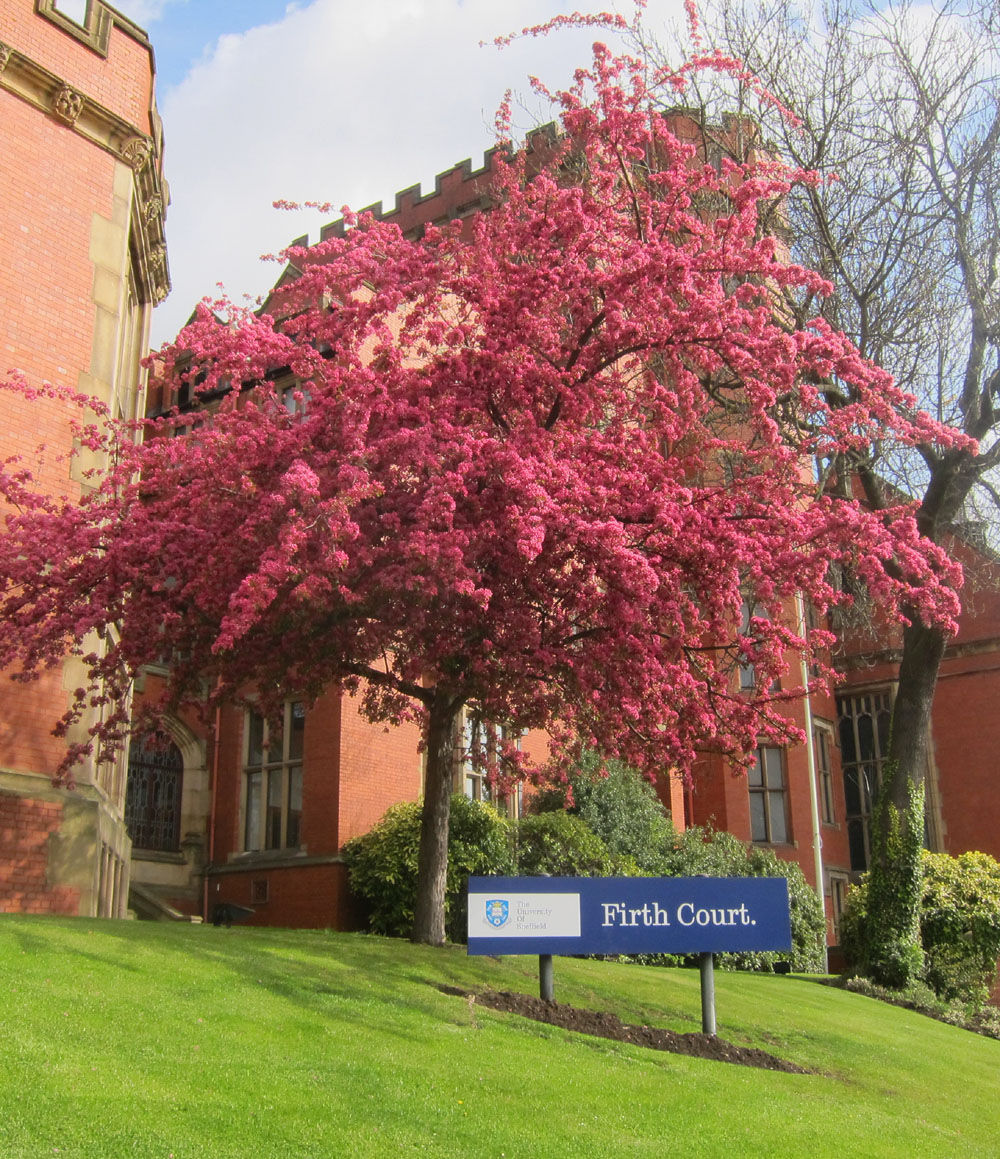
Photo by Sheila Webber: cherry blossom, 2012

Monday, May 14, 2012

Declaración de la Habana / Declaração de Havana /South American information literacy

The Havana declaration on information literacy, from March 2012, is available in Portuguese and Spanish. This asserts the importance of information literacy and calls for collaborative work and building of networks for the growth of information literacy in the context of Latin American countries. It has 15 points for action.
Declaração de Havana (Portuguese version): https://docs.google.com/file/d/0B0XpF3d0HM6YN3dBLWROYmNHLU0/edit?pli=1
Declaração de Havana (Brasilian Portuguese version): https://docs.google.com/file/d/0BweUYcipCswRSmI1ZFkyUDVqTjA/edit?pli=1
Declaración de la Habana (Spanish) https://docs.google.com/open?id=0BweUYcipCswRQjhxNnhITGEzOW8

Saturday, May 12, 2012

Comedy facebook privacy video

I had an interesting talk yesterday with one of our third year BSc students, whose dissertation I'm supervising. He has carried out two focus groups with his peers about how and why they share information on Facebook and Twitter (no further detail yet, as he hasn't finished writing it up, but I will add some more in the future).
Coincidentally, I came across this spoof documentary from Bubblegum Comedy about a Facebook privacy action group that I found amusing. I think the video dates from about 2010, so certainly not new. Humour is a subjective thing, and I don't think I'd actually show it all to students in class, in case some of this thought it was dull or lame & therefore got turned off the topic. However I could perhaps use a scene to get a discussion going on a specific point, or refer to it as an example of people's underlying concerns.

Friday, May 11, 2012

Academic Skills Support event at Leeds Metropolitan University

There is an Academic Skills Support event on 20th June 2012, at Leeds Metropolitan University, UK, Cost is £60. "Are you being asked to extend the range of academic skills support offered by your library? Would you be interested in hearing how other libraries provide this kind of service and the innovative ways in which they deliver tutorials, workshops and resources? Libraries and Learning Innovation at Leeds Metropolitan University is hosting a professional development event on the approaches used by a number of libraries to support students’ academic skills. The event will be an ideal opportunity for those involved in this area to share experience and discuss best practice."
There is a full programme, including "Skills for Learning at Leeds Metropolitan University" (Karen Croft and Marie Scopes); "Skills@Library at the University of Leeds" (Helen Howard); "Academic skills at Loughborough University" (Steph McKeating) and parallel sessions e.g. "Supporting international students in their academic skills".
Book by emailing g.walker@leedsmet.ac.uk by 6th of June with your details. Queries to m.scopes@leedsmet.ac.uk (or 0113 812 3906)
Photo by Sheila Webber: Lady's smock, May 2012.

Thursday, May 10, 2012

"Health information obesity: the new epidemic?"

Health information obesity: the new epidemic? is a free talk organised by the Career Development Group, Yorkshire and Humberside Division in collobaration with the University of Sheffield's iSchool. The speaker is Vicky Grant.
Date: Thursday 24th May. Time: 4:00 - 5:30pm. Venue: 1st floor conference room in ICOSS, 219 Portobello, Sheffield University, Sheffield, S1 4DP
Register via Eventbrite http://healthinformation.eventbrite.co.uk/ Vicky Grant is the Faculty Librarian for Medicine, Dentistry and Health at the UoS. In this talk, she will look at how patients are using health information from the net and will question the validity of government initiatives to give patients more information. She will argue that what patients actually need is more equitable access to medical research and improved levels of information literacy, including the skills to think critically about the health information they are reading. She will ask you to consider whether open access and open data publishing are matters of medical ethics and will argue that more equitable access to health information could challenge the health inequalities which continue to pervade our society.
Photo by Sheila Webber: "John's van", Sheffield University, April 2012.

Wednesday, May 09, 2012

Information literacy instruction in four Vietnamese university libraries

An article I came across recently: Diep, K.C. and Nahl, D. (2011) "Information literacy instruction in four Vietnamese university libraries." The International Information and Library Review, 43 (4), 198-206.
"This case study explored the perceptions of academic stakeholders about the development and delivery of information literacy (IL) programs in four universities, and identified elements necessary to establishing IL credit courses in Vietnamese higher education. The following research questions framed this study: 1) How do library administrators, instruction librarians, and faculty perceive the current implementation of information literacy instruction (ILI) programs for undergraduates studies in universities libraries in Vietnam? 2) What are the challenges to including IL as a credit course in the curriculum as perceived by library administrators, instruction librarians, and faculty? Respondents were purposefully recruited from four universities, including library administrators, instruction librarians, and faculty. Three online surveys were distributed to 537 individuals through Survey Monkey with 149 replies and a final receipt of 133 completed surveys. Interview and focus group data collection included 23 face-to-face interviews and nine focus groups. Findings showed IL is considered the domain of librarians and has not influenced Vietnamese campus culture. IL activities at four university libraries take the form of lectures, workshops, and basic IL skills modules. Few ILI activities are subject discipline-related. Respondents reported challenges to an ILI credit course revolve around the lasting impact of teacher-centered instruction and rote learning, misperceptions about the effect of IL on student learning outcomes, degree of support of IL by academic stakeholders, degree of faculty-librarian collaboration, and scarcity of resources. Recommendations are given for academic librarians in Vietnam implementing ILI programs and considering developing IL credit courses."
Photo by Sheila Webber: Pattern of new leaves, May 2012

Monday, May 07, 2012

HUMANIT information literacies issue

This journal from the Högskolan i Borås in Sweden has some information literacy and learning articles in English (HUMANIT issue 11:2):
- Camilla Moring: Newcomer Information Practice: Negotiations on Information Seeking in and Across Communities of Practice
- Anna Lundh, Birgitta Davidsson and Louise Limberg: Talking About the Good Childhood: An Analysis of Educators’ Approaches to School Children’s Use of ICT
- Jan Nolin: Learning Technologies that Are Not Meant for Learning: A Critical Discussion of Learning Objects
Go to http://etjanst.hb.se/bhs/ith/2-11/
Photo by Sheila Webber: Crab apple, Sheffield University, April 2012

Friday, May 04, 2012

School librarians Survive and Thrive!

Colorado Association of Libraries has a web site (unveiled at the end of January, I think) Survive and Thrive! An Advocacy Toolkit for School Librarians. This focuses on advocating the 21st century skills:
Self directed learning - “Own Your Learning”
Collaboration - “Work Together Learn Together”
Information Literacy - “Untangle the Web”
Critical thinking - “Think Deeply, Think Differently”
Invention - “Create Solutions"
https://sites.google.com/site/caslsurvive/home - Thanks to Judy O'Connell, I noticed this via her Scoop-IT page.
Photo by Sheila Webber: Crab apple blossom, Sheffield University, May 2012

Thursday, May 03, 2012

The Informed Researcher Booklet and Information literacy lens on the Vitae Researcher Development Framework

There are two important new publications from Vitae (the organisation in the UK that focuses on developing researchers' skills and employability): a short and attractive booklet aimed at researchers themselves (that gives advice and explains the relevance of information literay) plus a 2-pager that relates the SCONUL 7 Pillars model of Information Literacy to the framework for developing researchers' skills and knowledge (the RDF framework). They were produced in collaboration with other key bodies including SCONUL and the Research Information Network. They are both professionally produced and can be downloaded for free.
- Bent, M., Gannon-Leary, P., Goldstein, S. and Videler, T. (2012) The Informed Researcher. Vitae. http://www.vitae.ac.uk/CMS/files/upload/Vitae_The_informed_researcher_2012.pdf
- Information literacy lens on the Vitae Researcher Development Framework using the SCONUL Seven Pillars of Information Literacy. http://www.vitae.ac.uk/CMS/files/upload/Vitae_Information_Literacy_Lens_on_the_RDF_Apr_2012.pdf (the picture here is the second page of this publication)

Wednesday, May 02, 2012

Pinterest

There has been publicity for Pinterest, which allows you to assemble pin boards of images you have encountered on the web (though also intellectual property concerns). I've not seen that much specifically about information literacy (I've started a board, see below), but in terms of libraries there was this item a few days ago:
DeSantis, N. (2012) "3 Ways College Libraries Are Exploring Pinterest". The Chronicle of Higher Education, 27 April. http://chronicle.com/blogs/wiredcampus/3-ways-college-libraries-are-exploring-pinterest/36195 and a slideshow:
Murphy, J. (2012) Pinterest for Museums and Libraries. http://www.slideshare.net/joseph.murphy/pinterest-for-museums-and-libraries. Murphy's Pinterest site has some good examples as well.
I have just started using Pinterest at http://pinterest.com/sheilayoshikawa/
Photo by Christopher Webber: cherry blossom in Greenwich Park, April 2012

Tuesday, May 01, 2012

2 articles: IL in health; policymaker's information behaviour

- Stevenson, P. (2012) "Evaluating educational interventions for information literacy." Health Information and Libraries Journal, 29 (1), 81–86.
- Greyson, D.L., Cunningham, C. and Morgan, S. (2012) "Information behaviour of Canadian pharmaceutical policy makers, Health Information and Libraries Journal, 29 (1), 16–27.
The journal home page is http://onlinelibrary.wiley.com/journal/10.1111/%28ISSN%291471-1842
Photo by Sheila Webber: rain-soaked apple blossom, April 2012.

Jane Secker new Editor of JIL

Dr Jane Secker has been announced as the new Editor of the Journal of Information Literacy.

Monday, April 30, 2012

Report from the LILAC conference: in Second Life: May 1st

Hear first hand accounts of the UK's information literacy conference: for the 5th year running we will have an hour of reports and discussion in Second Life! All welcome!
When: 12 noon SL time (8pm UK time, 5pm US Eastern, see http://tinyurl.com/d9a7jrh for times elsewhere), Tuesday 1st May 2012.
Where: Infolit iSchool, in the virtual world Second Life, you need a SL avatar and the SL browser installed on your computer to participate. http://slurl.com/secondlife/Infolit%20iSchool/129/242/22/
What: Report from the LILAC (UK Information Literacy) Conference
Eleni Zazani, Birkbeck College (Loreena Sandalwood in SL) and Vickie Cormie, St Andrews University (Ishbel Hartmann in SL) will report back on highlights from the LILAC 2012 conference, that took place in Glasgow in April. This is the major British conference on Information Literacy: the website with powerpoint presentations is at http://lilacconference.com/WP/
A Sheffield iSchool Centre for Information Literacy Research event.

Friday, April 27, 2012

Journal of Business & Finance Librarianship IL special issue

There's an information literacy focus to volume 17, issue 1, 2012, of the Journal of Business and Finance Librarianship. Aryicles are:
- Information Literacy in the Workplace: Employer Expectations by Jason Sokoloff. There is an interesting blog post about this article (particularly interesting to me as my library doesn't subscribe to this publication): Cramer, S. (2012) "Information Literacy: Academia v. Workplace" This liaison life, April 10. http://liaisonlife.wordpress.com/2012/04/10/infolit_workplace/
- Workplace Information Literacy: A Neglected Priority for Community College Libraries by Nora J. Bird, Michael Crumpton, Melynda Ozan and Tim Williams
- Information Literacy in the Accounting Classroom: A Collaborative Effort by Wayne Finley and Tammy Waymire
- The Impact of Library Instruction on the Quality of Student Project Performance in an Advanced Financial Management Case Class by Michael Sherman, Julia A. Martin and Xiaoran An
- A Sustainable Approach to Teaching Information Literacy: Reaching the Masses Online by Camille Tooman and Julie Sibthorpe
- Developing and Assessing a Library Instruction Module for a Core Business Class by Connie Strittmatter
- Embedded Librarianship and Virtual Environments in Entrepreneurship Information Literacy: A Case Study by Hal Kirkwood and; Kelly Evans.
The home page is at http://www.tandfonline.com/toc/wbfl20/17/1
Photo by Sheila Webber: Arts tower, University of sheffield, April 2012.

Thursday, April 26, 2012

Presentations from LILAC #lilac12

The powerpoints from the 2012 LILAC (information literacy) conference are online at http://lilacconference.com/WP/past-conferences/lilac-2012/ - too many to take in easily, lots of good stuff!
Just to add to the links to reports about LILAC, there is this prezi from Ida Kwan http://prezi.com/t9nv204ixmpg/idalilac2012/, a report by Sam Aston at http://www.infotoday.eu/Articles/Editorial/Featured-Articles/Digital-detoxing---librarians-and-information-literacy-81988.aspx and some posts from Fiona McLellan http://fionamaclellan.wordpress.com/tag/lilac12/
Photo by Sheila Webber: yet more cherry blossom (currently, in fact, being destroyed by the rain)

Wednesday, April 25, 2012

Survey on professional development needs

A survey is underway on behalf of ACRL’s Instruction Section [Association of College and Research Libraries, USA], to look at the continuing professional development needs of librarians engaging in teaching online, i.e. "any means of teaching through the web including online research guides, tutorials, online chat reference, asynchronous online classes, and synchronous online classes. The questions are not limited to librarians whose primary job responsibilities include online instruction, but to any librarian who participates in online instruction in any capacity. Findings may influence ACRL Instruction Section’s support of professional development in this area and will be presented at the 2012 ALA Annual meeting in Anaheim, CA." The survey of 12 questions is at http://svy.mk/HVWxwV The deadline is May 11 2012 and you can contact alael2012c@gmail.com with any questions.
Photo by Sheila Webber: My cherry blossom, April 2012.

Tuesday, April 24, 2012

World Book and Copyright Day

Apologies, I missed marking the "real" World Book and Copyright day yesterday (23 April). Yerevan, Armenia, was named as World Book Capital for 2012. This year also marks the 80th anniversary of the Index Translationum, the international bibliography of translation. The UNESCO page has links to various resources and suggests some ways to celebrate the day. http://www.unesco.org/new/en/unesco/events/prizes-and-celebrations/celebrations/international-days/world-book-and-copyright-day-2012.

Monday, April 23, 2012

Journal Club: 25 April in Second Life

We will be discussing the paper “The implementation and evaluation of a new learning space: a pilot study” on Wednesday 25th April at 12 noon til 1pm Second Life time (that's starting 8pm UK time, see http://tinyurl.com/86c8uj7 for times elsewhere).
Where: In the virtual world, Second Life, http://slurl.com/secondlife/Infolit%20iSchool/106/208/30/ (in the Journal Club room, Infolit iSchool).You need a SL avatar, and the SL browser on your computer, to participate: otherwise, all welcome!
What: Lyn Parker (University of Sheffield, Maggie Kohime in Second Life) leads discussion on: Wilson, G. and Randall, M. (2012) “The implementation and evaluation of a new learning space: a pilot study.” Research in learning teachnology, 20 (1). http://www.researchinlearningtechnology.net/index.php/rlt/article/view/14431/html

Sunday, April 22, 2012

Communications in Information Literacy new issue

Volume 5, number 2 (2012) of Communications in Information Literacy has been published. This is an open access journal. Articles include:
- Team-Based Learning in an Information Literacy Course: Trudi Jacobsen
- Share and Share Alike: Barriers and Solutions to Tutorial Creation and Management:Anne-Marie Deitering, Hannah Gascho Rempel
- Guiding Students from Consuming Information to Creating Knowledge: A Freshman English Library Instruction Collaboration: Carolyn B. Gamtso, Susanne F. Paterson
- Designing and Implementing an Information Literacy Course in the Humanities: Ellen Daugman, Leslie McCall, Kaeley McMahan
- Design to learn, learn to design: Using backward design for information literacy instruction: Bruce E. Fox, John J. Doherty
- Academic Libraries and the Credit-Bearing Class: A Practical Approach: Margaret G. Burke.
http://www.comminfolit.org/index.php?journal=cil&page=issue&op=current
Photo by Sheila Webber: Candytuft, Sheffield, April 2012

Saturday, April 21, 2012

Social Media Use By Students With Disabilities

This looks an interesting article: Asuncion, J. et al (2012) "Social Media Use By Students With Disabilities." Academic Exchange Quarterly, 16 (1). http://rapidintellect.com/AEQweb/cho4973.htm They surveyed a convenience sample of 723 students/recent graduates with disabilities, in 2009, in Canada. They asked which social media they used, which were most difficult/easiest, what improvements could be made etc. The most used service was Youtube (91%). The top 5 recommendations were: Having a simpler or better layout; Improving privacy/ security; Fixing accessibility issues (e.g., CAPTCHA); Enlarging features on website; Having captions/ subtitles.
Photo by Sheila Webber: My daffodils, April 2012

Friday, April 20, 2012

Presentations from Missing Link conference

Powerpoints and a short abstracts from presentations at the Missing Link conference held at Birmingham City University in March 2012 are available. Presentations include: Creating a reusable, online information literacy tutorial for researchers: A collaborative approach; Getting your foot in the door – library liaison and research skills in university departments; Collaboration between Centre for Enhancement of Learning and Teaching (CELT) and Library and Learning Resources to improve the Student Experience. http://library.bcu.ac.uk/conferencempapers.htm
Photo by Sheila Webber: Spring ivy, April 2012

Thursday, April 19, 2012

Academic Exchange Quarterly cfp

There is a call for papers for Academic Exchange Quarterly, Fall 2012. They see articles on various topics for the special section: The Many Faces of Information Competence. The feature Co-editors are Heidi Blackburn, Undergraduate Services Librarian, Assistant Professor, Kansas State University, hblackbu@ksu.edu and Lisa Craft, Graduate and Faculty Services Librarian, Assistant Professor, Kansas State University, lmccraft@k-state.edu "Academic librarians are increasingly instructing targeted groups within the academic environment. Such groups include freshman learning communities, international students, graduate students, and faculty. Each of these groups is far from homogenous because of the diversity of their expectations of libraries and their information-seeking experiences. Even into the twenty-first century, many faculty members, for example, are reluctant to use electronic resources. How can we develop instruction programs that will address the shared needs of such groups and the diverse needs of individuals? What assessment tools are available to measure the success of such programs? How can we identify constituencies being underserved? Manuscripts are sought that describe successful (and even unsuccessful) approaches to inform
ation literacy for targeted groups and/or diverse populations in higher education. Manuscripts are also sought that report on quantitative or qualitative evaluations of the impact of information literacy programs, courses, and components of courses." Submission deadline: 31 May 2012. The submission procedure is outlined at http://rapidintellect.com/AEQweb/rufen1.htm Photo by Sheila Webber: bluebells in bud, April 2012

Wednesday, April 18, 2012

Welsh Information Literacy Project Phase 3 starts

Phase 3 of the Welsh Information Literacy Project has been awarded to Coleg Llandrillo’s Library and Learning Technology Service (LLTS), led by Andrew Eynon. The main streams are concerned with Public Libraries, Schools/Education, and Information Literacy for Employability. Currently they are using their college's blog to report news http://liberace.wordpress.com/ and the previous website is at http://library.wales.org/informationliteracy/blog/
Yesterday they posted a reflection on Phase 3 of the Welsh Information Literacy project, reporting how information literacy is "mentioned specifically in the Digital Classroom task and finish group report [commissioned by the Minister for Education and Skills in the Welsh Assembly], as one of the core features of success for supporting the recommendations of change to drive forward the digital learning agenda in Wales" http://liberace.wordpress.com/2012/04/17/welsh-information-literacy-project-reflections-on-the-hwb/
Photo by Sheila Webber: Cherry blossom on my tree, April 2012

Tuesday, April 17, 2012

New Libri

There's a new issue of Libri (2012, Volume 62 issue 1). Articles include:
- Keller, A. "In Print or On Screen? Investigating the Reading Habits of Undergraduate Students Using Photo-Diaries and Photo-Interviews" (pp 1-18)
- Bankole, O. M., Oshinaike, A. B.and Banwo, C. O. "HIV/AIDS Knowledge, Attitudes and Sources of Information among Librarians in Southwestern Nigeria (pp 41-51)
- Tan, S., Gorman, G. and Singh, D. "Information Literacy Competencies among School Librarians in Malaysia" (pp 98-107)
The Libri website is at http://www.degruyter.com/view/j/libr (priced journal).
Photo by Sheila Webber: Daffodils, Botanic Gardens, Sheffield, April 2012.

Monday, April 16, 2012

Some changes to this blog

I have added a couple of pages (see the tabs above) with a list of my publications, and links to some of my other web-based content (Slideshare, Youtube etc.). I think I should probably also add a bit more about "what is information literacy", so I might put up a page on that in due course.
Also I rather liked the twitter feed widget I used during LILAC, and I have added a feed of tweets that have the hashtag #infolit to the sidebar (see right). This does slow down the loading of the page a little and I'm not sure if I've got the best position for it yet. I haven't focused on my own Twitterfeed, as that mostly tweets posts on this blog!
Comments are, of course, welcome and I may have a user survey when I have tweaked the page a bit more.
Photo by Sheila Webber: Japanese Quince blossom, Sheffield Botanic Gardens, April 2012

Some more LILAC links #lilac12

Here are some more links to reports and content from the LILAC information literacy conference last week. Blog posts include:
- Melissa Highton: http://blogs.oucs.ox.ac.uk/melissa
- Reluctant librarian: http://reluctantlibrarian.tumblr.com/
- Peter Reid (CILIP Scotland President): http://www.cilips.org.uk/presidentshttp://www.blogger.com/img/blank.gif-blog-2012/2012/4/13/the-colour-lilac.html
- Sarah Faye Cohen: http://thesheckspot.blogspot.co.uk/
LILAC 2012 - Tara Brabazon with conference committeeAnd a couple of ppts
- Angela Newton and Dan Pullinger: powerpoint from the workshop Acting on PhD student feedback to create new learning resources http://www.slideshare.net/LULSci-EngTeam/acting-on-phd-student-feedback-to-create-new-learning-resources
- Alan Carbery: powerpoint presentation, Information literacy through inquiry: using problem-based learning in information literacy instruction: http://www.slideshare.net/acarbery/information-literacy-through-inquiry-using-problembased-learning-in-information-literacy-instruction
Top photo (parrot tulips) by Sheila Webber, April 2012.
2nd photo by Ruth Stubbings (on Flickr) showing the LILAC team with speaker Tara Brabazon.
target="_blank"

Sunday, April 15, 2012

Walsh and Leeds team award winners

Announced at the LILAC conference last week, the winner of the Information Literacy Practitioner of the Year award was Andrew Walsh, Academic Librarian, University of Huddersfield. The winners of the Credo Reference Digital Award for Information Literacy award were Carol Elston, Jade Kelsall, Michelle Schneider and Lizzie Caperon (University of Leeds), for their Library Guide – an online introduction to the library.

Saturday, April 14, 2012

High profile plagiarism example!

"Hungary President Schmitt quits in plagiarism scandal" as it says in the BBC story of 2nd April 2012 (he was found to have copied chunks of material in his PhD) http://www.bbc.co.uk/news/world-europe-17586128. Thanks to my colleague Peter Willett for drawing this to my attention.

Friday, April 13, 2012

Georgia International Conference on Information Literacy: presentations from 2011

19 Presentations from the 2011 Georgia International Conference on Information Literacy can be found at http://dspaceprod.georgiasouthern.edu:8080/jspui/handle/10518/4361. Mostly powerpoints, they include "Adventures in assessment: LIB100 @ Clemson University" (this includes a handout of tests/questions used), "Better beginnings: The link between a library skills class and student success rates", "Fade to black: The study of black popular culture for information literacy instruction", "Information: A literature review" (extended notes plus a powerepoint), "Planning a two-day workshop for graduate students writing theses and dissertations" (includes examples powerpoints used, sample letter etc as well as main presentation), "Turning students into ethnographers: A library discovery tour". The last named is not specifically about information literacy, but it is an interesting variation on the "induction session" as students are sent out with floor maps of the library and told to act as ethnographers, reporting on the activitiees etc. that they discover. The students also take pictures and produce quick presentations on their findings.
Photo by Sheila Webber: Parrot tulip, April 2012

Thursday, April 12, 2012

PRIMO (Peer Reviewed Instructional Materials Online) nominations

April 25th 2012 is the next deadline for nominations for inclusion in Peer Reviewed Instructional Materials Online (PRIMO). You can nominate online information literacy tutorials, virtual tours, or other online information literacy project "for review and possible inclusion in PRIMO: Peer-Reviewed Instructional Materials Online." "Site submissions for PRIMO are accepted continually, but are reviewed for possible inclusion twice per year." I have blogged about PRIMO before and it is worth bookmarking for the links and reviews, including teh "site of the month". Information at: http://www.ala.org/acrl/aboutacrl/directoryofleadership/sections/is/iswebsite/projpubs/primo
Photo by Sheila Webber: my cherry blossom, April 2012

Wednesday, April 11, 2012

Some links from the LILAC conference #lilac12

gender_visitsHere are some links that I picked up from the LILAC Twitterfeed:
- Dave Pattern's graphics of library impact data: http://www.flickr.com/photos/davepattern/sets/72157629087302688 (an example is on the right)
- A video introducing "ANCIL - A New Curriculum for Information Literacy", aimed at university administration/faculty http://www.youtube.com/watch?v=vY-V2givIiE
- A LibGuide from Newcastle University Library: A guide to mobile apps and resources for study and research http://libguides.ncl.ac.uk/mobile
- A LibGuide from Loyola Marymount University, William H. Hannon Library, An Introduction to the Research Process, and this page is about forming the question: http://libguides.lmu.edu/content.php?pid=10084&sid=1965230
- Free version of the article by keynote-r Megan Oakleaf: "Are They Learning? Are We? Learning Outcomes and the Academic Library." The Library Quarterly, 81 (1), 61-82. http://www.meganoakleaf.info/aretheylearningoakleaf.pdf
- ACRL Value of Academic Libraries report: http://www.acrl.ala.org/value/?page_id=21
- A couple of powerpoints are already there including:

Following the LILAC conference #lilac12

The UK's major information literacy conference, LILAC, is on for the next 3 days. The hashtag is #lilac12 https://twitter.com/#!/search/%23lilac12 and I have put up a widget on this blog for the Twitter feed for the duration of the conference (I am not attending it this year). LILAC also has its own Twitter account at https://twitter.com/#!/LILAC_2012. The conference website is http://lilacconference.com/WP/ and there is a facebook page at https://www.facebook.com/lilacconference (there is currently a picture of last year's conference - I'm crouching in the front, 5th right)

Tuesday, April 10, 2012

Reflecting through a digital lens: how can Libraries support learning? 11th May

On 11 May at Leeds Trinity University College, UK, is the event Reflecting through a digital lens: how can Libraries support learning? Cost £20 (includes lunch). Organised by the Yorkshire Universities Information Skills Group To book the event email Janice Lavigueur at j.lavigueur@leedstrinity.ac.uk with: Your name; Institution name; Contact Number; Additional requirements, e.g. diet/access/parking:
Programme includes presentations on: The SCONUL 7 Pillars of Information Literacy through a Digital Literacy Lens; Using technology to enhance student learning; Delivery of library services via mobile devices; The Roving Librarian Project; and a technology showcase (three short presentations followed by an opportunity for participants to see how different institutions have used technology to support student learning as well as getting some hands on practice with the technology).
Photo by Sheila Webber (photoshopped): Plum blossom, April 2012

Georgia International Conference on Information Literacy, cfp

September 21-22 2012 is the date of the 9th Annual Georgia International Conference on Information Literacy, held in Savannah, Georgia, USA. The deadline for proposals for workshops and presentations is April 15, 2012. The keynote speaker is Joyce Valenza. Full information at http://ceps.georgiasouthern.edu/conted/infolit.html

Monday, April 09, 2012

CILIP IL Group committee seeks members

The Chartered Institute of Library and Information Professionals (CILIP) CSG Information Literacy group (UK) is actively seeking enthusiastic information literacy champions from the following library sectors to join the group: Commercial/ Specialist; Further Education; Health. The role entails promoting information literacy and the group to colleagues in their sector, as well as keeping the group up-to-date with issues in the specific library sector. A job role ilg_jobdescription_sectorreps is available that outlines in detail the groups expectations of a Sector representative. If you wish to be considered for one of these voluntary roles, please send a short personal statement (no more than 500 words) indicating your ability to undertake the activities listed in the job description. Please send this personal statement, together with a CV to Ruth Stubbings, r.e.stubbings@lboro.ac.uk, indicating clearly which of the three roles you would like to be considered for. The deadline for applications is Monday 30th April 2012.
Photo by Sheila Webber: spring steps, April 2012

Friday, April 06, 2012

Library Trends: 2nd infolit special issue

The 2nd special issue of Library Trends (volume 60, issue 3, 2012) to focus on information literacy has been published. This is a priced journal at http://muse.jhu.edu/journals/library_trends/
Articles include:
Exploring health information use by older Australians within everyday life by Christine Yates et al.
Information and health literacy in the balance: findings from a study exploring the use of ICTs in weight management by Audrey Marshall et al.
Supporting informed learning in the twenty-first century by Christine Bruce et al.
The information world of parents: a study of the use and understanding of information by parents of young children by Christopher Walker
Teen content creators: experiences of using information to learn by Mary Ann Harlan et al.
Helping the non-scholar scholar by Lark Birdsong and Jennifer Freitas
From Lampitt to libraries: formulating state standards to embed information literacy across colleges by Jacqui Weetman DaCosta and Eleonora Dubicki
Student learning and workplace IL: a case study by Barbara D’Angelo
Photo by Sheila Webber: Garlic mustard, Hailsham, April 2012.

Thursday, April 05, 2012

Undergraduate information behaviour: 2 new articles

Latest issue of Information Research (volume 17 no. 1), the open access journal,includes:
A study of the information search behaviour of the millennial generation by Arthur Taylor. "The longitudinal study discussed here examined the information behaviour of undergraduate college students who were members of the millennial generation. Data were collected from the students using surveys throughout an information search process as part of an assigned research project. [...] Statistically significant findings suggest that millennial generation Web searchers proceed erratically through an information search process, make only a limited attempt to evaluate the quality or validity of information gathered, and may perform some level of 'backfilling' or adding sources to a research project before final submission of the work."
Information resource selection of undergraduate students in academic search tasks by Jee Yeon Lee, Woojin Paik and Soohyung Joo. "A self-generated diary method was employed with 233 undergraduate students in achieving their academic search tasks. [...] This study reaffirmed recent information usage trends that online sources are preferred by university students in their academic searches. This study identified twenty nine factors in four different dimensions, including information type, resource feature, search strategy, and interaction with others. Moreover, perceptions of users were investigated quantitatively focusing on usefulness, credibility, accessibility, familiarity with source, satisfaction, and intention of continuous use."
Go to http://informationr.net/ir/17-1/infres171.html
Photo by Sheila Webber: Sheffield Botanic Gardens, March 2012.

Wednesday, April 04, 2012

2012 Horizon Report

Another report I should have blogged earlier is: Johnson, L., Adams, S., and Cummins, M. (2012). The NMC Horizon Report: 2012 Higher Education Edition. Austin, Texas: The New Media Consortium.
This is a collaborative publication from the New Media Consortium and the EDUCAUSE Learning Initiative (ELI). The report identifies the following trends (I must say they don't seem very new to me - perhaps we are ahead of the trend here in my iSchool ;-)
1. "People expect to be able to work, learn, and study whenever and wherever they want to.
2. "The technologies we use are increasingly cloud-based, and our notions of IT support are decentralized
3. "The world of work is increasingly collaborative, driving changes in the way student projects are structured.
4. "The abundance of resources and relationships made easily accessible via the Internet is increasingly challenging us to revisit our roles as educators
5. "Education paradigms are shifting to include online learning, hybrid learning and collaborative
models.
6. "There is a new emphasis in the classroom on more challenge-based and active learning."
In terms of technologies: Near-term ("within the next 12 months") are mobile apps and tablets; mid term (2-3 years) are game-based learning and learning analytics; and on the far horizon are gesture-based computing and "the Internet of Things" ("the latest turn in the evolution of smart objects — a category of small devices or methods that enable an object to be assigned a unique identifier.")

The official place to get the report is here: http://www.nmc.org/publications/horizon-report-2012-higher-ed-edition (have to register) I got it directly here http://microsites.csusm.edu/sysnews/files/2012/02/2012-Horizon-Report-HE.pdf There is also the Horizon Report wiki at http://horizon.wiki.nmc.org/ The following video introduces the report.

Tuesday, April 03, 2012

Media and Information Literacy Recommendations from IFLA

In cooperation with UNESCO's Information for All Programme (IFAP), the IFLA Information Literacy Section drafted new Media and Information Literacy Recommendations which are now available in several languages: here http://www.ifla.org/en/publications/ifla-media-and-information-literacy-recommendations. These recommendations were endorsed by the Governing Board of the International Federation of Library Asjavascript:void(0)sociations and Institutions (IFLA), at its meeting in Den Haag, The Netherlands, 7 December 2011. The recommendations will also be a topic at an international conference of Media and Information Literacy for Knowledge Societies on 24-28 June, 2012, in Moscow, Russia.
As already noted on theis blog, UNESCO has combined media literacy and information literacy into Media and Information Literacy (MIL). This new document from IFLA reasserts that MIL is a " basic human right in an increasingly digital, interdependent, and global world". It defines MIL as consisting "of the knowledge, the attitudes, and the sum of the skills needed to know when and what information is needed; where and how to obtain that information; how to evaluate it critically and organise it once it is found; and how to use it in an ethical way. The concept extends beyond communication and information technologies to encompass learning, critical thinking, and interpretative skills across and beyond professional and educational boundaries. Media and Information Literacy includes all types of information resources: oral, print, and digital"

Monday, April 02, 2012

European Conference on Information Literacy

The European Conference on Information Literacy (ECIL), organised by the Department of Information Management of Hacettepe University and Department of Information and Communication Sciences of Zagreb University, will take place in Istanbul, Turkey, 23-25 October 2013. The first call for papers opens in May 2012. The website is at http://www.ilconf.org/
Photo by Sheila Webber: Cherry blossom, Sheffield, March 2012

Friday, March 30, 2012

Information Literacy Beyond Library 2.0: new book

Godwin, P. and Parker, J. (Eds) (2012) Information Literacy Beyond Library 2.0. London: Facet. ISBN: 978-1-85604-762-3
"Part 1 explores the most recent trends in technology, consumption and literacy, while Part 2 is a resource bank of international case studies that demonstrate the key trends and their effect on information literacy and offer innovative ideas to put into practice. Part 3 assesses the impact of these changes on librarians and what skills and knowledge they must acquire to evolve alongside their users."
More info at http://www.facetpublishing.co.uk/title.php?id=7623
You can download chapter 1, by Peter Godwin, for free "Library 2.0: a retrospective": http://www.facetpublishing.co.uk/downloads/file/godwin&p-ch1.pdf
Photo by Sheila Webber: Cherry Blossom, March 2012.

Thursday, March 29, 2012

Planet Wikimedia & Wikilit: review of wiki literature

Whilst googling to see whether I could find an open access version of the article I blogged yesterday, I came across a couple of interesting sites. Firstly, Planet Wikimedia. http://en.planet.wikimedia.org/ "The Planet Wikimedia is a weblog aggregator operated by the Wikimedia Foundation, to bring together on-topic posts about Wikimedia projects, other wiki sites, the free culture movement, the "wisdom of crowds", etc." Since it aggregates a lot of blogs, there is some duplication and some slightly baffling (to me) content, but also a lot of useful news, views and links.
One of the links I found was to WikiLit: A literature review of scholarly research on Wikipedia, http://wikilit.referata.com/wiki/Main_Page. There is a draft paper ("The People’s Encyclopedia Under the Gaze of the Sages: A Systematic Review of Scholarly Research on Wikipedia") which outlines the methodology and starts to summarise selected papers. On the Wikilit home page you can expand some fairly broad categories (e.g. Quality of Wikipedia) to reveal titles of identified articles and then you click through to see the extraction sheet with the details of the article.
Photo by Sheila Webber: Cherry blossom in Botanic Gardens, March 2012.

Wednesday, March 28, 2012

Wikipedia and the University, a case study

Thanks to Lyn Parker for alerting me to this new article (priced):
Knight, C. and Pryke, S. (2012)"Wikipedia and the University, a case study."
Teaching in Higher Education. (Currently listed as a "forthcoming article, available online DOI:10.1080/13562517.2012.666734)
I was interested to see that "use of Wikipedia is highest amongst trainee teachers, a finding that corresponds to our perception based on anecdotal observation that use of the encyclopaedia is widespread; possibly even a predominant resource, for teachers and children within British schools" since this has some relevance to the research into school children's information behaviour being carried out here in the iSchool. Another interesting finding was that a good number of lecturers who forbid their students to use Wikipedia, use it themselves, feeling that they are able to discriminate when to use Wikipedia, whereas their students aren't.
The abstract reads "This article discusses the use of Wikipedia by academics and students for learning and teaching activities at Liverpool Hope University. [...] Based upon a sample of 133 academics and 1222 students, our principal findings were: (1) 75% of academics and students use Wikipedia; (2) student use is typically confined to the initial stages of assessments; (3) a quarter of academics provide guidance on how to use Wikipedia and (4) 70% of academics use Wikipedia for background information for teaching purposes, something that it is not influenced by whether student use is tolerated or not. Our conclusion is that whilst Wikipedia is now unofficially integrated into universities, it is not ‘the’ information resource as feared by many and that an enlightened minority of academics have attempted to assimilate it into their teaching."
Photo by Sheila Webber: Spring in the park, Sheffield, March 2012

Tuesday, March 27, 2012

Webcast on April 4th: Lessons for Learning: Putting Project Information Literacy to Work

On 4th April at 4pm US Eastern time (9pm UK time), there is a webcast in the Blended Librarian series: Lessons for Learning: Putting Project Information Literacy to Work. The guest speaker is Michael Eisenber, co-Principal Investigator of Project Information Literacy (PIL) and he will "delve into the implications of PIL findings for learning, teaching, and library services, resources, and facilities." The hosts for the webcast are Steven Bell and John Shank, co-founders of the Blended Librarians Online Learning Community.
The event is free, with no need for registration: the first 200 people will get the "seats". You need to join the Blended Librarians Online Learning Community if you are not already a member: go to http://blendedlibrarian.org, click on the join button and follow instructions. When you are asked for the invitation key enter the word blended. Once you are registered, you will be able to go to http://home.learningtimes.net/library?go=6031692 to log in for the session. The organisers advise leaving time to log into the Elluminate webcasting software and "recommend that those participating in the webcast obtain a microphone or headset in order to make use of the VoIP technology that allows conversation between the speakers and participants. A microphone or headset is not required to participate."
Photo by Sheila Webber: Daffodil, Sheffield, March 2012

Monday, March 26, 2012

Nurse educator leads discussion on infolit article in SL

What: Journal Club in the virtual world, Second Life. You need a SL avatar and a computer with the SL browser installed, to participate.
When: Tuesday March 27th 12 noon SL time (which is the same as US Pacific time; 8pm UK time, see http://tinyurl.com/778na9a for times elsewhere)
What: Evelyn McElhinney, Nurse Lecturer at Glasgow Calendonian University, Scotland (Kali Pizzaro in SL) leads discussion on: Hegerty, N. and Carbery, A. (2010) “Piloting a dedicated information literacy programme for nursing students at Waterford Institute of Technology libraries.” Library Review, 59 (8), 606-614. http://repository.wit.ie/1562/1/EmeraldPaper_Sept2010.pdf
Where: Journal Club room on Infolit iSchool, Second Life. http://slurl.com/secondlife/infolit%20ischool/106/208/30/
This is a Sheffield iSchool Centre for Information Literacy Research event
The picture shows the journal club meeting held on 16th March 2012

Sunday, March 25, 2012

"Last Wednesday" infolit discussion 28th March

The Last Wednesday Information Literacy discussion on tinychat, sponsored by the ACRL Science and Technology Section’s Information Literacy Committee, takes place on Wednesday 28 March, 2012 at 2PM USA Eastern time, which is 7pm UK time. To join the discussion, go to http://tinychat.com/steminfolit at the scheduled time and join the conversation. The topic this month is Professional Development: : what's required of you, what do you attend, what have you liked not/liked?
Photo by Sheila Webber: another student placard, Sheffield University, March 2012.

Friday, March 23, 2012

LOEX of the West 2012 registration opens 26th March

Registration for the LOEX of the West 2012 Conference (at Woodbury University in Burbank, California, USA, June 6-8, 2012) opens at 9am Pacific time (that's 5pm UK time) on March 26th. The theme is: Our theme is Creative Landscapes: Information Literacy for all Terrains. Esther Grassian is the keynote speaker talking on Occupy Their Minds! The Politics of Information Literacy. Go to http://woodbury.libguides.com/lotw2012
Picture by Sheila Webber: Placards for student elections, University of Sheffield, 2012. Haines didn't get elected.

Thursday, March 22, 2012

Pew Internet reports: use of smartphones; hyperconnected millennials; privacy management

I have a backlog of reports that I meant to read before I blogged, but I think I had better just blog them, starting with some Pew Internet and American Life project reports. On March 19th they published a report about Teens, Smartphones & Texting. They did "telephone interviews with a nationally representative sample of 799 teens ages 12 to 17 years old and their parents living in the continental United States". "Teens are fervent communicators ... they communicate frequently with a variety of important people in their lives: friends and peers, parents, teachers, coaches, bosses, and a myriad of other adults and institutions. This report examines the tools teens use to communicate, with a particular focus on mobile devices, and then places the use of those tools in the broader context of how teens choose to communicate with people in their lives."
Just dipping in (since we have been discussing use of email in my department), texting dominates: "8% of teens say they email daily with friends, down from 14% in 2006. More than half (54%) of all teens now say they never use email to talk with friends, and one third of teens say they never use instant messaging or send messages via social media sites."

Another fairly recent report, released on March 1st, revealed that Nearly half of American adults are smartphone owners. "46% of American adults now have a smartphone of some kind, and for the first time smartphone owners outnumber users of more basic phones." "The results in this report are based on data from telephone interviews conducted by Princeton Survey Research Associates International from January 20 to February 19, 2012, among a sample of 2,253 adults, age 18 and older."

Then on 29 February, they revealed that Millennials will benefit and suffer due to their hyperconnected lives "A Pew Internet/Elon University survey reveals experts’ hopes and fears about the hyperconnected generation, from their ability to juggle many tasks to their thirst for instant gratification and lack of patience." "Teens and young adults brought up from childhood with a continuous connection to each other and to information will be nimble, quick-acting multitaskers who count on the Internet as their external brain and who approach problems in a different way from their elders, according to a new survey of technology experts."
I must say my immediate reaction is to trouble the expert opinions, as I don't think those things all necessarily follow on from one another. Still it does say that "Since the data are based on a non-random sample, a margin of error cannot be computed, and the results [i.e. the opinions in the report] are not projectable to any population other than the experts in this sample."

Finally, on 24th February a report was released on Privacy management on social media sites "Social network users are becoming more active in pruning and managing their accounts. Women and younger users tend to unfriend more than others" "The results in this report are based on data from telephone interviews conducted by Princeton Survey Research Associates International from April 26 to May 22, 2011, among a sample of 2,277 adults, age 18 and older."
Photo by Sheila Webber: more forsythia, March 2012

Wednesday, March 21, 2012

Children searchers; First year students

Articles in the latest issue of the priced journal, Journal of the American Society for Information Science and Technology:
- Foss, E. et al. (2012) "Children's search roles at home: Implications for designers, researchers, educators, and parents. Journal of the American Society for Information Science and Technology, 63 (3), 558–573. "This paper presents the results of a large-scale, qualitative study conducted in the homes of children aged 7, 9, and 11 investigating internet searching processes on Google. Seven search roles, representing distinct behavior patterns displayed by children when interacting with the Google search engine, are described, including Developing Searchers, Domain-specific Searchers, Power Searchers, Nonmotivated Searchers, Distracted Searchers, Rule-bound Searchers, and Visual Searchers. Other trends are described and selected to present a view of the whole child searcher. These roles and trends are used to make recommendations to designers, researchers, educators, and parents about the directions to take when considering how to best aid children to become search literate."
- Gross, M. and Latham, D. (2012) "What's skill got to do with it?: Information literacy skills and self-views of ability among first-year college students."Journal of the American Society for Information Science and Technology, 63 (3), 574–583. "This study replicates a previous study based on work in psychology, which demonstrates that students who score as below proficient in information literacy (IL) skills have a miscalibrated self-view of their ability. Simply stated, these students tend to believe that they have above-average IL skills, when, in fact, an objective test of their ability indicates that they are below-proficient in terms of their actual skills. This investigation was part of an Institute of Museum and Library Services-funded project and includes demographic data about participants, their scores on an objective test of their information literacy skills, and self-estimates of their ability. Findings support previous research that indicates many students come to college without proficient IL skills, that students with below-proficient IL skills have inflated views of their ability, and that this miscalibration can also be expressed by students who test as proficient. Implications for research and practice are discussed."
Photo by Sheila Webber: Forsythia, March 2012

Tuesday, March 20, 2012

First Year Experience: nursing curriculum; arts students

Two articles from this issue of the International Journal of the First Year in Higher Education (an open access journal).
Cassar, A., Funk, R., Hutchings, D., Henderson, F. & Pancini, G. (2012). "Student transitions – evaluation of an embedded skills approach to scaffolded learning in the nursing curriculum." The International Journal of the First Year in Higher Education, 3(1), 35-48. This included collaboration with librarians on information literacy. "The embedded skills approach adopted in this unit attempts to ensure that students transitioning from a variety of contexts acquire a range of introductory academic skills in a supported learning environment. A mixed methods evaluation of the unit of study over two years (2009-2010) has revealed that students are mostly appreciative of the scaffolded and embedded skills delivery format and cite that elements of the model have supported their learning needs." pdf at https://www.fyhe.com.au/journal/index.php/intjfyhe/article/viewFile/102/103

Secondly there is this article, which focuses on information literacy:
Cameron, C., George, L. & Henley, M. (2012). "All hands on deck: A team approach to preparing year one arts students for their first major assignment. A Practice Report." The International Journal of the First Year in Higher Education, 3(1), 101-108.
Photo by Sheila Webber: Trees reflected in windscreen, March 2012.

Monday, March 19, 2012

London LibTeachMeet #ldnlibtm

London (UK) LibTeachMeet 2012 is on 14th May 2012 6.00 - 9.00pm. This year's theme is Supporting Diverse Learners. People share ideas through 2 or 5 minute presentations. "Presentations will be about ways of teaching or technology used to support 'diverse learners'. Diverse learners is taken to include learners who may be new, dyslexic, mature, international, autistic, part-time, have a learning/physical difficulty or uses English as a further language, distance learners, e-learners - anyone outside your "usual" teaching group." It will take place in the Haldane Room of the Wilkins Building of University College London. Go to http://ldnlibtmeet.eventbrite.co.uk to register. Twitter is @ldnlibtm and the hashtag #ldnlibtm
Photo by Sheila Webber: Euphorbia, March 2012

Multimedia resources for librarians

Another useful powerpoint from Phil Bradley, listing loads of sites where you can edit videos, make customised pictures etc. He writes in the slide description "Don’t expect them to make too much sense without me talking over them, but you might find the tools themselves helpful."

Friday, March 16, 2012

Teaching and Learning in Second Life as Part of a Blended Approach: Reflections and Lessons learned #vwbpe

Today Ridvan Ata and I gave our presentation about the Second Life activities that the first year class is engaged with, at the Virtual Worlds Best Practices in Education Conference: here's a picture of us presenting and here is the presentation:

1st Annual Indiana University Libraries Information Literacy Colloquium

The 1st Annual Indiana University Libraries Information Literacy Colloquium has a call for papers for the conference theme: Learning Out Loud: Information Literacy Pedagogy for the Non-Shushing Librarian. "We seek stimulating proposals that examine the implications Learning Out Loud has for information literacy pedagogy. How can instruction librarians take into account the sometimes chaotic, highly complex learning process when planning and delivering instruction sessions? How do we reach diverse learners with diverse learning styles? How might instruction librarians partner with other campus entities in order to foster student learning and enhance information literacy pedagogy? How do we envision the future of library instruction?" Proposals for breakout sessions of up to 250 words, mentioning at least 2 learning outcomes should be submitted at http://ius.qualtrics.com/SE/?SID=SV_2sqrL75u53mzK0k Deadline is April 30, 2012. More info at http://libguides.ius.edu/colloquium
Photo by Sheila Webber: Trees, March 2012.