Friday, June 14, 2013

Health Literacy: the solid facts

Interesting new free publication: Kickbusch, I. (ed) et al. (2013) Health literacy: the solid facts. World Health Organization (WHO). ISBN 978 92 890 0015 4. http://www.euro.who.int/en/what-we-do/health-topics/environment-and-health/urban-health/publications/2013/health-literacy.-the-solid-facts
The aim is to influence policy-makers, and the main sections are called:
- Making the case for investing in strengthening health literacy;
- Taking action to create and strengthen health literacy–friendly settings; and
- Developing policies for health literacy at the local, national and European Region levels.
The publication is about 70 pages long and summarises a good deal of evidence and examples. There are also links to follow e.g. I noticed a short consultation document from the Institute of Medicine proposing Attributes of a Health Literate Organization (http://www.iom.edu/%7E/media/Files/Perspectives-Files/2012/Discussion-Papers/BPH_HLit_Attributes.pdf)
Photo by Sheila Webber: Planted chair in the Kulturen open air museum, Lund, Sweden, May 2013

#namle13 media literacy conference

The (USA) National Association for Media Literacy Education has its annual conference July 12-13, 2013 in Los Angeles, USA. The conference theme is Intersections: Teaching and Learning Across Media. Keynotes are Tiffany Shlain, Filmmaker and Founder of Webby Awards, and Jim Berk, CEO of Participant Media. http://2013.namle.net/

Thursday, June 13, 2013

Georgia Conference on Information Literacy: 2013 and presentations from 2012

The presentations from the 2012 Georgia International Conference on Information Literacy (held September 21-22, 2012) are at http://dspaceprod.georgiasouthern.edu:8080/jspui/handle/10518/5214.
This year's Georgia Conference on Information Literacy takes place August 23-24 2013 in Savannah, Georgia, USA. The keynote speaker is Alison Head on Information Literacy through the Lens of the Student Experience. http://ceps.georgiasouthern.edu/conted/infolit.html
Photo by Sheila Webber: The young peregrines have just left the nest but are still keeping to the church tower. In this rather poor picture you can't see the 2 on the ledge, but you can see a parent bird perched on the webcam.

Wednesday, June 12, 2013

RILADS: evaluating postgraduate/research infolit training

There are a couple of just-published outcomes from the Research Information Literacy and Digital Scholarship (RILADS) project. One is a report from one strand of the project "looking at the identification and promotion of good practice in information training in UK HE [Higher Education]" (with a focus on researcher training). They developed some questions for evaluating training courses etc. and trialed the instrument in some UK universities. This also enabled them to gain insight into the type of training provided. The report is at http://rilads.files.wordpress.com/2013/06/riladsreportmay13final.pdf
As part of this, RILADS identified 15 examples of good practice in information literacy resources (for training postgraduates). These are linked from: http://rilads.wordpress.com/2013/06/10/short-list-of-good-practice-examples-of-information-literacy-delivery-in-uk-he/
Apologies for a few days away from blogging, one excuse is that the graphics card on my work computer went phut.
Photo by Sheila Webber: Duck showing interest in research conversations, Lund, May 2013

Friday, June 07, 2013

To measure or not to measure at #colrictt13

I will do a couple of blog posts from the COLRIC (Council for Learning Resources in Colleges) information literacy event in Newcastle-upon-Tyne, which focuses on the Further Education sector. Grazyna Kuczera's session was called: To measure or not to measure. She is from Northampton College, which won the 2011 Association of Colleges (AoC) Beacon Award for the Effective Integration of Libraries/Learning Resources Centres in Curriculum Delivery (More info about this here http://www.northamptoncollege.ac.uk/news/item.aspx?NewsItem=724) She is far left in the poor-quality picture above.

Grazyna stressed that you had to develop impact measures that really told you something about how the students' learning experience has changed. She introduced a picture of a tree, with the library at the base of the trunk, i.e. vital in order to get the tree to grow leaves and fruit. However you had to convince and influence others that students would not flourish in the same way if the library was not there. She mentioned the Huddersfield University project which got meaning out of visitor statistics by correlating them with class of degree. Here is a quick link to the archived version of an article about this: http://eprints.hud.ac.uk/7940/1/Academic_library_non__low_use_revised_final_version.pdfGoodall
Homing in on her picture of the tree, she identified some root activities (roots nourishing the tree) e.g. support for A levels or for Higher Education in Further Education, catch up sessions and information for study skills. One tip was to watch for things which were not working and move in to show how the library could make an improvement.

Also Grazyna talked about tracking performance of students who had information and study skills education, not just while they were at the college, but also after they went on to university via direct entry (they found that their students were doing better than the students who had started at the university at level 1). This information was powerful to feed backto the teachers. She talked about some other initiatives where you could get evidence about impact including the "Six book challenge". Evidence included the testimony of students themselves e.g. a student saying "It made me realise I shouldn't use Wikipdia so much."

Thursday, June 06, 2013

NFIL asking for USA librarians' collaborations

The USA's National Forum on Information Literacy (NFIL) is "conducting an informal survey to see how many of America's 3000+ 2-4 yr college and university libraries are involved in the following:
1) actively engaged in IL programmatic collaborations with on-campus and/or off campus pre-college, remediation, and/or undergraduate retention programs and
2) have on-going collaborations with community-based organizations such as the Boys and Girls Clubs, YMCA, Year-Up, etc. Also please identify the type of engagement i.e., weekly involvement, orientation sessions, integrated in First Year Experience curriculum, etc."
NFIL president Dr. Lana W. Jackman asks that if you are in the USA and have anything to share, then to send your response to nfil@infolit.org They will "summarize the results and post insightful comments anonymously on our website by the end of the summer."
Photo by Sheila Webber: young beech leaves, Lund, May 2013

2nd UK Information Literacy and Summon Day

The 2nd UK Information Literacy and Summon Day will be held on 25 July 2013 at Manchester Metropolitan University, Manchester, UK. It is self-evidently for people who use the Summon discovery system at their library. "Whether you’re about to implement Summon, have just done so, or are an old hand at this sort of thing, you’ll have thought about how using web-scale discovery impacts on your information literacy teaching. Have you hardly changed your approach or have you had a radical rethink?" http://summonil2013.wordpress.com/ and the blog from last year's event is here http://summonil2012.wordpress.com/

Wednesday, June 05, 2013

Special issue of Library Trends

There is a special issue of Library Trends (Volume 61, Number 3, Winter 2013: a priced publication) on the theme of Research Into Practice, marking the fiftieth anniversary of the founding of the Information School (iSchool) at the University of Sheffield. This is my department, so I'm mentioning it even though it isn't focusing on information literacy.
- Putting Research into Practice: An Exploration of Sheffield iSchool Approaches to Connecting Research with Practice by Angharad Roberts, Andrew D. Madden, Sheila Corrall
- Community Resilience and the Role of the Public Library by Dan Grace, Barbara Sen
- No More Controversial than a Gardening Display?: Provision of LGBT-Related Fiction to Children and Young People in U.K. Public Libraries by Elizabeth L. Chapman
- Mind the Gap: Do Librarians Understand Service User Perspectives on Bibliotherapy? by Liz Brewster, Barbara Sen, Andrew Cox
- Collection Growth in Postwar America: A Critique of Policy and Practice by David E. Jones
- Provision of Distance Learner Support Services at U.K. Universities: Identification of Best Practice and Institutional Case Study by Charlotte Brooke, Pamela McKinney, Angie Donoghue
- Bibliometrics and Research Data Management Services: Emerging Trends in Library Support for Research by Sheila Corrall, Mary Anne Kennan, Waseem Afzal
- On Your Own but Not Alone: One-Person Librarians in Ireland and Their Perceptions of Continuing Professional Development by Eva Hornung
- Knowledge Management through the Lens of Library and Information Science: A Study of Job Advertisements by Ray Harper
- Getting Research into Policy and Practice: A Review of the Work of Bob Usherwood by Sheila Corrall
http://muse.jhu.edu/journals/library_trends/toc/lib.61.3.html
Photo by Sheila Webber: Cherry blossom fringes the path, May 2013, Lund

Tuesday, June 04, 2013

Indiana University Libraries Information Literacy Colloquium

Registration for the 2nd Annual (on August 9 2013) Indiana University Libraries Information Literacy Colloquium is now open. It takes place in New Albany, Indiana, USA. This year’s conference theme is Shaping Student Success: The Role of Academic Libraries in High Impact Educational Practices. The full program and additional information about the event is available at http://libguides.ius.edu/colloquium and online registration is at https://indianauniv.ungerboeck.com/prod/emc00/register.aspx?OrgCode=10&EvtID=5724&AppCode=REG
Photo by Sheila Webber: crowd of peregrine watchers (see last post) after an interesting talk about the birds, held in the building they are nesting on. Sheffield, June 2013.

Intellectual freedom; Sharing information; peregrines

A couple of new open-access articles:
- Meyer N, and Bradley, d. (2013) "Collaboratively Teaching Intellectual Freedom to Education Students" Education Libraries, 36 (1) http://education.sla.org/?page_id=727 (includes links to material they used with the students)
- Sar, R. and Al–Saggaf, Y. (2013) "Propagation of unintentionally shared information and online tracking" First Monday, 18 (6). http://firstmonday.org/ojs/index.php/fm/article/view/4349/3681
A useful piece of research if you are stressing the ease with which we "leak" information about ourselves. "Various pieces of information are being shared online while users browse the Internet. Previous studies have demonstrated that as social networking sites (SNS) became popular, the information being leaked or shared is becoming more personal (including names and e-mail addresses). Users’ information is being shared or leaked from visited sites (both SNS and non-SNS) to third party sites (such as advertisers) in a number of ways including via the HTTP header. The intent of this study is identify the privacy implications of browsing the Internet within a single browsing session of a group of commonly visited sites (both SNS and non-SNS) doing activities common among most online users. We analysed the HTTP headers resulting from the first author’s browsing and reported on the types of information being shared or leaked, and to whom. We observed that within just a single browsing session of some sites, both the user’s identifiable and non-identifiable information are being leaked to various third party sites and also propagated to more than just one level of third party site. We also found that some SNS are also able to track user’s browsing activities not only within the SNS but also beyond it -particularly among web sites that use SNS widgets."
- Also I can't remember whether I said that ALISS Quarterly (a journal with short articles, aimed at librarians in the social sciences) makes its issues open access after a year, so the January 2012 issue on New Developments Library Orientation/ Information Literacy is now open: http://alissnet.org.uk/aliss-quarterly/aliss-quarterly-past-issues/
Photo from the University of Sheffield webcam that is following the progress of a nesting pair of peregrine falcons, on the building (a converted church) next to my department. They had 3 chicks, which are growing at an enormous rate - they were tiny balls of white fluff a couple of weeks ago. The live webcam is at http://efm.dept.shef.ac.uk/peregrine/ and they are likely to fly the nest in about 10 days. Two of the chicks are tucked at the side of the nest box in this picture. The "disturbing images" mentioned on the webcam page are when they get fed bits of (mostly) pigeon.

Saturday, June 01, 2013

Presentations from #WILU2013 (Canadian Information Literacy conference) available

As usual, it looks like there were interesting sessions at the WILU conference that took place last month in Fredericton, Canada. The presentations are up online already. Just a few that caught my eye:
- “You must come see my daughter’s pet deer”: Cultural immersion for effective offshore distance learner support by Marc Bragdon (Distance Education Librarian, University of New Brunswick) (Talks about how Marc changed his approach to that of an embedded librarian in a distance learning course offered to students in Trinidad and Tobago, after actually visiting the country and interviewing students)
- Literacies — Information and beyond: The Learning Commons and the embedding of academic literacy instruction in disciplinary courses by Sophie Bury (Business Librarian and Head, Peter. F. Bronfman Business Library, York University), Ron Sheese (University Professor, York University), Rebecca Katz (Graduate Student, Boston University)
- Lesson Study: Creating a Synchronized Approach to Information Literacy Instruction by Eric Jennings (Assistant Professor, Instruction and Outreach Librarian, University of Wisconsin – Eau Claire) (talks about an approach to teaching IL in a nursing curriculum)
Go to http://lib.unb.ca/WILU/session-abstracts/
Photo by Sheila Webber: apple blossom in Lund Botanic Gardens, May 2013

Friday, May 31, 2013

cfp #ifutures2013 conference

Sheffield University's Information School (i.e. my department!) has organised iFutures, a one-day conference on Thursday 25 July in Sheffield, UK, to mark the 50th anniversary of the founding of the Information School. Run by and for doctoral students in the Information Science community, and based on the theme of The Next 50 Years the aim is to create an event for IS researchers and practitioners of the future to explore the potential impact of our research, and determine how we can help shape our discipline, both in academia and beyond.
The call for papers is open, with abstracts to be submitted by the deadline of 16 June 2013.  
Submissions are welcomed from doctoral researchers working in any area of information science or in related fields, including information retrieval, knowledge management, informatics or library and information studies. It doesn't matter whether you are studying part-time or full-time, or where you are based, do consider participating. There are several options for presentation format (Paper, Poster, and Pecha Kucha) and a prize of £100 in Amazon vouchers for the best submission in each category.
Diane Sonnenwald, Chair of Information and Library Studies at the School of Information and Library Studies at UCD, Dublin, and Vanessa Murdock, Principal Applied Researcher at Bing (Microsoft) will give keynotes.
More information on the website at http://ifutures.group.shef.ac.uk; the twitter account is @ifutures2013 and hashtag is #ifutures2013

Thursday, May 30, 2013

Moving from ‘e’ to ‘d’ – what does a Digital University really look like?

This is a presentation being made tomorrow by Bill Johnston at Dundee University, looking at the place of information literacy within the "digital" university. It continues on from the framework proposed by him and Sheila MacNeill initially at http://blogs.cetis.ac.uk/sheilamacneill/2012/01/26/a-converstaion-around-what-it-means-to-be-a-digital-university/

Wednesday, May 29, 2013

Discussion of Barbara Fister's keynote paper on academic libraries/infolit in Second Life

When: Wednesday 29 May noon SL time (this is the same as US Pacific time, and is 8pm UK time), see http://tinyurl.com/nsyjruw for times elsewhere

Where: Infolit iSchool, in the virtual world Second Life, http://maps.secondlife.com/secondlife/Infolit%20iSchool/132/239/22 You need a Second Life avatar and the SL browser installed on your computer

What: I (Sheila Yoshikawa in SL) will lead a one-hour discussion about Barbara Fister's stimulating keynote paper, presented at the LOEX (information
literacy) conference earlier this month. What do you think about her ideas? Everyone welcome.
Fister, B. (2013) Decode academy. Paper presented at LOEX, 3 May 2013. http://homepages.gac.edu/~fister/loex13.pdf
Photo by Sheila Webber: our last SL meeting, in April 2013

Tuesday, May 28, 2013

London Libraries Learning Research Reading Group meets 5th June

The London Libraries Learning Research Reading Group is next meeting on 5th June - this is a face to face meeting (not virtual ;-) at the LSE in London, UK. They will be discussing Intersections of Scholarly Communication and Information Literacy: Creating Strategic Collaborations for a Changing Academic Environment. More info at http://lllrrg.wordpress.com/2013/05/28/june-meeting/

Monday, May 27, 2013

Health Information and Libraries Journal 2013 Virtual Issue: Patient information

The virtual (free) issue of Health Information and Libraries Journal for 2013 has the theme Patient Information Comes of Age. Articles include:
The state of consumer health information: an overview by Sarah Smith, Mark Duman
Perceived Internet health literacy of HIV-positive people through the provision of a computer and Internet health education intervention by Christie Robinson, Joy Graham
‘Quality signposting’: the role of online information prescription in providing patient information by Liz Brewster, Barbara Sen
Use and value of information sources by parents of child psychiatric patients by Adrienne Turner, Arta Kabashi, Hannah Guthrie, Roger Burket, Philip Turner
Online health information search and evaluation: observations and semi-structured interviews with college students and maternal health experts by Hyojin Kim, Sun-Young Park, Ingrid Bozeman
Monitoring or avoiding health information – the relation to inner inclination and health status by Stefan Ek, Jannica Heinström
Evaluating the quality of websites relating to diet and eating disorders by Rocío Guardiola-Wanden-Berghe, Josefa D. Gil-Pérez, Javier Sanz-Valero, Carmina Wanden-Berghe
Assessing Internet access and use in a medically underserved population: implications for providing enhanced health information services by Lisl Zach, Prudence W. Dalrymple, Michelle L. Rogers, Heather Williver-Farr
http://onlinelibrary.wiley.com/journal/10.1111/%28ISSN%291471-1842/homepage/virtual_issue__patient_information_comes_of_age.htm
Photo by Sheila Webber: Bluebells, fern, Sussex, May 2013

Saturday, May 25, 2013

Jacqueline Geekie, Aberdeenshire Libraries, wins Phil Bradley video challenge

Phil Bradley, the President of CILIP (Chartered Institute of Library and Information Professionals, in the UK) set down a challenge in March, for people to produce a short video in which they showed their "information literacy work in action”. The winner is Jacqueline Geekie, the Information Literacy and Learning Librarian at Aberdeenshire Libraries (Scotland), and her video is embedded below; do take a look!

Friday, May 24, 2013

Recent articles - international students' information behaviour

- Alzougool, B. et al . (2013) "Finding Their Way around: International Students’ Use of Information Sources." Journal of Advanced Management Science, 1 (1), 43-49 doi: 10.12720/joams.1.1.43-49 (you have to register, but it is free. I got an error message in the middle, but found I had in fact been registered. This paper was written by academics in Australia: this and the third article do not come from library and information researchers, interestingly) "There has been some research on the information behaviour of international students that is related to their academic issues (e.g. coursework and patterns of library use). However, little research has explored other non-academic issues (e.g. access health services and accommodation) of international student everyday life. This paper therefore explores the sources of information that international students rely on for academic and everyday living as well as the patterns students use in accessing these information sources. By analyzing interview data from a series of 7 focus groups, this study shows that international students rely on a wide range of information sources and display different patterns in using these sources depending on the source type, origin and amount as well as the students’ education level. Some practical implications to effectively provide information to international students are suggested." http://www.joams.com/
- He, D. et al.(2012) "Undergraduate students’ interaction with online information resources in their academic tasks: A comparative study." Aslib proceedings, 64 (6), 615-640. (One of the co-authors is Anna Fu, who was a Masters student here is Sheffield last academic year. The paper compare behaviour of USA and Chinese students) "This paper aims to identify the opinions of undergraduate students on the importance of internet-based information sources when they undertake academic tasks. Based on a set of identified typical academic tasks for undergraduate students, three research questions were designed around the students’ usage and views of information resources for completing these tasks. Web-accessible questionnaires were used to collect data from participants in two universities in the USA and China, and the data were analyzed using quantitative methods, which included several statistic methods. The results confirm that undergraduate students use different information resources for various academic tasks. In their tasks, online electronic resources including search engines are the most commonly used resources, particularly for complex academic tasks. Social networking sites are not used for the students’ individual academic tasks, and traditional resources still play equal or more important roles in certain specific academic tasks. Students in collaborative tasks look for resources that make it easy to share documents. Participants from the two countries also exhibit interesting and important differences in their usage of information resources." http://www.emeraldinsight.com/journals.htm?issn=0001-253X
- Thompson, C., Morton, J. and Storch, N. (2013) "Where from, who, why and how? A study of the use of sources by first year L2 university students." Journal of English for Academic Purposes, 12, 99-109. "Knowing how to use sources effectively often poses considerable challenges for first year undergraduate students for whom English is a second language (L2). In this longitudinal case study we investigated the selection and self-reported use of source materials by thirteen first year L2 undergraduate students from a range of disciplines enrolled at a major Australian university. Our findings show that students at the beginning of their studies selected material from a wide range of sources but relied predominantly on Internet sources using Google as a search engine. The main criteria guiding students’selection of sources were authoritativeness, ease of understanding and relevance. By the end of the first year, not all students (notably those from Engineering, Science and Music)were able to report further on their use of sources, as they had not undertaken any independent research in the second half of the year. In contrast, students from Arts, who also tended to be more proficient L2 learners, continued to undertake research-based assignments and demonstrated an awareness of the role played by task type, argumentation and writer authority in their selection and use of sources. We conclude this paper by considering the implications of these findings for EAP pedagogy and future research" This is one of a set of articles about "source use in academic writing" by 2nd language students, in this issue: http://www.sciencedirect.com/science/journal/14751585/12/2
Photo by Sheila webber: Fern in the bluebell wood, Sussex, may 2013

Thursday, May 23, 2013

Online courses on teaching, from Oxford Brookes University

These priced short courses are offered online, and Oxford Brookes has a good reputation in the area of teaching and learning
- Teaching online courses (26 June - 26 July 2013) "An intensive introduction to supporting student learning in online environments"
- Extending your learning environment (12 June - 12 July 2013) "A chance to experiment with a wide range of educational technologies and tools"
http://www.brookes.ac.uk/services/ocsld/online/index.html
Photo by Sheila Webber: Bluebell wood, Sussex, may 2013

Wednesday, May 22, 2013

Decode academy: Barbara Fister

Excellent full text keynote paper from Barbara Fister (given at the LOEX conference on 3 May) Decode academy - at http://homepages.gac.edu/~fister/loex13.pdf She discusses what she frames as "outrageous" (to some) ideas for changing the way librarians approach information literacy and teaching information literacy. Well worth reading and discussing (I think I will suggest this for a future blog-post Infolit Journal Club - BTW we had a good discussion on teachmeets last night: scroll down to see the 100+ threaded comments)
Photo by Sheila Webber: Bluebell wood, Sussex, May 2013

Tuesday, May 21, 2013

Latest issue of College and Undergraduate Libraries

Volume 20, Issue 1, 2013 of College and Undergraduate Libraries has been published. This is a priced publication. Articles include:
- Contextualizing Information Literacy Enrichment Through a Common Reader in a First-Year Experience Seminar by Sarah Fay Philips & Emerson Case (pages 1-24)
- Adjunct Faculty and the Library: A Challenge for Change by Susan Avery (pages 25-39)
- Developing a Topic-Centered First-Year Seminar with an Emphasis on Information Literacy at a Large Regional University by Wendy L. Chambers, Lisa P. Smith, Jessica N. Orvis & Christopher Caplinger (pages 52-71)
- Health Literacy: A National Responsibility—Our Brothers’ Keeper by Lana W. Jackman (pages 95-106)
Details at http://www.tandfonline.com/toc/wcul20/current#.UZZAyFLT7TQ
Photo by Sheila Webber: White blossom in the dusk, Lund, Sweden, May 2013

Friday, May 17, 2013

Infolit journal club: TeachMeets: discussion on 21st May #ilread

The next online blog-comments journal club will be on 8pm UK time (see here for times elsewhere in the world) on Tuesday 21 May. It will take place on the Infolit Journsal Club blog http://infolitjournalclub.blogspot.com/, as a discussion in blog comments.

The topic will be TeachMeets - originating in the schools sector, a TeachMeet is an ‘unconference’, organised by teachers for teachers. The TeachMeet has been adapted into the LibTeachMeet, with the first Library TeachMeet taking place in Cambridge in 2010.

The following article gives the background and provides the starting point for discussion:
Chapter:
Tumelty, N., Kuhn, I., and Birkwood, K. (2012). TeachMeet: Librarians, learning from each other. In P. Godwin and J. Parker (Eds.), Information,Literacy Beyond Library 2.0 (pp. 191-201). London: Facet Publishing. http://www.dspace.cam.ac.uk/handle/1810/244069

More information at http://infolitjournalclub.blogspot.com/2013/05/teachmeets-discussion-on-21st-may.html
Photo by Sheila Webber: Dandelion clocks, Lund, May 2013

Wednesday, May 15, 2013

Research Summer School (and my Twitter restored)

The University of Northampton Department of Library and Learning Services, UK, runs a Research Summer School 17 - 18 June 2013. "Designed to provide practitioners with the motivation, knowledge and tools to conduct effective research projects, the two day event is aimed at staff in libraries and learning services who are new to research or would like to brush up on their research skills. One day costs £50, two days cost £80. More information at http://www.northampton.ac.uk/info/20394/postgraduate-research-students/552/researchers-in-the-library/17

By the way, my Twitter account @sheilayoshikawa got suspended for a couple of days (I don't know why!) but it is now back to normal.
Photo by Sheila Webber: White blossoms in the dusk, Lund, May 2013

Monday, May 13, 2013

New articles: Information Literacy and Lifelong Learning

There is a new issue of the open access journal Library and Information Research,(volume 37, no 114) focusing on Information Literacy and Lifelong Learning. It includes:
- Information literacy in adult returners to Higher Education: student experiences in a university pre-entry course in a UK university by Tony Anderson, Bill Johnston, Alexandra McDonald
- The learning continuum: economical best practices for implementing and achieving a community’s information literacy goals by Shiva Darbandi, Carolyn Waite, Rose Medlock
- Welsh Information Literacy Project by Andrew Eynon
- Dundee College’s Literacy Information Skills Project by Abigail Gourlay Mawhirt
- BILI: Building Information Literacy in Ireland by Amy Connolly, Lorraine Curran, Áine Lynch, Sile O’Shea
- What information competencies matter in today’s workplace? by Alison J. Head, Michele Van Hoeck, Jordan Eschler, Sean Fullerton
- iKnow: Information skills in the 21st Century workplace by Katharine Reedy, Elizabeth Mallett, Natasha Soma
http://www.lirgjournal.org.uk/lir/ojs/index.php/lir/issue/view/65
Photo by Sheila Webber: Copper beech, Lund University, May 2013

Sunday, May 12, 2013

TeachMeet in Norwich, 15 June, Talking teaching: tips, tools and technology

There is a teachmeet in Norwich, UK, on 15 June, organised by ARLG Eastern Librarian TeachMeet - Talking teaching: tips, tools and technology. "Join us for this launch event of the Eastern Division of CILIP's Academic and Research Libraries Group. Bookings will go live at http://arlgeasternlibtm.eventbrite.co.uk/ at 9:00 on Monday 13 May. ... It's open to anyone interested in teaching and technology in libraries and is completely free, including light refreshments. You don't have to be a member of CILIP or ARLG to attend."

Friday, May 10, 2013

Information Literacy: the Teaching Takeaway: 7 & 21 June

CoLRiC (Council for Learning Resources in Colleges) is running two events on Information Literacy: in Newcastle-upon-Tyne, UK, on 7 June 2013 (where I will be running a workshop on the 'Profile of the Information Professional') and on 21 June 2013 in Northampton, UK (where Chris Powis and Georgina Dimmock from the University of Northampton will talk about teaching skills for information literacy). At both events there will also be practical sessions with people from the Further Education sector. Further details and a booking form at: http://www.colric.org.uk/events.php.
Photo by Sheila Webber: cherry blossom in the grass, Lund, May 2013

iDocQ 2013 Doctoral Colloquium #idocq2013

The iDocQ 2013 Information Science Doctoral Colloquium will be held on 24 June 2012 at the Scottish Graduate School of Social Science, Aberdeen, UK (this is immediately before the i3 conference). All doctoral students in the information and library field are welcome. Ther eis no fee for UK-based students, and a small fee for students outside the UK. More information and registration at http://idocq2013.eventbrite.co.uk/#
Photo by Sheila Webber: Lund University, a rabbit had just passed through, May 2013

Thursday, May 09, 2013

>Re-defining and Refining Information Literacy and Reference Services in the Digital Age

Registration is open for the Satellite Meeting – IFLA World Library and Information Congress Information Literacy Section and Reference and Information Services Section: Re-defining and Refining Information Literacy and Reference Services in the Digital Age: August 15-16, 2013, National Library Building, Singapore. I am giving a keynote: Question and enquire: taking a critical pathway to understand our users and the other keynote speaker is Ismail Serageldin. There are parallel sessions and an evening reception at Singapore Art Museum. More information at http://ifla2013satellite.nlb.sg/infolitref/

Wednesday, May 08, 2013

Connecticut Information Literacy Conference, 7 June

The 3rd Annual Connecticut Information Literacy Conference, Enlightened Hunters and Gatherers: Teaching Information Literacy Skills for Life, will be held at Capital Community College in Hartford, CT on June 7, 2013. Registration is open. The keynote is Sharon Weiner. More information at http://ctinfolit.wix.com/conference#!2013-conference/cjg9

Tuesday, May 07, 2013

Free Spanish-language webinar: Alfabetización Informacional y Bibliotecas

Today (7 May) at 8pm Argentinian time (see here for times elsewhere) a free webinar Alfabetización Informacional y Bibliotecas [Information Literacy and Libraries] from Ana Povolo. More info (in Spanish) http://www.socialbiblio.com/alfabetizacion-informacional-y-bibliotecas/ and joining instructions here http://www.wiziq.com/online-class/1221319-alfabetizaci%C3%B3n-informacional-y-bibliotecas (where it says the date is 8th May, but that is because it IS 8th May in some countries, e.g. Spain, by then (for people in Spain, France etc. the seminar is at 1am)
Photo by Sheila Webber: This ginger cat likes this tree in May (see here in 2011): May 2013

Monday, May 06, 2013

Webinars on digital literacy etc.

Jisc Advance and the Jisc e-Learning programme have been running webinars on topics such as assessment, digital literacies etc. The webinars are free (so check for anything upcoming), but the main point was to highlight the fact that there are recordings and material from previous ones e.g.from Supporting the development of staff digital literacies; Changing student practices and digital literacies
Go to http://jiscdesignstudio.pbworks.com/w/page/55268839/e-Learning%20Webinars
Photo by Sheila Webber: Pink cherry blossom in a natural bouquet, Blckheath, May 2013

Saturday, May 04, 2013

Lire et écrire la littérature scientifique

A new book (in French) about finding and using information, with advice on academic writing for publication.
Pochet, B. (2012) Lire et écrire la littérature scientifique. Presses agronomiques de Gembloux. ISBN : 978-2-87016-118-0
"Basé sur plus de vingt ans d'expérience et rédigé dans un style simple et direct, cet ouvrage aborde les différents aspects de la recherche d'informations scientifiques et de l'utilisation de cette information ainsi que ceux de la production d'articles publiés dans des revues à comité de lecture." http://orbi.ulg.ac.be/handle/2268/109540
Photo by Sheila Webber: Showing off, Thessaloniki, April 2013

Friday, May 03, 2013

Exploring the Educational Potential of Open Educational Resources

The journal E-Learning and Digital Media (Vol 10, no. 2) has Open Educational Resources as its theme. The articles look thoughtful and interesting, but unfortunately it's a priced publication that my university doesn't subscribe to. The introduction (by Markus Deimann and Norm Friesen, giving a preview of the articles) is free, though, and worth reading.
http://www.wwwords.co.uk/elea/content/maincontents.asp
Photo by Sheila Webber: Wood anemone, April 2013

Thursday, May 02, 2013

New articles in: International Journal of the First Year in Higher Education

This open access journal has a new issue, including:
- Yager, Z., Salisbury, F., and Kirkman, L. (2013) "Assessment of information literacy skills among first year students." The International Journal of the First Year in Higher Education, 4(1). 59-71. The authors are from La Trobe University, Australia "The development of research and information literacy skills in first year students is essential, but challenging. Approaches to developing these skills that are embedded within subject design, and use a blended approach between online and face-to-face delivery are considered best practice in this area. However research has yet to identify the most appropriate form of assessment of these skills. We used constructive alignment to embed research skills in a first year subject. Students were assessed on their research skills using a diagnostic online quiz in week one, and then in week six, their application of their skills in their assignment was assessed using a rubric. We created a matched sample of the results on these two forms of assessment that included 227 students. Our main aim was to determine whether there was a relationship between quiz and rubric scores, and to assess the practical relevance of the quiz in terms of identifying students who might be in need of additional support. We found a small, but significant, positive correlation between quiz and rubric results and conclude that both the quiz and the rubric are useful forms of assessment, and that there are benefits to using both within an embedded curriculum."

The following aren't specifically about information literacy, but caught my eye.
- Willis, E., Abery, E. and Leiman, T. (2013). "Interrogating education of the heart." The International Journal of the First Year in Higher Education, 4(1). 21-32. (Developing alternative assessments for health students, focusing on creative responses to the lived experience of patients etc.)
- Bone, E., and Reid, R. (2013). "First course at university: Assessing the impact of student age, nationality and learning style." The International Journal of the First Year in Higher Education, 4(1). 95 - 107. (In fact they were looking at students' approach to learning, rather than learning style, and found that students with a surface approach to learning were still getting good marks: they note this as a stimulus to changing how they teach "... the general finding that most students were using reproducing strategies in MGC [the module] suggests that learning activities within the course may not encourage independent learning." (p105).
Go to https://fyhejournal.com/issue/view/7/showToc

Also there is a new issue of open-access journal Practice and Evidence of the Scholarship of Teaching and Learning in Higher Education, including:
- Murtagh, P., Morris, K., and Thorpe, P. (2013) "'A fish in water’ - Supporting transition to Higher Education and Initial Teacher Training." Practice and Evidence of the Scholarship of Teaching and Learning in Higher Education, 8(1). (Describes and evaluates a pre-entry module for part time trainee teachers: it doesn't mention IL as such, but problems with citation and synthesis are mentioned).
- Cunningham, S. (2013) "Teaching a diverse student body – a proposed tool for lecturers to self-evaluate their approach to inclusive teaching." Practice and Evidence of the Scholarship of Teaching and Learning in Higher Education, 8(1). (Includes "a Self Reflective Tool which ... is mapped with the UK Professional Standards for teaching and supporting learning dimensions and encourages consideration of the context, preparation, evaluation, strategies for promoting learning and affective and sensory elements of learning.")
Go to:  http://www.pestlhe.org.uk/index.php/pestlhe/issue/view/23
Photo by Sheila Webber: budding bluebells, April 2013

Plagiarism Education Week webcasts

There are webcasts from Turnitin's Plagiarism Education week, including:
- Students and Plagiarism: Exploring the Disconnect Between Morals and Behavior (Jason Stephens, Educational Psychologist at University of Connecticut)
- Responding to Plagiarism: Lesson Plans and Strategies (Lynn Lampert, Chair of Reference & Instructional Services and Coordinator of Information Literacy & Instruction at California State University Northridge)
- Teaching Originality, Creativity, and Critical Thinking (Kelly McBride, Senior Faculty, Ethics, Reporting and Writing, Poynter)
There are also the winning student entries for an anti-plagiarism poster competition.
http://turnitin.com/en_us/resources/plagiarism-education-week
Photo by Sheila Webber: Woods, Hellingly, April 2013

Wednesday, May 01, 2013

Recent articles in Journal of Academic Librarianship

Catching up with the last three issues of this priced publication, they include:

- Bandyopadhyay, A. (2013) "Measuring the Disparities between Biology Undergraduates' Perceptions and Their Actual Knowledge of Scientific Literature with Clickers." Journal of academic librarianship, 39 (2), 194-201
- Colón-Aguirre, M. and Fleming-May, R (2012) “'You Just Type in What You Are Looking For': Undergraduates' Use of Library Resources vs. Wikipedia." Journal of academic librarianship, 38 (6), 391-399.
- Costella, T. et al. (2013) "Undergraduate Program Review Processes: A Case Study in Opportunity for Academic Libraries." Journal of academic librarianship, 39 (2), 169-174.
- Denison, D. and Montgomery, D. (2012) "Annoyance or Delight? College Students' Perspectives on Looking for Information." Journal of academic librarianship, 38 (6), 380-390.
- Finch, J. and Jefferson, R. (2013) "Designing Authentic Learning Tasks for Online Library Instruction." Journal of academic librarianship, 39 (2), 181-188
- Gitari Mbabu, L., Bertram, A. and Varnum, K. (2013) "Patterns of Undergraduates' Use of Scholarly Databases in a Large Research University." Journal of academic librarianship, 39 (2), 189-193
- Harris, B. (2013) "Subversive Infusions: Strategies for the Integration of Information Literacy Across the Curriculum." Journal of academic librarianship, 39 (2), 175-180
- Solomon, D. (2013) "Digital Distribution of Academic Journals and its Impact on Scholarly Communication: Looking Back After 20 Years." Journal of academic librarianship, 39 (1), 23-28
- Tomaszewski, R., Poulin, S. and MacDonald, K. (2013) "Publishing in Discipline-Specific Open Access Journals: Opportunities and Outreach for Librarians." Journal of academic librarianship, 39 (1), 61-66.

Journal home page: http://www.sciencedirect.com/science/journal/00991333
Photo by Sheila Webber: Wood anemones, Hellingly, April 2013


Tuesday, April 30, 2013

Teaching Info Lit With Zines

There is a nice zine-type publication called Teaching Info Lit With Zines, from Kelly McElroy. It has an introduction explaining why this is useful, and three ideas for lessons. If you follow the link you can request a print copy (but probably only if you were at the ARLIS conference where this was just presented) or anyone can download a digital copy straightaway. https://docs.google.com/forms/d/11QylHWxzV_dlEP7R6KqHx6_fMoXNFdpCWC7E6MZJ6As/viewform
Photo by Sheila Webber: Poster for Lewes Library, Lewes Station, today.

Monday, April 29, 2013

Journals on learning and teaching

(North American focused) list of journals in the field of learning and teaching, on the ACRL website (as suggested places for articles on information literacy). http://www.ala.org/acrl/aboutacrl/directoryofleadership/sections/is/iswebsite/projpubs/journalsteachinglearning
Photo by Sheila Webber: Cherry blossom, April 2013

Friday, April 26, 2013

Supporting information literacy of students in transition to higher education in Zimbabwe

Josiline Phiri (a Law Librarian at the University of Zimbabwe) has written an interesting short article in the Chat Literacy online community: Supporting information literacy and research skills of students for a successful transition from secondary to higher education. She "contacted some local schools and talked with the information literacy teachers and librarians" and she adds her own thoughts on this issue. She looks particularly at the access to electronic resources (e.g. the lack of availability of local resources) http://community.eldis.org/.5b8b28d6
Photo by Sheila Webber: Balloons, London Marathon start, Blackheath, last Sunday.

Thursday, April 25, 2013

Library Instruction and Academic Success

Bowles-Terry, M. (2012) "Library Instruction and Academic Success: A Mixed-Methods Assessment of a Library Instruction Program." Evidence based library and information practice, 7 (1). "This study examines the connection between student academic success and information literacy instruction. ... Focus groups with 15 graduating seniors, all of whom had attended at least one library instruction session, discussed student experiences and preferences regarding library instruction. An analysis of 4,489 academic transcripts of graduating seniors identified differences in grade point average (GPA) between students with different levels of library instruction. ... Students value library instruction for orientation purposes as beginning students, and specialized, discipline-specific library instruction in upper-level courses. There is a statistically significant difference in GPA between graduating seniors who had library instruction in upper-level courses (defined in this study as post-freshman-level) and those who did not." (This item isn't brand new, but I noticed it because of an ACRL-related tweet, afraid I can't remember who from)
http://ejournals.library.ualberta.ca/index.php/EBLIP/article/view/12373
Photo by Sheila Webber: Lost item series: soft toy: Thessaloniki: April 2013

New articles in Reference Services Review

Volume 41 issue 2 (2013) of Reference Services Review (priced publication) has the theme of The Role of the Library in Campus-Wide Recruitment Efforts. It includes:
- Bridging the Information Literacy Gap: Library Participation in Summer Transition Programs: Anne C Barnhart, Andrea G Stanfield
- Academic Library Participation in Recruitment and Retention Initiatives: Melissa A. Hubbard, Amber T. Loos
- Academic Libraries, Institutional Missions, and New Student Recruitment: A Case Study: Maggie Kopp
- Library and University Governance: Partners in Student Success: Vickie Lynn Mix
- Faculty-Librarian Collaboration in Improving Information Literacy of Educational Opportunity Program Students: Ma Lei Hsieh, Susan J McManimon, Sharon Q Yang
- Preparing Graduate Students for Graduate-Level Study and Research: Katherine O'Clair
http://www.emeraldinsight.com/journals.htm?issn=0090-7324&volume=41&issue=2
Photo by Sheila Webber: Locust, outside Thessaloniki airport. I've never seen one that close before, it was alarmingly large. However, when it took off, a bird swooped down and I think that was that...

Wednesday, April 24, 2013

A guide to open educational resources

I don't think I have blogged this resource from JISC: A guide to open educational resources. I think what is mainly new is structuring the content into a guide like this. Key contenet areas are:
- What are open educational resources?
- Open educational resources – the story so far
- Finding and sharing open educational resources
- Open licensing
- Approaches to releasing, using, reusing and repurposing open educational resources
- The rationale for adopting open educational resources
- Practical guidance: Manage, Find , Use and Reuse, Release, Share, License, Track, Collaborate
- Benefits case studies: Teacher, Learner, Institution, Communitities
http://www.jisc.ac.uk/publications/programmerelated/2013/Openeducationalresources.aspx
Photo by Sheila Webber: Lost item series: Mitten, St Johns Park, April 2013

Tuesday, April 23, 2013

10th International Librarians' Conference, Bosnia and Herzegovina

The Cantonal and University Library Bihac, Bosnia and Herzegovina is organising The 10th International Librarians' Conference known as June on the Una River from 13-15 June 2013. Amongst the topics will be the Tempus project Developing Information Literacy for lifelong learning and knowledge economy in Western Balkan countries (Tempus project 517117). The main Conference topics are: Information Systems in the Libraries; Information Literacy Development in the Region; Information Literacy and Lifelong Learning. There is a call for papers (in English or Serbian/ Croatian), closing May 15 2013, on the conference website at http://www.bibliotekabihac.com/
Photo by Sheila Webber: Participants for the London marathon flooding out of Blackheath station and up the hill to get ready for the start, on Sunday.

World book and copyright day today!

Today is World Book and Copyright Day 2013 (at least everywhere except the UK and Ireland, that celebrates it in March). April 23 is Shakespeare's birthday and the anniversary of Cervantes' death. As far as I could see the UNESCO page hadn't really updated from 2012, but googling showed that the Day is indeed being marked around the world e.g. in Malawi, and in Georgia (the country, not the USA state) some book shops closed in sympathy with publishers who say they will suffer when the government starts to give text books to schools for free...
Photo by Sheila Webber: anemone blanda, Blackheath, April 2013

Monday, April 22, 2013

Papers from the ACRL conference: lots of information literacy!

Well worth browsing the papers (full text) from the (US) Association of Collegeand Research Libraries (ACRL) conference 2013 held just over a week ago. http://www.ala.org/acrl/acrl/conferences/2013/papers
Just to pick out a few of them:
- Bodemer, B. They Not Only CAN But They SHOULD: Why Undergraduates Should Provide Basic IL Instruction. This starts with a rationale for peer teaching and then gives an example from California Polytechnic State University in San Luis Obispo, where "LibRATS" (Library Reference Assistance Technicians) have running training sessions for their peers for several years: evaluations of the sessions are included.
- Leibiger, C. and Aldrich, A. The Mother of all LibGuides”: Applying Principles of Communication and Network Theory in LibGuide Design
- Monroe-Gulick, A., O’Brien, M. and White, G. Librarians as Partners: Moving from Research Supporters to Research Partners
Photo by Sheila Webber: Garden outside St Thomas' hospital, it's opposite the Houses of Parliament, April 2013.

Sunday, April 21, 2013

The New Digital Scholar (new book)

McClure, R and Purdy, J. (Eds) (2013) The New Digital Scholar: Exploring and Enriching the Research and Writing Practices of NextGen Students. Information Today. ISBN 978-1-57387-475-5
I haven't seen this, but one ofthe people quoted on the website, saying it is good, is Babara Fister, whose opinion I respect. The publisher's blurb says "The New Digital Scholar presents innovative thinking and groundbreaking research on the challenges NextGen students face with research-writing projects. Reminding readers of the history of the academic research paper and the scope of the recent information explosion, editors McClure and Purdy open a discussion long silent in academic circles—that the teaching of research-writing is mired in practices poorly suited for digital natives. Through the experiences and analyses of more than 20 writing teachers, library science professionals, and higher education administrators, the book examines research-writing in practice, revealing what has been learned, what works, and what doesn't. Practitioners describe teaching methods and research projects suited for the new digital scholar—concepts not only rooted in traditional academic research values, but designed for the information universe NextGen students inhabit."
http://books.infotoday.com/asist/New-Digital-Scholar.shtml#ixzz2QhfVciGO

Photo by Sheila Webber: preparations for the London Marathon, yesterday.

Friday, April 19, 2013

OERs for information literacy workshop on 30th May

The Creating, finding and using open educational resources (OERs) for information literacy workshop is on 30 May 2013 at the University of Surrey, UK. "This free workshop, organised by the CoPILOT (Community of Practice for Information Literacy Online Teaching) Sub-Group of the CILIP Information Literacy Group, will give a practical introduction to OERs for teaching information literacy. Though a mixture of presentation, group work and hands-on participants will learn to find, evaluate and consider adopting OERs for use in their own practice. The session includes presentations from the national repository Jorum (http://www.jorum.ac.uk/) and institutional OER policy at the University of Leeds." More info and booking at http://copilot1-eorg.eventbrite.co.uk/
Photo by Sheila Webber: Daffodil, April 2013

Thursday, April 18, 2013

Making News

An interesting radio series was on BBC Radio 4, and the last programme is available to "listen again" for another few days (at least in the UK). The series was Making news (about "what News was, what it is now and what it will become") and the last episode was Brave New Worlds: "Steve Richards looks beyond the official news cycle to explore what news might become as informal outlets continue to multiply, digitally and online, and as revolutions in technology underwrite the very content of news: the rise of the citizen journalist, the phenomenon of pre-emptive news and the relatively new psychic disorder of news 'addiction'." I didn't listen to it with undivided attention, but one regret was that I think that the only reference to libraries or information professionals was when one of the journalists said that he used to go to the library but now they didn't have one anymore (though I think probably they do have one, it is just that it is virtual now...) http://www.bbc.co.uk/programmes/b01rrz95
Photo by Sheila Webber: curtain, St Thomas' Hospital, April 2013

Wednesday, April 17, 2013

Final reports from #lilac13 - health literacy and teachmeet sessions

On 10th April we had a meeting in the virtual world Second Life (SL) in which Vicki Cormie (St Andrews University) and I highlighted sessions at the LILAC 2013 information literacy conference that we had particularly enjoyed. The SL meeting was attended by people from the UK and North America (picture, right). The complete chat log from the session is here: https://docs.google.com/document/d/1Zbn1fwFntO74-d5OPMz4BNqvVnMGeSOaJIbFg4nlLUY/edit?usp=sharing
I introduced a couple of sessions that I had blogged already. Vicki Cormie introduced the following (ones I haven't blogged, so I will give some details):

1. Vicky Grant and Liz Brewster: Creative pedagogies and health information literacy: the Storying Sheffield Knowing as Healing Project

The powerpoint is here: http://www.slideshare.net/infolit_group/grant-220-lilac

The video is here: http://www.youtube.com/watch?v=v9DNaYwOHeI

The article that Vicky Grant co-wrote with a doctor is here http://www.ncbi.nlm.nih.gov/pubmed/23239770

Vicki Cormie introduced it by saying "I am interested in Health Librarianship, having the Faculty of Medicine under my remit, although I am not so familiar with patient information. This session was fascinating covering a variety of diferent areas, from where and how patients get their information, using storytelling as both an information and therapeutic vehicle for patients, bringing together patients and student doctors and finally, using patient sourced information itself."

2. Teachmeet sessions:
- Quick referencing with QR codes: Sarah Munks and Nicola Howarth. Abstract at http://www.lilacconference.com/WP/programme/abstracts-tuesday/#munks (Vicki said: "What they are doing is putting QR codes physically on the front cover of books which link to web pages which tell students how to reference that particular item")
- Project: Mobile Academics: Anna Kågedal, Ninna Wiberg, Linda Vidlund and Ebba Warén. Abstract here http://www.lilacconference.com/WP/programme/abstracts-tuesday/#kagedal (Vicki said: "This was interesting because it is the Library who is running sessions on mobile devices and apps. They have an ENORMOUS number of devices available and they take them along to classes run in the Library and talk about them to researchers and academic staff.")
- No rock stars involved: Capturing the interest of first-year medical students in a health information literacy session Carla Hagstrom and Heather Cunningham. Abstract: http://www.lilacconference.com/WP/programme/abstracts-tuesday/#hagstrom (They asked medical students to create their own videos - see where medical students actually find the answers http://guides.library.utoronto.ca/content.php?pid=222901&sid=1849893

Vicki and I said more about our chosen sessions, and there was interesting discussion, so do look at the full chatlog here


Tuesday, April 16, 2013

The needs of the distance learner

A event that will be livestreamed (if all goes to plan) is the next NetworkED event from the LSE: Lindsay Jordan (Senior Lecturer at the University of the Arts) on The needs of the distance learner: Wednesday 17th April 2013, at 3pm UK time. Go here http://clt.lse.ac.uk/events/networkED-seminar-series-10.php
Photo by Sheila Webber: walls and shadows, Thessaloniki, April 2013

MOOC session at ACRL THATcamp

Part of the ACRL conference 2013 (10-13 April) was THATcamp , an unconference day. One session that caught my eye was Let’s Make a MOOC! Crowdsourcing an Information Literacy MOOC. Proposed by Kate Ganski and Kristin Woodward, University of Wisconsin- Milwaukee, they say "Inspired by Hybrid Pedagogy’s week long MOOC MOOC let’s bring our collective knowledge of delivering information literacy instruction together to crowdsource a week long information literacy MOOC. Let’s design the instruction blocks, learning activities, and assessment challenges using open educational resources (OERs), free and open access readings, cloud based productivity tools, and open badges." One of the participants, Steve Stone, put some notes on Google Docs https://docs.google.com/document/d/1Pa0JB2cbdfrvfgxSNzFTou2h-GWOqstXxVzbs6gC-Ec/edit?pli=1
I've been thinking about MOOCs and information literacy, unsurprisingly, and would be interested in any other MOOC initiatives.
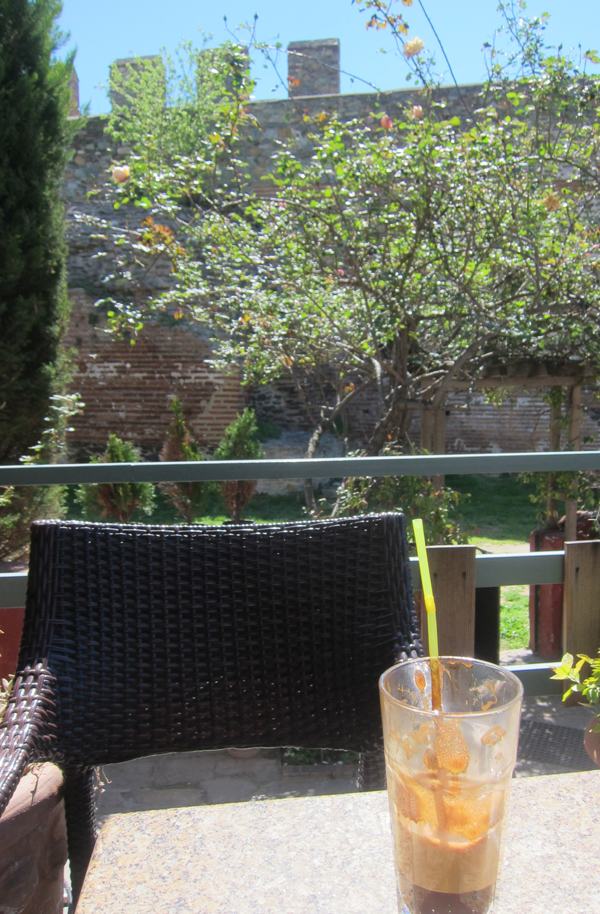
Photo by Sheila Webber: remains of a coffee frappe, Thessaloniki, April 2013

Monday, April 15, 2013

Feminist pedagogy

I was too busy at the end of last week to follow much of the ACRL conference live, but I did pick up some links etc. from the Twitter feed when I did dip in. I will give some of these over the next day or two. Firstly, Maria Accardi delivered a session on feminist pedagogy. She put a bibliography online at http://mariataccardi.com/fempedbib.pdf and she also has a book coming out about now:
Accardi, M. (2013) Feminist Pedagogy for Library Instruction. Library juicy press. Price: US $30.00; ISBN: 978-1-936117-55-0. "Providing both a theoretical framework and practical guidance, this title introduces feminist pedagogy to librarians seeking to enrich their teaching practices in feminist and progressive ways. Drawing heavily upon the women’s studies literature where the concept first appears, Accardi defines and describes recurring themes for feminist teachers: envisioning the classroom as a collaborative, democratic, transformative site; consciousness raising about sexism and oppression; ethics of care in the classroom; and the value of personal testimony and lived experience as valid ways of knowing. Framing these concepts in the context of the limits of library instruction--so often a 50 minute one-shot bound by ACRL-approved cognitive learning outcomes--Accardi invites a critical examination of the potential for feminist liberatory teaching methods in the library instruction classroom."

There is an interview with her here: http://libraryjuiceacademy.com/news/?p=34

Photo by Sheila Webber: Spot the cat, Thessaloniki, April 2013

Sunday, April 14, 2013

Saturday, April 13, 2013

Metaliteracy presentations and blog

Tom Mackey and Trudi Jacobson presented at ACRL 2013, the Association of College and Research Libraries (ACRL) Annual Conference on What’s in a Name? Information Literacy, Metaliteracy, or Transliteracy http://www.slideshare.net/tmackey/acrl-2013. Also worth mentioning are presentations from the Transliteracy, Technology, and Teaching conference linked from their Metaliteracy blog: Sue Thomas on Transliteracy and Technobiophilia; Mark McBride and Beth Burns on OER 101 and Tom Mackey, Trudi Jacobson, and Greg Bobish on Metaliteracy http://metaliteracy.org/2013/04/04/metaliteracy-discussed-at-3ts-conference/
Photo by Sheila Webber: Thessaloniki, April 2013

Friday, April 12, 2013

Designing innovative online tutorials for PhD students in France

The new issue of the open access IFLA Journal includes:
Malingre, M-L. et al (2013) "Form@doct: Designing innovative online tutorials for PhD students in France." IFLA journal, 49 (1), 45-57.
"At a time when information literacy is a growing subject in doctoral programs, it appears necessary to assess the benefits of online education in this field and its suitability for PhD students, considering their specific working conditions and learning methods. The purpose of this communication is fourfold: to show how Form@doct, an online portal for PhD students, uses its resources to respond to this need, to describe the challenges faced in e-learning, to explain the final structure that learning content, general architecture and online teaching could take and to assess, by a first analysis, whether the use made of this portal validates our approach"
The (French language) resource they created, Form@doct, is at http://guides-formadoct.ueb.eu/ and the pdf of the whole IFLA journal issue is at http://www.ifla.org/node/7637
Photo by Sheila Webber: early blossom, April 2013