Curating information literacy stories from around the world since 2005 - - - Stories identified, chosen and written by humans!
Wednesday, September 28, 2022
Call for Nominations for 2023 LIRT Librarian Recognition Award & Innovation in Instruction Award
- "The Librarian Recognition Award is given in acknowledgement of a practicing librarian’s contribution to the development, advancement, and support of information literacy and/or instruction in any type of library. Self-nominations are welcome" Criteria are: "Contributions to library literature on topics related to instruction/information literacy. These contributions can consist of both formal and informal publications; Key role in the creation of an instruction/information literacy program or project that has shown potential for wide-spread sharing and replication; Impactful participation within local, regional, national, and/or international level professional organizations that are devoted to the support and promotion of library instruction and information literacy in any type of library."
- "The LIRT Innovation in Instruction Award is given in recognition of a library’s contributions to the development, advancement, and support of information literacy and/or instruction in any type of library. The award will be given to a library that has done one (or more) of the following: Revamped its public instruction program in response to a new technology, an assessment report, etc.; Initiated a public program that utilizes best practices of instruction in combination with new methods of delivery; Created an original type of instruction, e.g., team-taught interdisciplinary research sessions, a novel form of outreach, etc. Practice(s) will be prioritized over scholarship with preference for innovative practices that are low-cost and can be easily reproduced."
Photo by Sheila Webber: shadows in the park, September 2022
Tuesday, September 27, 2022
New articles: Intellectual Freedom
Just published, a special issue of the open access IFLA Journal (vol. 48 no. 3) which focuses on Intellectual Freedom. It includes:
- A declaration for all seasons: The IFLA Statement on Libraries and Intellectual Freedom by Alex Byrne
- Intellectual freedom and alternative priorities in library and information science research: A longitudinal study by Gabriel J Gardner
- Navigating complex authorities: Intellectual freedom, information literacy and truth in pandemic STEM information by Kate Mercer, Kari D Weaver and Khrystine Waked ("This article presents an illustrative case study, using the example of scientific information around the safety and efficacy of the Oxford-AstraZeneca vaccine to demonstrate how modern scientific information sharing is shaped by the ways in which misinformation and fake news spread.")
- Transcribing public libraries as revitalized ethical spaces by Alison Frayne
- Automating intellectual freedom: Artificial intelligence, bias, and the information landscape by Catherine Smith
- Analysis of professional secrecy in Ibero-America: Ethical and legal perspectives by Alonso Estrada-Cuzcano and Karen Lizeth Alfaro-Mendives
- Intellectual freedom: Waving and wavering across three national contexts by Shannon M Oltmann, Toni Samek and Louise Cooke
- Long tail metaphysics: The epistemic crisis and intellectual freedom by Sarah Hartman-Caverly
Download the whole issue at: https://repository.ifla.org/bitstream/123456789/2143/1/ifla-journal-48-3_2022.pdf or https://repository.ifla.org/handle/123456789/2143
Monday, September 26, 2022
Webinar: SUNY Exploring Emerging Technologies for Lifelong Learning and Success
The next LILi Show & Tell webinar is on 5 October 2022, 10.00-11.00 US Pacific Time (which is e.g. 18.0-19.00 UK time) SUNY Exploring Emerging Technologies for Lifelong Learning and Success "This session will introduce how libraries can take advantage of the State University of New York (SUNY) Exploring Emerging Technologies for Lifelong Learning and Success (#EmTechMOOC). EmTech is an online learning opportunity targeted to the needs of college students, faculty, and anyone interested in learning about the value and implications of using emerging technologies for personal and professional growth. Registration is free and the session will be recorded." Register at https://www.eventbrite.com/e/suny-exploring-emerging-technologies-for-lifelong-learning-and-success-tickets-427266454467
Photo by Sheila Webber: apples and pears, September 2022
Sunday, September 25, 2022
Digital Futures for Learning
An interesting-looking forthcoming education book by one of the team at the University of Edinburgh who have done thoughtful and innovative work on online learning (they are responsible for the Manifesto for teaching online) is Digital Futures for Learning: Speculative Methods and Pedagogies by Jenn Ross: more details at https://www.routledge.com/Digital-Futures-for-Learning-Speculative-Methods-and-Pedagogies/Ross/p/book/9781032058122
Friday, September 23, 2022
Webinar: the ethics of online safety and security for young people
There is a webinar on 4 October 2022, 15:45 - 16:45 (BST) on The ethics of online safety and security for young people https://www.eventbrite.co.uk/e/the-ethics-of-online-safety-and-security-for-young-people-tickets-418854604397 This reports on the outcomes of a project funded by the Scottish Government and supported by Digital Xtra Fund .
"As part of this free online session, you will be the first to find out about our new freely available eBook that will be released next month, packed with resources for children aged from 9 to 13 years old on the following:
Theme 1: Online Behaviours
Theme 2: The Internet of Things
Theme 3: Online Terms and Conditions
Theme 4: Identifying Phishing and Scams
Theme 5: Private and Personal Information.
We will also share details on how to join a series of 5 free workshops organised for teachers, librarians, parents and anyone involved with young people."
The session is led by Dr Konstantina Martzoukou (Robert Gordon University)
Thursday, September 22, 2022
#BannedBooksWeek
This week is Banned Books Week https://bannedbooksweek.org/ - also follow at https://twitter.com/BannedBooksWeek and see the North American campaign https://uniteagainstbookbans.org/
Today (22nd September) at 12 noon US Central time (which is, e.g., 6pm UK time) there is a free webinar Banned Books Week - Practical Strategies for Defending Books in Your Library "we’ll use ripped-from-the-headlines scenarios as discussion prompts to provide practical strategies and resources that librarians can use to inform their defense of challenged materials", registration at https://ala-events.zoom.us/webinar/register/WN_kCdwS9T1TDewjApcczi4fw
Wednesday, September 21, 2022
RAILS conference online
The Australian conference that focuses on research in the library and information field, RAILS, will take place online 29-30 November 2022. The theme is Off the RAILS: Changing Research for Changing Times. It is free of charge. It runs in 10.15-15.00 on 29th and 15.00-20.30 on the 30th - in Australian Eastern Daylight Time (AEDT) (You can find the time in your country at for10am on 29th here).
Speakers include: Carol Tenopir (Scholarly reading: What has changed, what hasn’t changed, and what might change in the future); Lisa Given (Enabling research-based practice in library and information science: A preliminary model from the LISRA project); Chin Ee, LOH (New Times, New Methods: How to Be a Data-Savvy LIS Researcher and Practitioner; Gill Hallam (The interplay between research and practice in the ALIA Professional Pathways initiative; Mary-Anne Kennan (Getting published).
More details at https://railsconference.wordpress.com/ and registration at https://www.eventbrite.com.au/e/off-the-rails-changing-research-for-changing-times-tickets-383217522927
Photo by Sheila Webber: more rosehips, September 2022
Tuesday, September 20, 2022
Call for LiLi Show and Tell presentations
Saturday, September 17, 2022
Effective Educational Ecosystems: Solutions for Open Digital Content
There is a webcast: you go to https://media.un.org/en/webtv and search for ‘ Effective Educational Ecosystems: Solutions for Open Digital Content’, conference room 1, 17 September.
"This side event will examine how Governments can leverage two key UN instruments – representing globally adopted norms and standards in the area related to open educational content: the 2019 UNESCO OER Recommendation and the United Nations General Assembly Resolution A/RES/75/267 on Media and Information Literacy and related MIL guidelines. Discussions will center on how these instruments guide creation of the crucial digital ecosystems needed for the establishment and maintenance of free, high quality open educational resources and platforms, while building educators’ and learners’ media and information literacy for critical and effective engagement with information, technologies and media."
Friday, September 16, 2022
Young Scot and the European Youth Information Charter
One of the presentations at the webinar I was at last week was from Young Scot. They have a Get Informed website and have a section on Information Literacy at https://youngscot.net/information-literacy which includes their own commitment to provide information in line with the European Youth Information Charter. The latter document seeks "to guarantee the right of young people to complete, reliable and updated information" and so is worth looking at if you provide information to young people."
Photo by Sheila Webber: Teddy, September 2022
Thursday, September 15, 2022
Keeping up with ... #peerReviewWeek
The latest in ACRL's Keeping Up With .... series is Keeping up with ... peer review week. As usual it is a short publication with brief explanation, suggested articles and links, all to do with peer review (including some articles troubling the notion). It is here.
I hadn't realised Peer review week was a thing, but it is next week: https://peerreviewweek.wordpress.com/ The organisations behind it are mostly publishers of various kinds.
Wednesday, September 14, 2022
European Project: BRIDGE
At the Scottish event I presented at last week, they mentioned Information and Digital Literacy at School. A Bridge to Support Critical Thinking and Equality Values for Primary Education Using Children’s Literature and Transmedia
(BRIDGE) a new European project targeted at school children aged 8-11 that "endeavours to foster information literacy (as well as digital, visual and media literacy) as a vital basis for educating an informed citizenry that will stand up to disinformation, hate speech and fake news". There are partners in Spain, Turkey, the UK, Italy, Finland and Greece. Since it has only just started there is not much on the website at the moment, but it is worth keeping track of.
Go to https://bridgeinfoliteracy.eu/
Photo by Sheila Webber: autumn flower, red dahlia (possibly "Bishop of Llandaff" according to Google images), September 2022
Tuesday, September 13, 2022
16th European Conference on Games Based Learning
Monday, September 12, 2022
Freedom of expression, media and Information literacy and digital competencies to support peace and human rights
Photo by Sheila Webber: September sky, 2022
Saturday, September 10, 2022
Webinars: C&RL One-Shots Special Issue Conversations #CRLOneShots
Following on from Thursday's post, there are 2 webinars in which you can "meet the authors" of the special "critiquing the one shot" issue of College and Research Libraries.
C&RL One-Shots Special Issue Conversations, Part 1. 21 October 2022, 13.00 US Central time (which is, e.g., 19.00 UK time).
"Authors will discuss their articles, respond to questions, and engage with participants" Panelists include: Annie Pho, Wynn Tranfield, and Doug Worsham; Dani Brecher Cook; Sofia Leung; Karen P. Nicholson & Maura Seale; Lalitha Nataraj; Sajni Lacey. Moderated by Nicole Pagowsky.
Go to https://arizona.zoom.us/meeting/register/tZwvdeuurTMpHNEvPvfF0qdOJWM4aWHd8reH
C&RL One-Shots Special Issue Conversations, Part 2. 16 November 2022, 13.00 US Central time (which is, e.g., 19.00 UK time). Panelists include: Kristina Clement; Yi Ding; Veronica Arellano Douglas & Joanna Gadsby; Nora Almeida; Urszula Lechtenberg & Carrie Donovan; Gina Schlesselman-Tarango & Monideepa Becerra. Moderated by Nicole Pagowsky.
Go to https://arizona.zoom.us/meeting/register/tZIqfuuvrTMpGdQhOoCAOamJeEI5T4QyABr1
You are welcome to submit questions ahead of time, for either session, here: https://docs.google.com/forms/d/e/1FAIpQLScspp5Z-kuUnR26Mc_VVk5Iprgy7FMHefeIPRZGi-mOY_o01g/viewform?usp=sf_link
Photo by Sheila Webber: Flowers at the farmers market, August 2022Friday, September 09, 2022
#CEDMO Conference - Europe tackles Infrmation Chaos
The CEDMO Conference: Europe tackles Infrmation Chaos takes place 22-23 September 2022, organised by the Central European Digital Media Observatory. The physical conference (in Prague) is sold out, but you can register for online free.The parallel sessions are:
(22 September) Impact of Disinformation on Society; Changing Hearts and Minds? The Role of Fact-checking; Technology and AI; Look Who’s Talking: Chinese and Russian Propaganda and Disinformation in Europe
(23 September) Disinformation, Media Freedom and Journalism; Ukraine and COVID-19 - Challenges and Lessons Learned; Media and Information Literacy in the Age of Global Crisis and Confrontations; Epistemic Democracy.
Go to https://cedmohub.eu/cedmo-international-conference/
Thursday, September 08, 2022
UNESCO's Media and Information Literacy initiatives #MILCLICKS
Today I was invited to speak at the webinar: Building a Media, Digital and Information Literate Scotland organised by Scotland’s Information Literacy Community of Practice and CILIP Scotland. Below are my slides and these are the links and references.
Main UNESCO MIL site: https://www.unesco.org/en/communication-information/media-information-literacy/about
Short Twitter video https://twitter.com/MILCLICKS/status/1319605689690562563
UNESCO MILA: https://en.unesco.org/themes/media-and-information-literacy/gapmil
Global MIL week: https://www.unesco.org/en/media-information-literacy-week
MIL CLICKS: https://en.unesco.org/MILCLICKS
Doyle, A. (2019). Analyzing the laws of MIL: a Five-step scientific conversation on critical information literacy. Communications in Information Literacy, 13(1), 114-126. https://doi.org/10.15760/comminfolit.2019.13.1.8
Garner, S. (2005). High-Level Colloquium on Information Literacy and Lifelong Learning: Bibliotheca Alexandrina, Alexandria, Egypt: November 6-9, 2005. http://eprints.rclis.org/3829/1/alexfinalreport.pdf
Grizzle, A. et al. (2013). Media and Information Literacy: policy and strategy guidelines. https://unesdoc.unesco.org/ark:/48223/pf0000225606
Grizzle, A. et al. (2021). Media and information literate citizens: think critically, click wisely! Media & information literacy curriculum for educators and learners. ISBN 978-92-3-100448-3. https://unesdoc.unesco.org/ark:/48223/pf0000377068.locale=en
Haider, J. & Sundin, O. (2022). Paradoxes of media and information literacy: the crisis of information. Routledge.
Owens-Ibie, N. (Ed) (2019). Media and information literacy: non-formal
education guide for all platforms.
https://unesdoc.unesco.org/ark:/48223/pf0000372417
UNESCO. (2005). Beacons of the Information Society: The Alexandria Proclamation on Information Literacy and Lifelong Learning. https://www.ifla.org/publications/beacons-of-the-information-society-the-alexandria-proclamation-on-information-literacy-and-lifelong-learning/
UNESCO. (2020). Evaluation of UNESCO’s work in the thematic area of media and information literacy (MIL). https://unesdoc.unesco.org/ark:/48223/pf0000374972
UNESCO. (2022). Global Standards for Media and Information Literacy Curricula Development Guidelines. Available here
UNESCO. (2019). Global Framework for Media and Information Literacy Cities (MIL Cities). https://en.unesco.org/sites/default/files/global_framework_for_mil_cities.pdf
UNESCO Communication and Information Sector. (2013). Global Media and Information Literacy Assessment Framework: country readiness and competencies. https://unesdoc.unesco.org/ark:/48223/pf0000224655
UNESCO Section for Global Citizenship and Peace Education. (2022). Addressing conspiracy theories: what teachers need to know. https://unesdoc.unesco.org/ark:/48223/pf0000381958
Yanaze, M. & Chibás, F. (2020). From smart cities to MIL cities. https://www.academia.edu/43369259/FROM_SMART_CITIES_TO_MIL_CITIES_Metrics_inspired_by_the_vision_of_UNESCO
New articles: Disrupting Narratives of the One-Shot Instruction Model
The new issue of open-access College and Research Libraries (Vol 83, No 5, 2022) is a special issue focusing on: Critique as Care: Disrupting Narratives of the One-Shot Instruction Model. It includes the following articles - go to https://crl.acrl.org/index.php/crl/issue/view/1623/showToc to access them
- Annie Pho, Salma Abumeeiz, Kristina Vela Bisbee, Nisha Mody, Renee Romero, Wynn Tranfield, and Doug Worsham. You Only Get One Shot: Critically Exploring and Reimagining the One-Shot Instruction Model.
- Dani Brecher Cook. Is the Library One-Shot Effective? A Meta-Analytic Study.
- Sofia Leung. The Futility of Information Literacy & EDI: Toward What?
- Karen P. Nicholson and Maura Seale. Information Literacy, Diversity, and One-Shot ‘Pedagogies of the Practical’.
- Zoe Bastone and Kristina Clement. Serving Everyone or Serving No One? Examining the Faux-Equity of the One-Shot.
- Yi Ding. Feminized Flexibility, One-Shot, and Library Professionalism: Oxymoron or Opportunity?
- Veronica Arellano Douglas and Joanna Gadsby.The Power of Presence: One-Shots, Relational Teaching, and Instruction Librarianship.
- Lalitha Nataraj and April Ibarra Siqueiros. ‘Slow Your Roll’: Making Time for Reflection and Diverse Epistemic Practices in Library Instruction.
- Nora Almeida. Library Tautology: A Reenactment of the One-Shot.
- Urszula Lechtenberg and Carrie Donovan. Undoing Our Instructional Past: Envisioning New Models for Information Literacy.
- Sajni Lacey. Racial Imposter Syndrome, White Presenting, and Burnout in the One-Shot Classroom.
- Gina Schlesselman-Tarango and Monideepa Becerra. The Critical Information Literacy Leadership Institute as Alternative to the One-Shot: Q & A with a Faculty Partner.
- Colleen Hoelscher. One-Shots in Special Collections and Archives: Moving from Gatekeeper to Guide.
- Michele Santamaria and Jessica Schomberg. It Doesn’t Matter How Many ‘Doses’: One-Shots Aren’t Cures.
Photo by Sheila Webber: Another August sky, 2022
Wednesday, September 07, 2022
Call for papers & registration: Western Balkan Information and Media Literacy Conference 2022
The Western Balkan Information and Media Literacy Conference 2022, theme Information Literacy: combatting disinformation, working for truth in a Digital World, takes place on 8-9 December 2022 in Bihać, Bosnia & Herzegovina, together with the 11th International Summit of the Book 2022.
The deadline for abstracts is 23 October 2022 (for Presentation, Roundtable discussion, Poster session, Workshops, Symposia or PechaKucha) and the list of possible topics (very wide ranging) is at https://www.wbimlc.org/topics.
Keynote Speakers are Ismail Serageldin, Founding Director of the Bibliotheca Alexandrina; Serap Kurbanoğlu, Professor at the Department of Information Management of Hacettepe University, Turkey; Sonja Špiranec, Professor at the Department of Information & Communication Sciences, University of Zagreb, Croatia.
The website with more information is at https://www.wbimlc.org/
Tuesday, September 06, 2022
How to report misinformation online
The World Health Organization has a site: How to report misinformation online which has links to the pages on various social media that give instructions on how to report misinformation https://www.who.int/campaigns/connecting-the-world-to-combat-coronavirus/how-to-report-misinformation-online
Photo by Sheila Webber: duck, August 2022Saturday, September 03, 2022
Informed Choice Project
An interesting initiative in Canada is the Informed Choice Project which is focused on countering misinformation about vaccination and "aims to leverage a Canada-wide network of HCWs [health care workers] and volunteers to tackle misinformation in the social media ecosystem." There are training modules and then volunteers are supposed to engage in conversation on social media a few times a week, to counter vaccine hesitancy. There are also links to other sites: List of Tools That Fight Misinformation Online; Verified - An Initiative Aimed at providing reliable, accurate information about COVID-19; A Guide to Anti-Misinformation Actions Around the World; Harvard Misinformation Review.
Go to https://www.19tozero.ca/misinformation
Photo by Sheila Webber: casting a long shadow, August 2022
Thursday, September 01, 2022
Misinformation - articles and a taxonomy
Firstly, via the World Health Organization's Infodemic Management Newsflash; their just-published Public health taxonomy for social listening on monkeypox conversations - basically a checklist to enable you to categorise what kinds of issues are being discussed about Monkeypox on social media. The aim is to be able to analyse the conversation in particular regions/languages or channels, so that you can then develop an effective strategy to combat misinformation (by targetting the issues that are being most discussed and are the soiurces of most misinformation). There are sections for: the cause; the illness; the treatment; the interventions; the information. https://www.who.int/publications/m/item/public-health-taxonomy-for-social-listening-on-monkeypox-conversations
Secondly a couple of articles:
- Alwan, A., Garcia, E., Kirakosian, A. & Weiss, A. (2021). Fake News and
Libraries: How Teaching Faculty in Higher Education View Librarians’ Roles in
Counteracting the Spread of False Information. Partnership, 16(2), 1–30.
https://doi.org/10.21083/partnership.v16i2.6483
- Borah, P. (2022). The Moderating Role of Political Ideology: Need for Cognition, Media Locus of Control, Misinformation Efficacy, and Misperceptions About COVID-19.
International Journal of Communication, 16 https://ijoc.org/index.php/ijoc/article/view/18261
I thought this article was interesting for the idea of "misinformation efficacy" (derived from Bandura's concept of self-efficacy) Abstract "Along with the horrific impacts of the COVID-19 pandemic, there has been another attack alongside termed as the “infodemic.” The main purposes of the current study are to examine (1) the association between literacy variables and misperceptions about COVID-19 and (2) the moderating role of political ideology on these relationships. The findings from a survey conducted in the United States show that self-identified liberals, need for cognition, and misinformation efficacy were negatively related to misperceptions about COVID-19. Findings from Hayes’s PROCESS model 1 show meaningful moderating effects of need for cognition, media locus of control, and misinformation efficacy with political ideology. Implications are discussed."
Wednesday, August 31, 2022
Online/in person: Understanding more about Media Literacy
On 28 September 2022
at 18:30 UK time (BST) there is a free event which can be attended online or in person in London: Understanding more about Media Literacy. It is organised by SLA Europe and hosted at the Business & IP Centre at the British Library. Stéphane Goldstein will be talking about the Media and Information Literacy Alliance (MILA). There is a limit of 20 in person attendees "with drinks and nibbles in a local pub after the event".
"MILA was set up in mid-2021 to promote media and information literacy in the UK, with a view to getting this better recognised as a vital contribution to society. In this presentation, Stéphane Goldstein, MILA’s coordinator, will explain how the Alliance came about; how it fits into current UK public policy developments; what it has achieved to date; and how it brings together organisations and individuals interested in working collaboratively to champion media and information literacy and to influence policy and practice. MILA was originally founded by CILIP and the CILIP Information Literacy Group, but its remit extends beyond the library world. The presentation will be an opportunity to discuss the increasing relevance of media and information literacy and how this might relate to the interests of the SLA Europe community."
Register here: https://www.tickettailor.com/events/slaeurope/750723
Tuesday, August 30, 2022
UK's Media Literacy Programme Fund call for proposals
There is a call, closing 19 September 2022, for applications to the UK Government's (Department for Digital, Culture, Media & Sport) Media Literacy Programme Fund. It is aimed at "organisations undertaking media literacy activity that tackles the media literacy challenges in the Online Media Literacy Strategy."
The interventions have to be with populations in England.
I think I mentioned before that the Strategy did not take proper account of the work that libraries already do in this area, but libraries should certainly qualify.
"In year 1 of the fund, we are inviting bids for projects that meet one or more of the following strategic priorities: vulnerable users: providing support to vulnerable users who are currently underserved by media literacy initiatives; evaluation: implementing new or robust approaches to evaluation that improves understanding of the effectiveness of media literacy interventions; misinformation and disinformation: undertake activity to effectively build audience resilience to misinformation and disinformation"
"The fund is open to proposals for a wide range of media literacy interventions. This could include, but is not limited to: traditional educational interventions; upskilling professionals or other actors to support those they work with (i.e. train-the-trainer); tech-based solutions; awareness campaigns; evaluation of existing media literacy initiatives. The fund will welcome proposals for new and innovative activity, and activity that builds on existing media literacy work that has been proven to be effective. Rigorous evaluation of the effectiveness of projects will be a key requirement for funding."
More information at
https://www.gov.uk/guidance/media-literacy-programme-fund
Photo by Sheila Webber: Warning, August 2022
Monday, August 29, 2022
Webinar: Making sense of academic research for information & cultural practitioners
A webinar on 21 September 2022 15.00-16.30 UK time (BST) is Making sense of academic research for information & cultural practitioners. Cost is UK £15. The webinar is led by Sarah McNicol sarahmcnicol22@gmail.com
It "will explore how to find relevant academic research and use it to improve your own service.... This introductory session, designed for practitioners with limited previous experience of academic research, will demystify some of the language used in academic papers and describe how to relate the research to your own situation - focusing on the aspects of articles that are likely to be most relevant from a practitioner perspective."
Register at https://www.eventbrite.co.uk/e/making-sense-of-academic-research-for-information-cultural-practitioners-tickets-394030454697
Photo by Sheila Webber: sunlight through leaves, August 2022
Sunday, August 28, 2022
Critical Conversations in LIS
- 22 September 2022: Carrie Banks: Nothing About Us Without Us: Inclusive Services for Youth with Disabilities at Brooklyn Public Library
- 29 September 2022: Kate Reynolds: Finding Solidarity In Storytime
- 6 October 2022: Alvin Irby: Cultivating the Reading Identity of Black Boys
- 13 October 2022: Dr. Emily Knox and Dr. Shannon Oltmann: What's so critical about intellectual freedom?
- 27 October 2022: Angel Truesdale: “Diversity Work” is Labor
Go to https://sites.google.com/view/bakerlectures/critical-conversations-in-lis/critical-conversations-in-lis-2022
Photo by Sheila Webber: white rose, August 2022
Friday, August 26, 2022
Webinar: Writing the abstracts: the art with many motifs
A free Pre-Conference Webinar for the VICLIS 2022 conference is on 30 August 2022 at 14.00-15.00 India Standard Time (which is, e.g., 09.30-10.30 BST) Writing the abstracts: the art with many motifs
It will be lead by Dr. (Mrs.) Namali Suraweera (Director, Inter-Faculty Center Coordinating the Modular System/ Senior Lecturer, Department of Library & Information Science, University of Kelaniya, Sri Lanka) and the Moderator is Dr. Upul Lekamge (Head of Department, Senior Lecturer in Sociology, Department of Social Sciences, Faculty of Social Sciences and Languages, Sabaragamuwa University of Sri Lanka)
Join Zoom Meeting
https://us06web.zoom.us/j/83881658000?pwd=Z21keHVqY2thQjllbkNPN1prZSs0QT09#success
Meeting ID: 838 8165 8000
Passcode: #vclic
New Book: Digital Literacy, Inclusivity and Sustainable Development in Africa
"This important book features contributions from libraries across Africa outlining how they have approached the shift towards a better and more widespread digital literacy." The chapters are:
- Digital Gap in Global and African Countries: Inequalities of Opportunities and COVID-19 Crisis Impact Syden Mishi, Godfred Anakpo
- E-skills and Wages in Tunisia Najeh Aissaoui
- Digital Literacy in Africa: A Case Study of Kenya National Library Services Thika Miriam Mureithi
- Digital transformation in city of Johannesburg Library Services through the provision of E-Learning services Jeff B Nyoka
- National Library of Nigeria and the Promotion of Digital Equity Glory Okeagu, Okwuoma Chidumebi Chijioke, Daship Na'angap, Solape Oshile
- Driving Digital Literacy - An Assessment of GhLA's Interventions Against the COVID-19 Impact on Library Services Hayford Siaw
- Impact of COVID-19 on Digital Divide: Perspectives of an Educator and a Librarian in Botswana Lynn Jibril, Priti Jain
- Digital literacy Skills Investigation among Third Year Bachelor of Library and Information Science Students of Makerere University Faridah Muzaki, Sarah Kaddu, Eric Nelson Haumba
- ICT Training for Children with Hearing-Impairment Rachel Andisi
- Underscoring the Value of Digital Literacy as a Tool for Reducing Unemployment and Enhancing Workplace Productivity Lanre Abubakar Folurunso and Emmanuel Omeiza Momoh
- Backwards Design Modelling of Digital Literacy in Africa Oluwaseun David Adepoju
More information at https://www.facetpublishing.co.uk/page/detail/digital-literacy-inclusivity-and-sustainable-development-in-africa/?k=9781783305117
Thursday, August 25, 2022
Critical Approaches to Libraries Conference: final summer event #CALC22
The final CALC (Critical Approaches to Libraries Conference) free webinar this summer is on 7 September 2022 at 13.45-17.00 BST. They are "revisiting some of
our past speakers from CALC2020 and CALC2021 and getting an update on the
work they presented, what they've been doing since and any future actions
they're planning."
Tickets
are available at Eventbrite
https://www.eventbrite.co.uk/e/calc-summer-series-3-catching-up-with-calc-tickets-406730430667
.
They encourage attendees to re/familiarize themselves with the past work of the speakers:
Speaker Bios/Recordings:
- Sarah Hammond - Recording of session from CALC2020 https://sites.google.com/view/calcconference/past-conferences/calc2020?authuser=0#h.p0gn1qek2cz0
- Yohanna Anderson and Caroline Ball - #ebooksos - #ebooksos homepage https://academicebookinvestigation.org/
- Ramona Naicker - Abstract, recording and slides from CALC2021
https://sites.google.com/view/calcconference/past-conferences/calc2021
Details and materials from past webinars are at https://sites.google.com/view/calcconference/past-conferences/calc2022.
Photo by Sheila Webber: sun in the park, August 2022Tuesday, August 23, 2022
Recent articles: Health literacy; COVID and #infolit; Enterprise search; Information behaviour of pets and people; Refugee information behaviour
- Ashraf, S., Batool, S., Sulehri, I., Eman, S., Rehman, A. & Mahmood, K. (2022). Measuring Everyday Health Information Literacy: A Survey of Pakistani Married Working Women. Libri, 72(2), 97-107. https://doi.org/10.1515/libri-2021-0021 (priced article)
- Lloyd, A. and Hicks, A. (2022). Saturation, acceleration and information pathologies: the conditions that influence the emergence of information literacy safeguarding practice in COVID-19-environments. Journal of Documentation, 78(5), 1008-1026. https://doi.org/10.1108/JD-08-2021-0162
- Lykke, M., Bygholm, A., Søndergaard, L.B. and - Byström, K. (2022). The role of historical and contextual knowledge in enterprise search. Journal of Documentation, 78(5), 1053-1074. https://doi.org/10.1108/JD-08-2021-0170
- Solhjoo, N., Krtalić, M. and Goulding, A. (2022). Pets and people: information experience of multispecies families. Journal of Documentation, 78(5), 1092-1108. https://doi.org/10.1108/JD-03-2021-0052
- Kainat, K., Eskola, E.-L. and Widén, G. (2022). Sociocultural barriers to information and integration of women refugees. Journal of Documentation, 78(5), 1131-1148. https://doi.org/10.1108/JD-05-2021-0107
Photo by Sheila Webber: flowers at the farmers market, August 2022Monday, August 22, 2022
Policy paper: Women’s Health Strategy for England
The strategy paper published by the Department of Health and Social Care on 22 July 2022. Women’s Health Strategy for England, includes a section Information and awareness that starts by saying that
"Through the call for evidence, we heard of the importance of high-quality information provision – from school education through to support for adults. Overall, family or friends was the main source of health information (74%), followed by Google (71%), other online search engines and blogs (69%), GPs or healthcare professionals (59%), and the NHS (54%)."
The ambitions are that "girls and boys receive high-quality, evidence-based education on women’s health from an early age. ..... women and girls are empowered through access to education and information to maintain their health and wellbeing, and make informed decisions about their healthcare throughout their lives. .... information is accessible to all women and girls – in particular under-served populations or those who need materials in alternative and non-digital formats."
This recognition of the importance of information is welcome. What isn't so welcome is the fact that there appears to be not a single reference to libraries or librarians in the whole document. It also mentions NHS Digital, but not NHS Knowledge and Library Services (rather ironic, considering the 3rd ambition about including non-digital formats).
https://www.gov.uk/government/publications/womens-health-strategy-for-england
Saturday, August 20, 2022
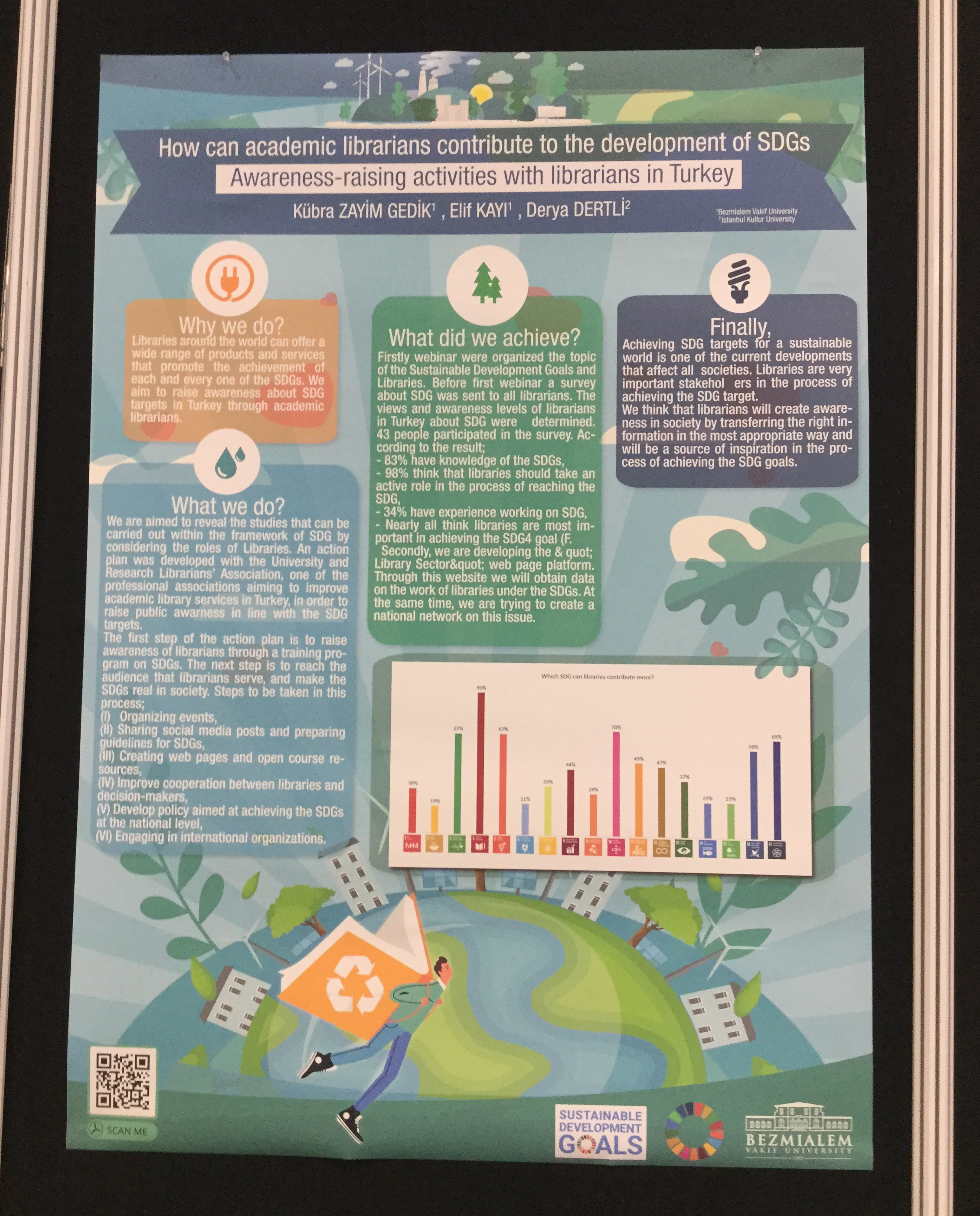
Curriculum, community, context, sustainability: A reflection
On 29 July I gave a keynote at the IFLA WLIC 2022 Satellite Conference: SET Training School: Towards a Curriculum for Social and Digital Inclusion and Lifelong Learning entitled Curriculum, community, context, sustainability: A reflection. The slides for this presentation are embedded below
Thursday, August 18, 2022
Recordings from the 9th Annual LILi Conference
There are recordings from the 9th Annual LILi Conference (LifeLong Information Literacy), held in July 2022.
The full recording is at https://youtu.be/a6rRWqoEA6Y.
The individual recordings of the presentations and lightning talks are at https://lili.libguides.com/lili2022/schedule where you can also see the programme (which has lots of interest packed into one day!).
Wednesday, August 17, 2022
Webinar: How to Reach (Almost) All Learners with Universal Design for Learning
A free webinar on 25 August 2022 at 2-3pm USA Eastern time (which is, e.g., 7-8pm UK time) How to Reach (Almost) All Learners with Universal Design for Learning. Led by Thomas Tobin and organised by the Canadian Contact North/Contact Nord organisation "This webinar shares low-effort “do-them-right-now” design techniques that reduce student anxiety and pressure, reduce your instructor colleagues’ frustrations (and your own), and allow you to focus on engaging student interactions, especially for those living in small, rural, remote and Indigenous communities."
Go to https://teachonline.ca/webinar/how-reach-almost-all-learners-universal-design-learning
Tuesday, August 16, 2022
New Book: Intersections of Open Educational Resources and Information Literacy
A new book from ACRL is:
Cullen, M.A. & Dill, E. (Eds). (2022). Intersections of Open Educational Resources and Information Literacy. ACRL. ISBN 978-0-8389-3673-3 Price: US $112.00; ALA Member
$100.80. (However - there is also an open access pdf - see below)
The sections are: Teaching Info Lit with OER; Librarian Support of Open Pedagogy/OER; Social Justice/Untold Stories; Student Advocacy; Spreading the Love: Training Future Advocates and Practitioners.
Go to https://www.alastore.ala.org/content/intersections-open-educational-resources-and-information-literacy-pil-79 for the details and this page also has a link to the open access pdf version https://bit.ly/ACRLOERInfoLit
Monday, August 15, 2022
Media and Information Literacy news
A couple of UNESCO-related news items. Firstly, various news outlets have reported on Lai Mohammed, Nigeria’s Minister of Information and Culture, saying why he thinks that Media and Information Literacy (MIL) is important. This is as plans go ahead for Nigeria hosting the in-person Global MIL Week conference in October 2022.
Oyedeji, N. (2022, 7 August). UNESCO confab to boost war against fake news, misinformation – Lai Mohammed. https://factcheckhub.com/unesco-confab-to-boost-war-against-fake-news-misinformation-lai-mohammed/
Secondly, there is a short report on a training session organised by UN Lebanon via UNESCO, for 15 young people, to help youth combat hate speech and misinformation under the Youth Countering Hate Speech and Misinformation project
Lebanese youth learn to stand up to hate speech. (2022, 12 August). https://news.un.org/en/story/2022/08/1124502
I also came across a series of short Youtube videos from UNESCO Beirut Office Verified - Youth Countering Hate Speech and Disinformation - the first one is here (n.b. I haven't viewed them) https://youtu.be/KGfbCwszh1Y
Sunday, August 14, 2022
Using Social Media to engage Communities with Local History Workshop
The IFLA Local History and Genealogy Section has organised a free webinar on 23 August 2022 15.00-16.30 CET (which is, e.g., 14.00-15.30 UK time) Something Old, Something New ー Using Social Media to engage Communities with Local History Workshop which has a number of interesting speakers from different countries and sectors. More information at https://www.ifla.org/events/something-old-something-new-%e3%83%bc-using-social-media-to-engage-communities-with-local-history-workshop-part-2/
Photo by Sheila Webber: washing on the line, August 2022
Saturday, August 13, 2022
COVID19 and #misinformation
A special issue of the open access Journal of Medical Internet Research (vol 24 no 7, 2022) focused on Social Media, Ethics, and COVID-19 Misinformation. It contains a lot of articles, for example:
-
Inoue, M., Shimoura, K., Nagai-Tanima, M. & Aoyama, T. (2022). The Relationship Between Information Sources, Health Literacy, and COVID-19 Knowledge in the COVID-19 Infodemic: Cross-sectional Online Study in Japan. Journal of Medical Internet Research, 24(7):e38332. https://doi.org/10.2196/38332
"An online cross-sectional study was conducted in November 2021. Participants were 477 individuals aged 20-69 years. After obtaining consent to participate in the study, participants were asked about sociodemographic indicators, sources of health-related information, health literacy, and COVID-19 knowledge. Sources of health-related information were categorized into 4 types: mass media, digital media, social media, and face-to-face communication. The Spearman rank correlation test was conducted to determine the relationship between health literacy, the number of correct answers to COVID-19 knowledge, and the number of information sources used. Multiple regression analysis was conducted with health literacy and the number of correct answers as dependent variables, the 4 media types as independent variables, and age and sex as adjustment variables.
"Mass media was the most frequently used source of information, followed by digital media, face-to-face communication, and social media. Social media use was significantly higher among individuals aged 20-29 years than among other age groups. Significant positive correlations were found between health literacy, the number of positive responses to COVID-19 knowledge, and the number of information sources used. Multiple linear regression analysis showed that health literacy is associated with access to information from digital media and face-to-face communication. Additionally, COVID-19 knowledge was associated with access to information from mass media, digital media, and face-to-face communication."
Go to https://www.jmir.org/themes/1142-theme-issue-social-media-ethics-and-covid19-misinformation
Photo by Sheila Webber: Rowan berries, August 2022
Thursday, August 11, 2022
How many sources are needed? The effects of bibliographic databases on systematic review outcomes
An interesting preprint, which takes articles which were identified in german systematic reviews of educational topics, and identifies which of 7 databases contain the articles (the databases were: Catalogue of the German National Library; Education Research Complete; ERIC; FIS Bildung Literaturdatenbank/ German Education Index; Google Scholar; LearnTechLib; Web of Science Social Science Citation Index).
- Keller, C., Heck, T. & Rittberger, M. (2022). How many sources are needed? The effects of bibliographic databases on systematic review outcomes. in: Aizawa, A., Mandl, T., Carevic, ., Hinze, A.,Mayr, P. & Schaer, P. (Eds). Proceedings of the ACM/IEEE Joint Conference on Digital Libraries in 2022 (JCDL '22), hybrid conference, Cologne, Germany and online, June 20 - 24, 2022. New York : Association for Computing Machinery. https://doi.org/10.25657/02:25180
"The database coverage showed high variations and clearly indicates that one source on its own does not cover a sufficient amount of relevant literature. Some databases are very similar in coverage, while national and discipline-specific databases hold publications that cannot be found elsewhere. Google Scholar outperformed all databases regarding recall. However, due to poor precision this database is considered inadequate for review purposes" - the latter sentence highlights that Google Scholar yields by far the largest % of the articles - but although they are there, you wouldn't necessarily find them if you were using a subject (rather than a known item) search. In the original search some of these items could only be found through hand searching. There are also observations on why the authors of the original systematic reviews did not find items in other databases, when the items were in fact there. This includes the poor quality of metadata, and sometimes over-specific searches.
Photo by Sheila Webber: dry heath, summer 2018
Wednesday, August 10, 2022
Recent articles: Librarians and IL education; schools and literacy policies; COVID19 information; Information behaviour; Teachers' self-efficacy
The latest published issue of Journal of Librarianship and Information Science (vol. 54, issue 3) includes the following (priced unless marked as open access)
- The expanding circles of information behavior and human–computer interaction by Tim Gorichanaz, Sukrit Venkatagiri
- Relegating expertise: The outward and inward positioning of librarians in information literacy education by Alison Hicks, Annemaree Lloyd (open access)
- Information and information resources in COVID-19: Awareness, control, and prevention by Mohammadhiwa Abdekhoda, Fatemeh Ranjbaran, Asghar Sattari (open access)
- Information seeking behaviors of environmental journalists by Stacy Gilbert, Philip B. White, Kathryn Tallman
- The role of the library within school-level literacy policies and plans in Australia and the United Kingdom by Margaret K. Merga
- Teachers’ perceived information literacy self-efficacy by Miri Shonfeld, Noa Aharony, Noa Nadel-Kritz
Go to https://journals.sagepub.com/toc/lisb/54/3
Photo by Sheila Webber: my hydrangea, August 2022
Tuesday, August 09, 2022
Building community partnerships through digital literacy workshops
A priced webinar from ACRL: Building community partnerships through digital literacy workshops on 11 August at 2-3pm US EAstern time (which is, e.g., 7-8pm UK time) "Digital Matters Interim Director Rebekah Cummings will share her experiences at the University of Utah partnering with the College of Education to disseminate online digital literacy training to 7-12 grade teachers. In this session, we will discuss the initial needs assessment, building community partnerships, creating a digital literacy curriculum, and delivering the content online in 2021 and in-person in 2022. This interactive session will explore how the instructors mixed practical digital literacy skills such as podcast production and video essays with relevant digital literacy concepts such as misinformation, digital citizenship, and ethical use of online sources. Engage in exercises used with the teachers such as online investigative journalism and an interactive game designed to gather social media followers. Be challenged to consider how we they unlock their own ivory towers to disseminate digital and information literacy to their communities." Cost: ACRL member: US$50; ALA member: US $71; Nonmember: US$79. Registration and more details at https://www.ala.org/acrl/onlinelearning/buildingcommunitypartnerships
Photo by Sheila Webber: poster at WLIC, July 2022
Monday, August 08, 2022
Call for proposals #BOBCATSSS2023
The theme for the Bobcatsss 2023 conference is: A New Era: Exploring the Possibilities and Expanding the Boundaries. It takes place 25-27 January 2023 and the deadline for proposals is 12 September 2022. The conference is based on the campus of Oslo Metropolitan University (Norway) but there will be a hybrid attendance possibility. The co-organisers with OsloMet are
University College London, UK, and
University of Borås, Sweden. The conference "will explore the possibilities for services and programming and the expansion of physical and virtual boundaries in this new era for libraries, archives and information services" Subthemes include: Universal design;
User communities;
Gaming; ;
Information behavior and practices (for the full list follow the link). BOBCATSSS was started as a conference "for students by students" and still has strong student involvement. Go to https://www.oslomet.no/en/about/events/bobcatsss-2023
Photo by Sheila Webber: Howth harbour, July 2022
Sunday, August 07, 2022
New articles: Critical media literacy; Digital games; Media literacy
- The COVID-19 infodemic among young people and adults: The support of critical media literacy by J.-Roberto Sánchez-Reina, Barcelona (Spain) & Ericka-Fernanda González-Lara, Puebla (Mexico).
- Learning strategies through digital games in a university context by Fernando-Silvio Cavalcante-Pimentel, Alagoas (Brazil), Margarida Morais-Marques, Aveiro (Portugal) & Valdick Barbosa-de-Sales-Junior, Alagoas (Brazil).
- Secondary education students and media literacy in the age of disinformation by Eva Herrero-Curiel, Madrid (Spain) & Leonardo La-Rosa, Madrid (Spain).
- Emoticons in student-professor email communication by Alenka Baggia, Maribor (Slovenia), Anja Žnidaršič, Maribor (Slovenia) & Alenka Tratnik, Maribor (Slovenia).
Photo by Sheila Webber: Docklands near convention centre, Dublin, July 2022
Friday, August 05, 2022
Libraries and Literacies in the Metaverse #WLIC2022
At WLIC 2022 last week in Dublin I presented a poster co-authored with Dr Valerie Hill (USA) and Rossanna Barrios-Llorens (Puerto Rico) entitled Libraries and Literacies in the Metaverse. It is embedded below and there are references and links here. On the right you see Dr Joe Sanchez in front of the poster. Our abstract was
"In uncertain times, virtual libraries connect patrons to vital information that they may not be able to access in the physical world. They can also be sanctuaries from pandemic and war. Librarians (including the co-authors) have worked in virtual worlds for 15 years (e.g. Webber & Nahl, 2011) and the Community Virtual Library in the 3D virtual world Second Life exemplifies global connectivity, with volunteers collaborating internationally to enact diversity for information access. A current exhibit, "Social Determinants for Access to Information: Virtual World Library Exhibition" includes 3D rooms filled with resources on racial diversity, gender diversity, issues of changing literacies, digital legacy, confirmation bias, digital citizenship, and the digital divide. Visitors interact with content and share a sense of place and presence through embodiment in the metaverse, providing advantages beyond web platforms such as Zoom.
Our poster shares examples of using 3D virtual worlds for librarianship through international collaboration across learning communities. The 3D virtual library is a real space where librarians can offer services such as reference work, exhibits, workshops, conferences and discussions, and embed themselves into virtual spaces without the boundaries of physical space (e.g. Hill, 2016; Hill, 2021)."
Thursday, August 04, 2022
Russia-Ukraine ConflictMisinfo Research Portal
- the Russia-Ukraine ConflictMisinfo Dashboard, an interactive tool "for monitoring online misinformation and disinformation about the Russia-Ukraine war. It tracks and visualizes debunked claims from 100s of trusted fact-checkers worldwide. Debunked claims are collected live and auto-translated into English, Ukrainian and Russian." and
- a Russia-Ukraine ConflictMisinfo Geo-Map "A geo-visualization of debunked claims about the Russia-Ukraine war that specifically reference a geographical location."
- Additionally it has "A curated list of projects and initiatives aimed at investigating and countering Russian propaganda and disinformation on and offline." and a "Curated list of publicly available datasets for studying dis- & misinformation campaigns on social media in the context of the Russia-Ukraine war."
The website is here https://conflictmisinfo.org/
Photo by Sheila Webber: librarians with Ukrainian flag at World Library and Information Conference last week
Tuesday, August 02, 2022
Recent articles: Community college students; Engineering students and researchers; Competence in data management
- Community College Students’ Perceptions of Their Information Literacy Needs by Don Latham, Melissa Gross, Heidi Julien, Felicia Warren, Lindsey Moses
- Identifying Scholarly Search Skills Based on Resource and Document Selection Behavior among Researchers and Master’s Students in Engineering by Yasuko Hagiwara, Emi Ishita, Yukiko Watanabe, Yoichi Tomiura (the comparison of the responses from the 2 groups is useful in identifying what skills students need to learn in finding and evaluating research articles)
- Reflection and Analysis of Implementing a Free Asynchronous MOOC to Build Competence in Biomedical Research Data Management by Julie Goldman, Nevada Trepanowski
Photo by Sheila Webber: Ireland's Eye, July 2022
Monday, August 01, 2022
IFLA-UNESCO Public Library Manifesto #WLIC2022
The new version of the IFLA-UNESCO Public Library Manifesto was launched at the WLIC last week and can be found here https://repository.ifla.org/bitstream/123456789/2006/1/IFLA-UNESCO%20Public%20Library%20Manifesto%202022.pdf I note that one of its misions is (my emphasis)
"initiating, supporting and participating inliteracy activities and programmesto buildreading and writing skills, and facilitating the development of media and information literacy and digital literacy skills for all people at all ages, in the spirit of equipping an informed, democratic society"
Photo by Sheila Webber: conference centre, Dublin, Ireland, July 2022


